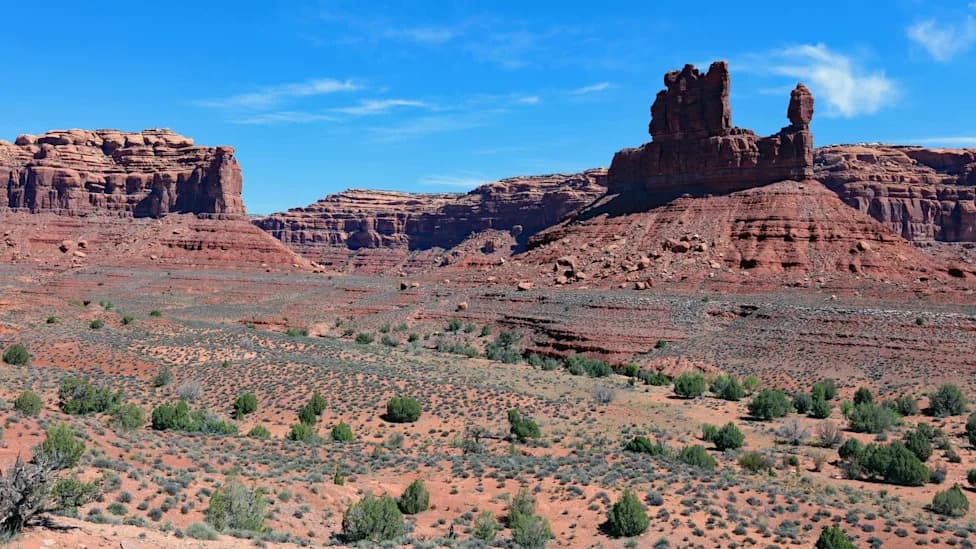
Habitat loss — not politics — is the primary threat to wildlife, yet recent policy changes have made conservation vulnerable to election cycles. A July rule and additional actions have weakened habitat protections under the Endangered Species Act, and executive orders on July 13 reduced Bears Ears and Grand Staircase-Escalante by roughly 90%. While legal challenges are underway, the author argues the U.S. needs a durable, science-based conservation framework that transcends partisan change.
Don't Let Elections Decide Which Species Survive: A Call For Durable, Science-Based Conservation
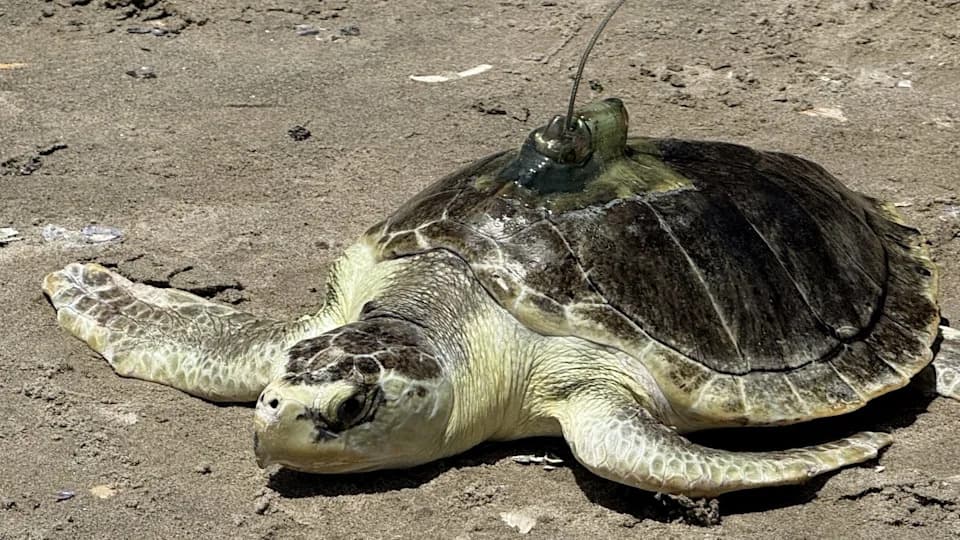
A Kemp's ridley sea turtle, a critically endangered species, returns to the Atlantic Ocean in Coney Island, New York, after months of rehabilitation.
Wildlife cannot survive without secure habitat — a reality most Americans understand instinctively. A species may enjoy legal protections on paper, but if its nesting grounds are bulldozed, wetlands drained or migration corridors severed, extinction is only a matter of time.
For more than five decades the Endangered Species Act (ESA) has relied on that simple premise to safeguard the nation's wildlife. It remains one of the country's most successful and broadly supported environmental laws because people value abundant wildlife and protected public lands.
Recent Policy Shifts and Their Consequences
In July, the Trump administration finalized a rule that meaningfully curtailed the ESA's ability to protect habitat. It also announced additional actions that would remove the presumption that a species listed as "threatened" should automatically receive important protections and that would weaken the central role of science in identifying critical habitat.
On July 13, the president signed orders that reduced the boundaries of Bears Ears National Monument and Grand Staircase-Escalante National Monument by roughly 90%. These moves are striking not only for their immediate impact on iconic public lands but also because they run clearly counter to public sentiment about conservation.
Why This Is A Larger Problem
Many of the same policy changes were implemented in the previous administration and later reversed by the Biden administration. That back-and-forth illustrates a troubling dynamic: the fate of America's wildlife is increasingly determined by election cycles rather than enduring science and shared civic values.
Grizzly bears do not become less threatened because a new administration takes office. Rice’s whales do not need less habitat because political priorities shift.
The ecological and cultural importance of national monuments does not vanish at a president's whim. Nor does the science guiding wildlife conservation fundamentally change every four years. Politics, however, does.
What Needs To Change
Conservationists should — and do — challenge rollbacks in court. Defenders of Wildlife is actively litigating to preserve protections. But reversing harmful decisions is only step one. The larger goal must be a durable, science-based conservation framework that can withstand partisan swings and address 21st-century threats, including climate change, habitat fragmentation and new development pressures.
That framework should include stronger habitat protections, clearer legal presumptions for threatened species, transparent science-based habitat designations, and partnerships across political lines and sectors. New threats demand new tools, stronger collaborations and a willingness to work with anyone serious about advancing conservation.
A Call To Action
Administrations will come and go, but the fate of America's wildlife should not depend on which way the political pendulum swings. Starting now, we should commit to put politics aside and build lasting solutions for wildlife and the public lands and waters we all share.
Andrew Bowman is the president and chief executive officer of Defenders of Wildlife. His career has focused on strengthening foundational conservation laws and protecting habitats where wildlife can thrive.
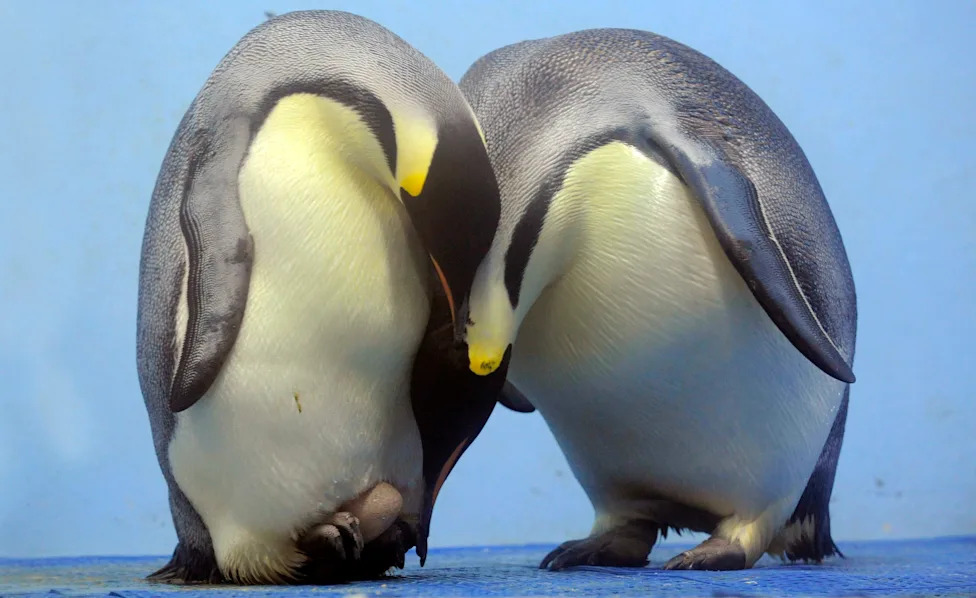
A femaleemperor penguinhatches an egg at an oceanarium in Nanjing, Jiangsu province Feb.10, 2009. Emperor penguins were added to the endangered list as climate change threatens the sea ice they depend on to survive.(China Daily China Daily Informat, via REUTERS)
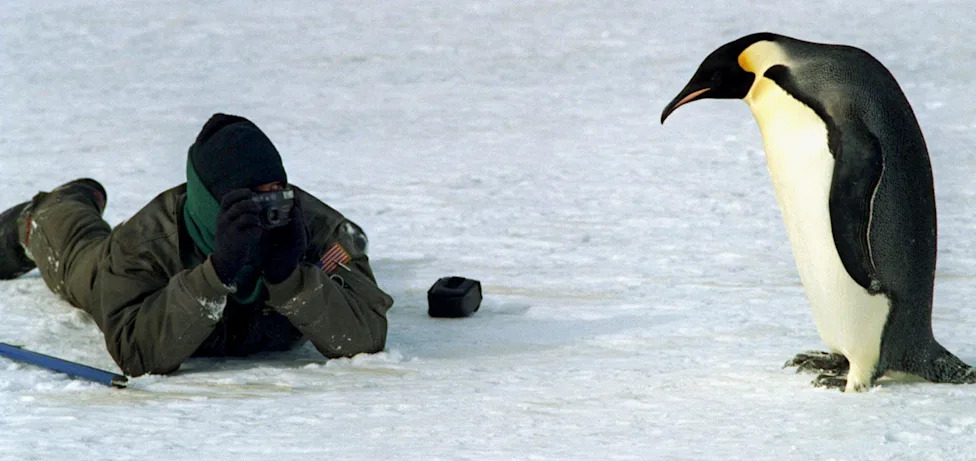
An unidentified United States helicopter pilot moves in for a close up picture of an Emperor penguin on the Ross Sea ice shelf about 150kms north of Scott Base in Nov. 1995.(REUTERS)
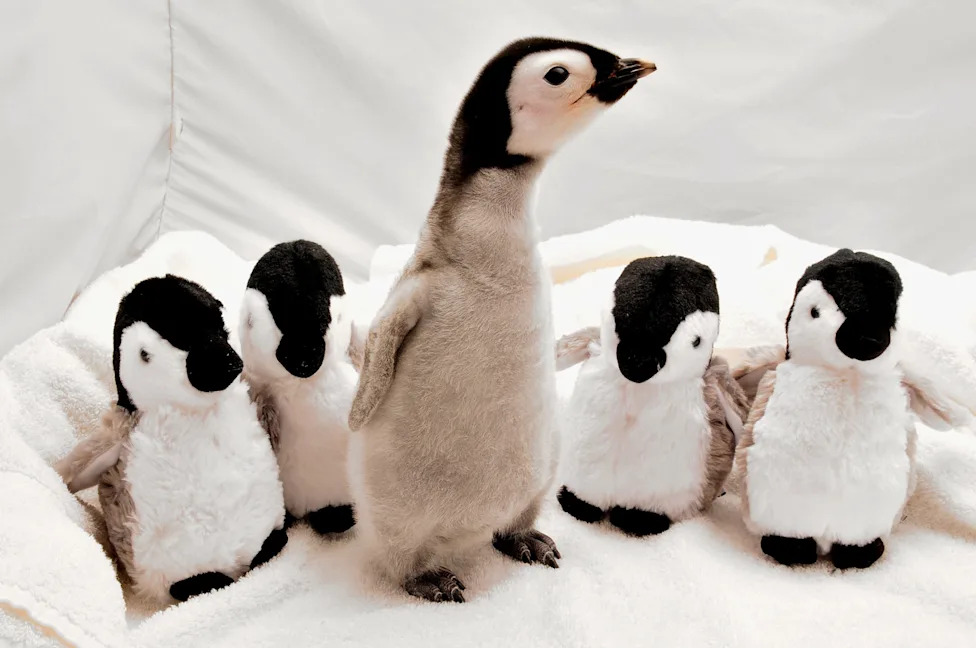
In this handout photo provided by SeaWorld San Diego, a new emperor is in town at SeaWorld on Oct. 4, 2010 in San Diego, California. For the first time in eight years, an emperor penguin has hatched at the marine-life park's Penguin Encounter attraction. The 3-week-old, 2-pound chick hatched in mid-September and is being hand-raised by the SeaWorld's aviculturists in a behind-the-scenes nursery. This marks the 21st emperor penguin to hatch at the park since 1980. SeaWorld San Diego is world-renowned for its successful penguin breeding program and has hatched and raised more than 500 penguin chicks representing eight species in the last 30 years. The chick is expected to go on public display in about four months.(Mike Aguilera/SeaWorld San Diego via Getty Images)
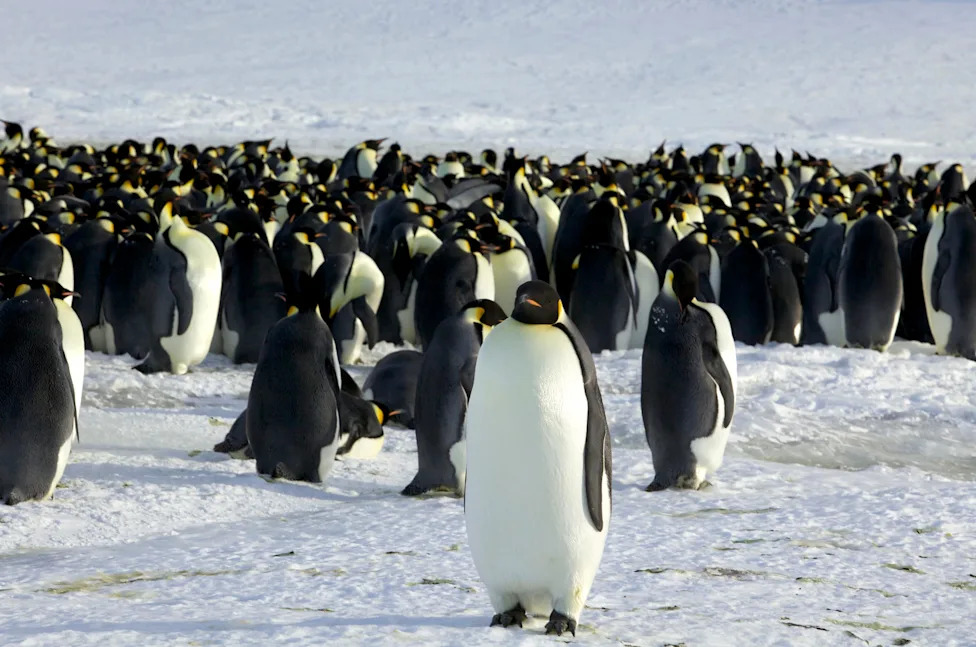
Emperor penguins are seen in Dumont d'Urville, Antarctica April 10, 2012. Counting emperor penguins in their icy Antarctic habitat was not easy until researchers used new technology to map the birds from space, and they received a pleasant penguin surprise for their efforts. Using satellite mapping with resolution high enough to distinguish ice shadows from penguin poo, an international team has carried out what they say is an unprecedented penguin census from the heavens over the past three years.(REUTERS)
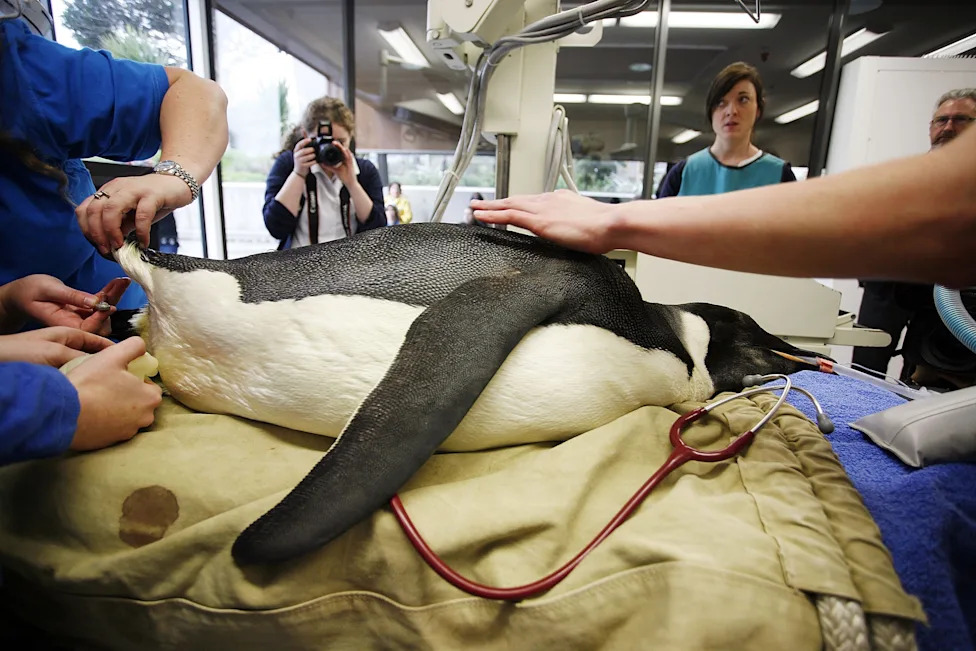
"Happy Feet" the emperor penguin that washed up on the Kapiti Coast last week, undergoes a medical examination at Wellington Zoo on June 29, 2011 in Wellington, New Zealand. The young penguin landed on NZ shores last week, after traveling over 3,000 kilometres from the antarctic. The ill penguin was operated on at Wellington Zoo several times this week to remove sand and sticks from it's stomach with hopes it will recover fully. A team of experts is likely to decide today, whether the bird will remain in captivity in New Zealand, or be transported back the antarctic.(Hagen Hopkins, Getty Images)
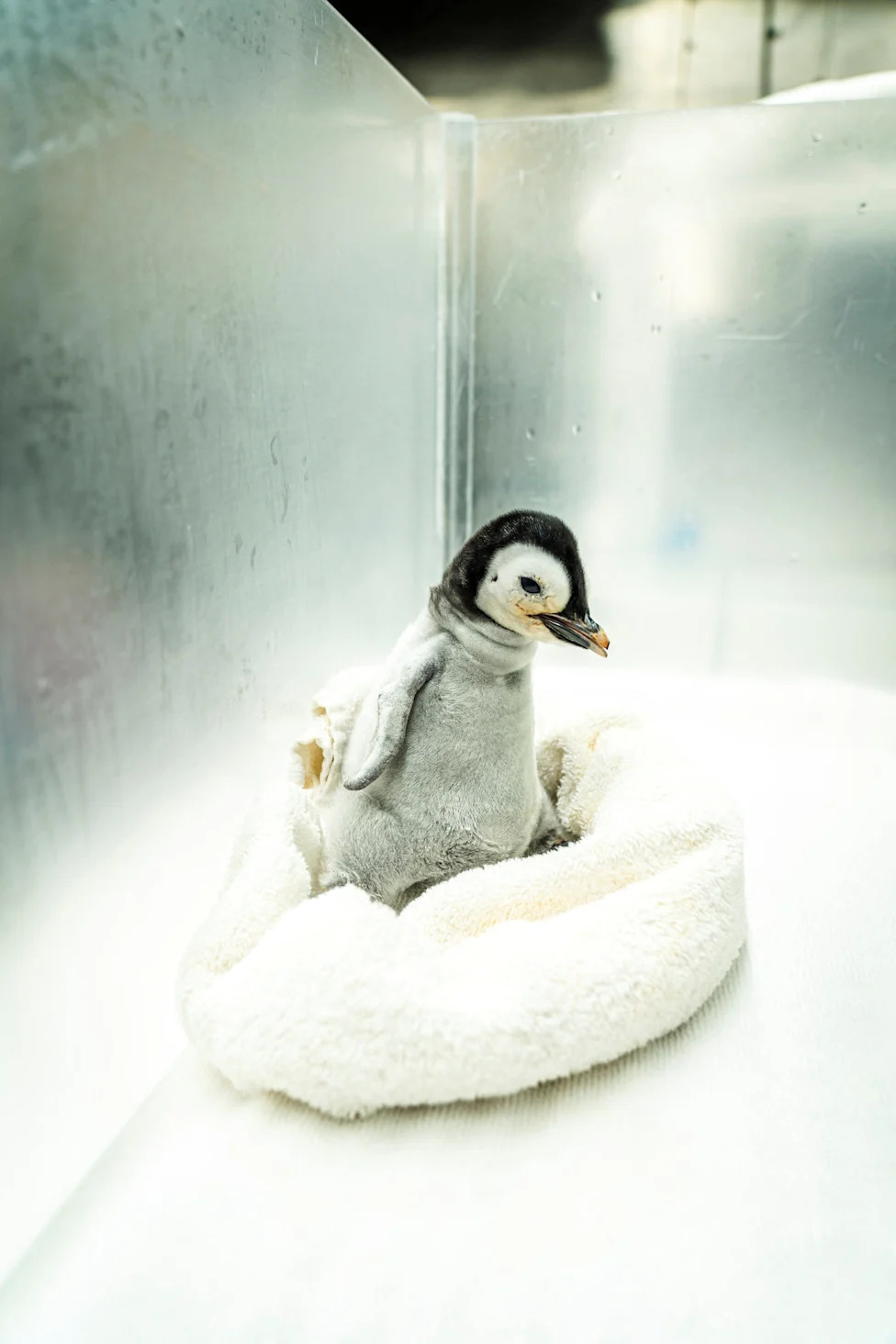
A new emperor penguin chick rests in a blanket at SeaWorld in San Diego, Calif., in this handout image released to Reuters on Oct. 25, 2023.(KYLE WILLIAMS/SEAWORLD SAN DIEGO, via REUTERS)
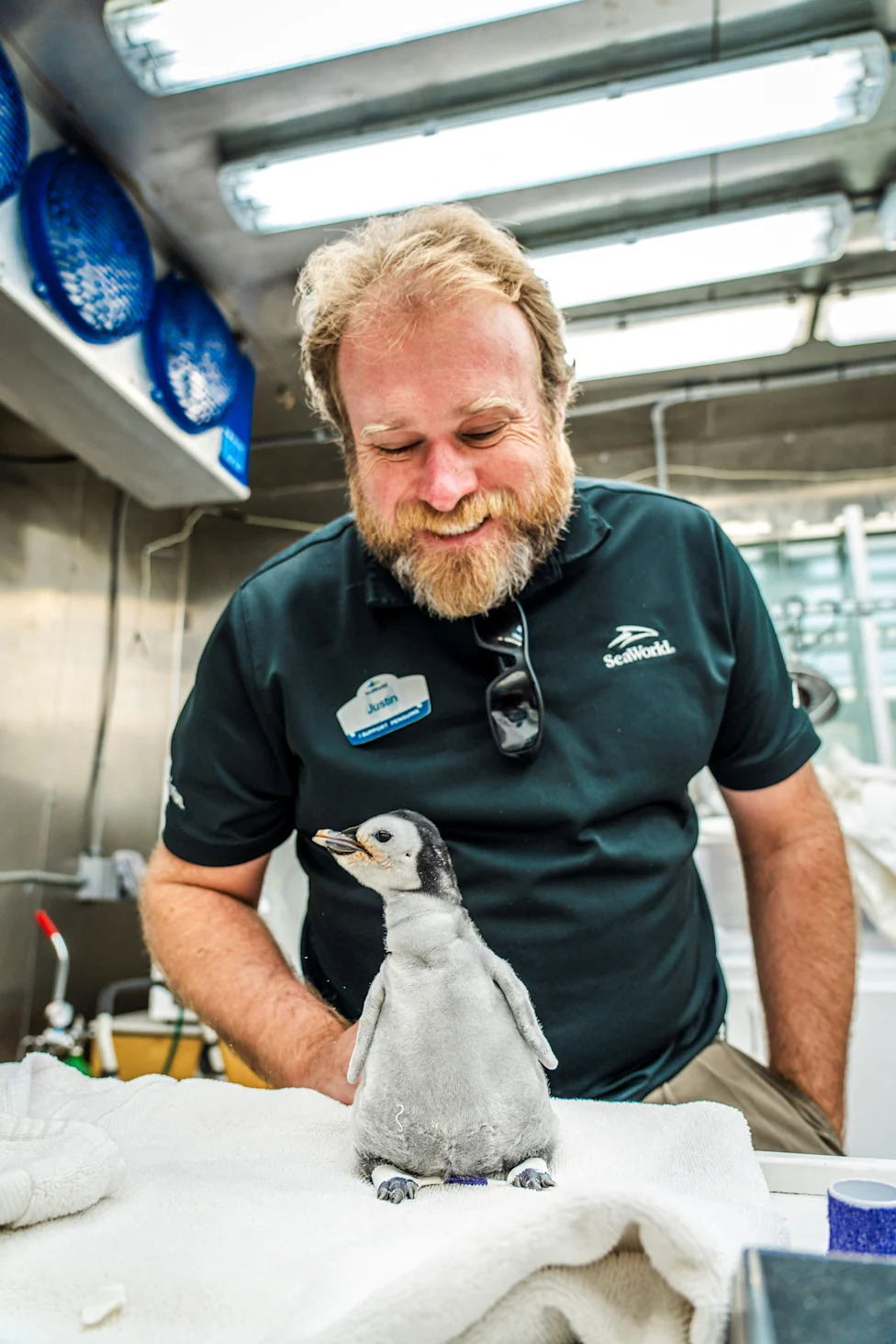
A new emperor penguin chick is observed by a SeaWorld employee in San Diego, Calif. in this handout image released to Reuters on Oct. 25, 2023.(KYLE WILLIAMS/SEAWORLD SAN DIEGO, via REUTERS)
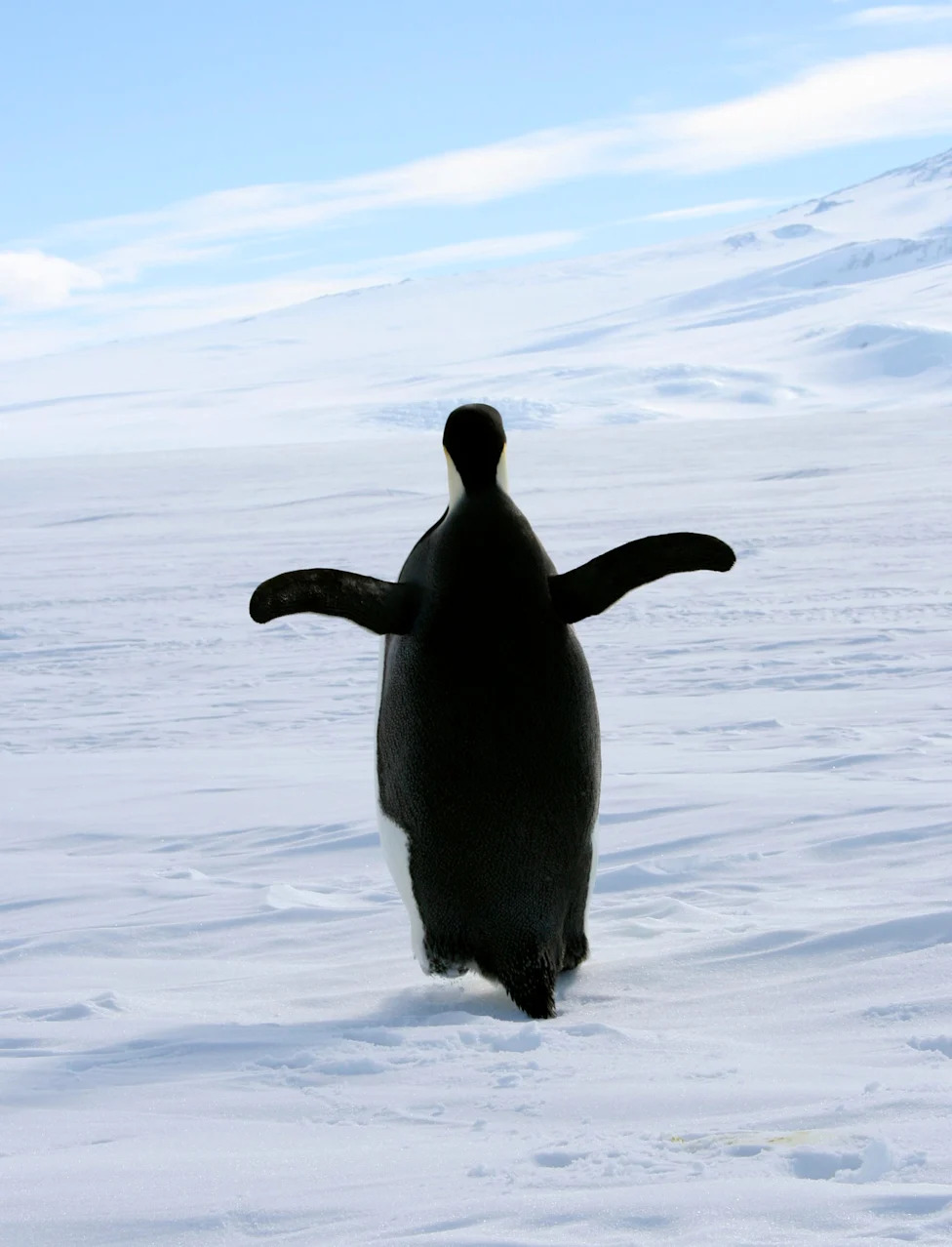
An Emperor penguin waddles along sea ice off the Antarctic coast off Ross Island on Dec.9, 2006.(REUTERS)
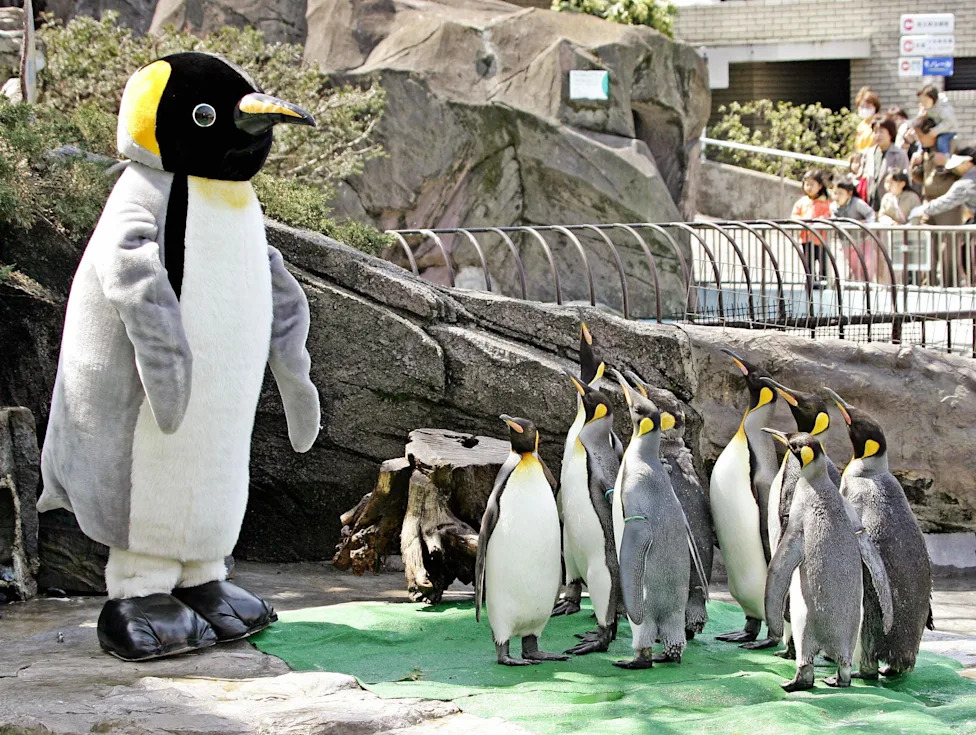
Emperor penguins give attention to a person in costume at the penguin cage of Tokyo's Ueno Zoo on April 1, 2005 for the annual April Fool event to display a human being at the zoo.(YOSHIKAZU TSUNO, AFP via Getty Images)
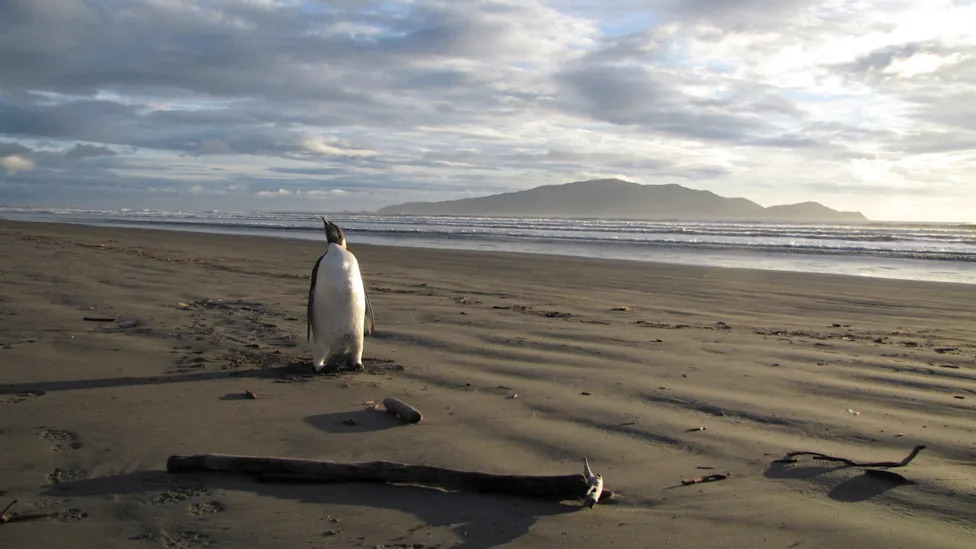
An Emperor Penguin stands on a beach on Kapiti coast June 20, 2011. The bird's arrival, the second ever recorded according to New Zealand's Department of Conservation, has caught the public's attention as Emperor Penguins usually live in Antarctica, more than 1,864 miles away.(Ho New, REUTERS)
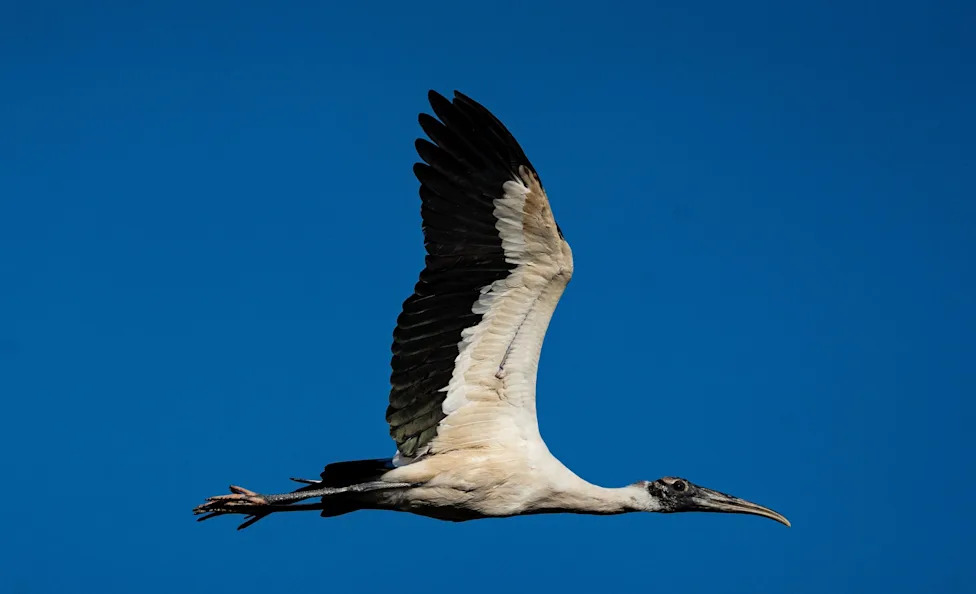
A wood storks soars over the Corkscrew Swamp area on Dec. 4, 2024.(Andrew West/The News-Press/USA Today Network)
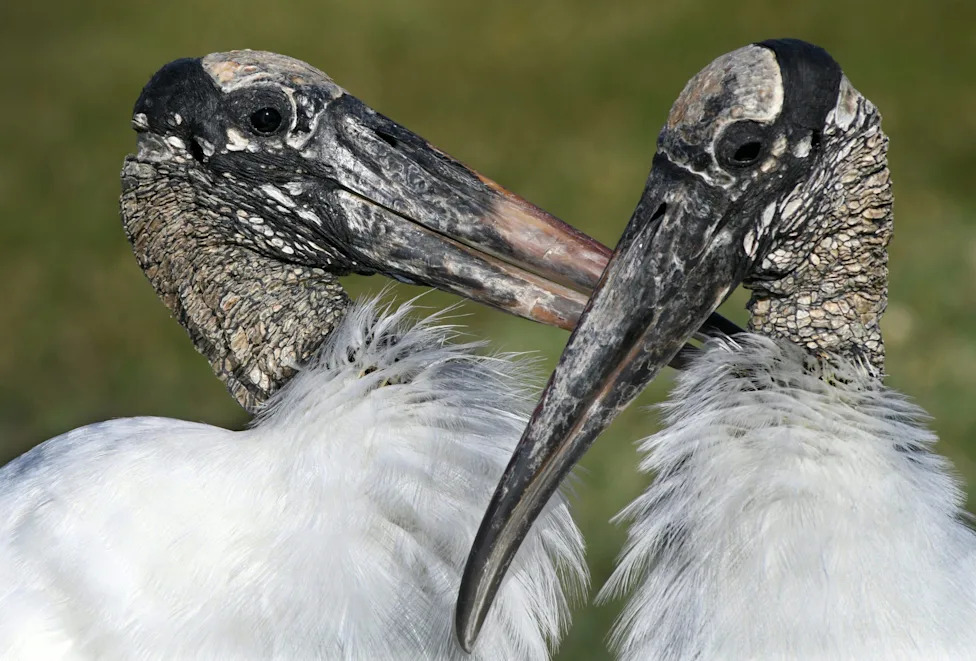
A couple of wood storks on a sunny afternoon at Ballard Park in Melbourne, Florida(Tim Shortt/Florida Today/USA TODAY Network)
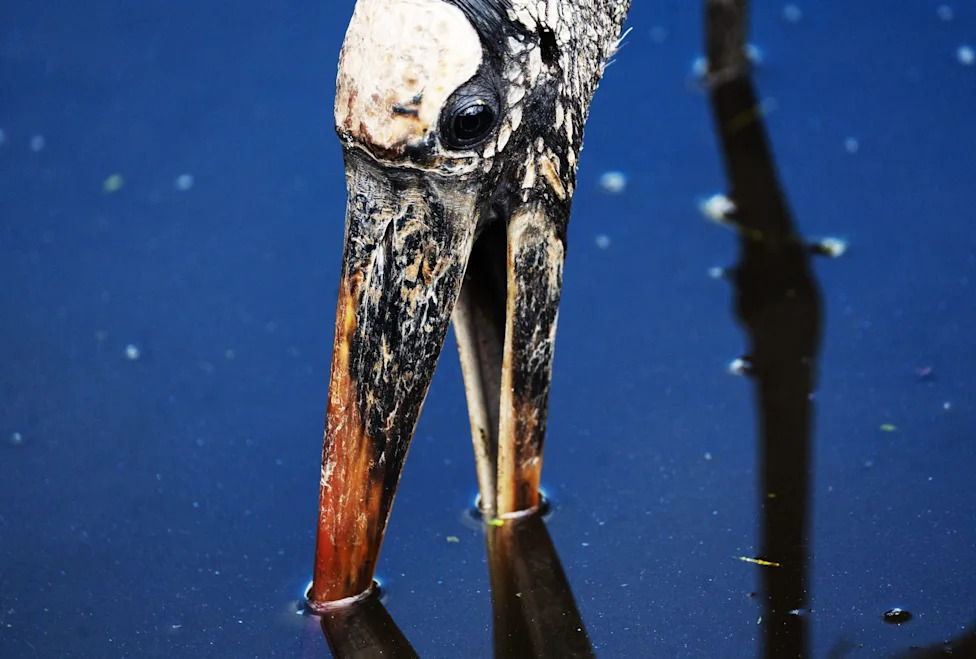
A wood stork feeds in a waterway at Hibiscus Golf Club in Naples on Monday, Oct. 6, 2025.(Andrew West/The News-Press/USA Today Network,)
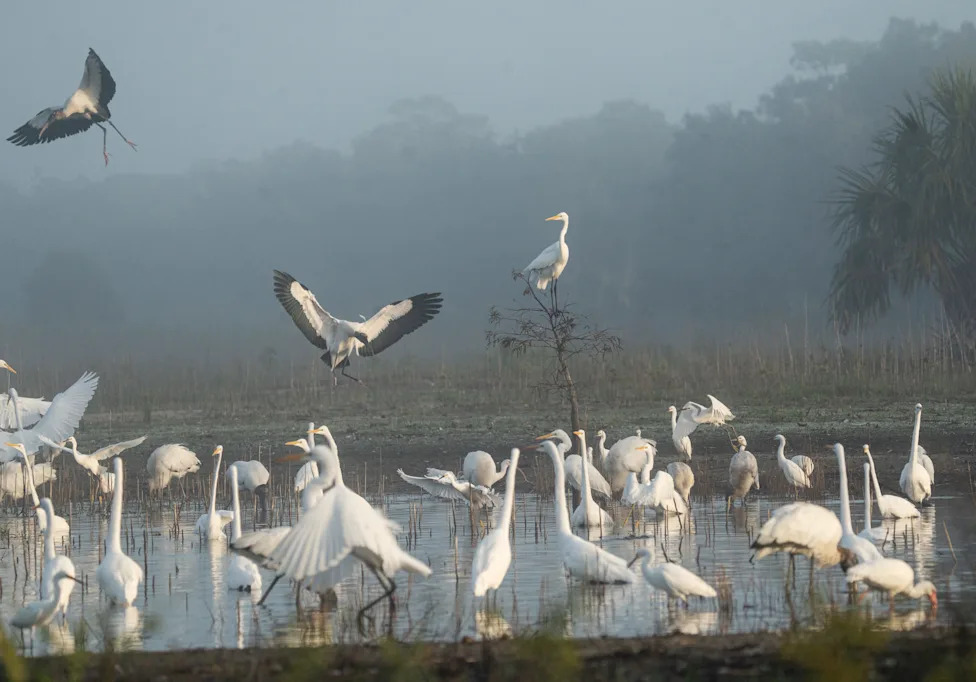
Wood storks, great egrets and other birds congregate in a drying marsh off of Corkscrew Road on Thursday, Nov. 20, 2025.(Andrew West/The News-Press & Naples Daily News/USA Today Network-Florida)
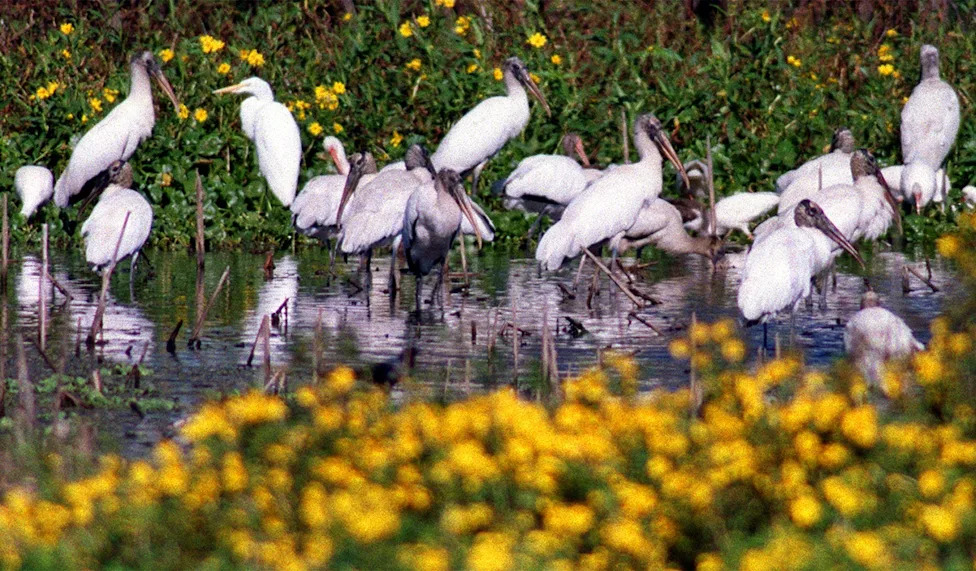
Wood storks are seen feeding on fish stranded by rapidly dropping water levels at Paynes Prairie State Preserve near Gainesville, Florida, surrounded by marsh marigolds.(John Moran, The Gainesville Sun)
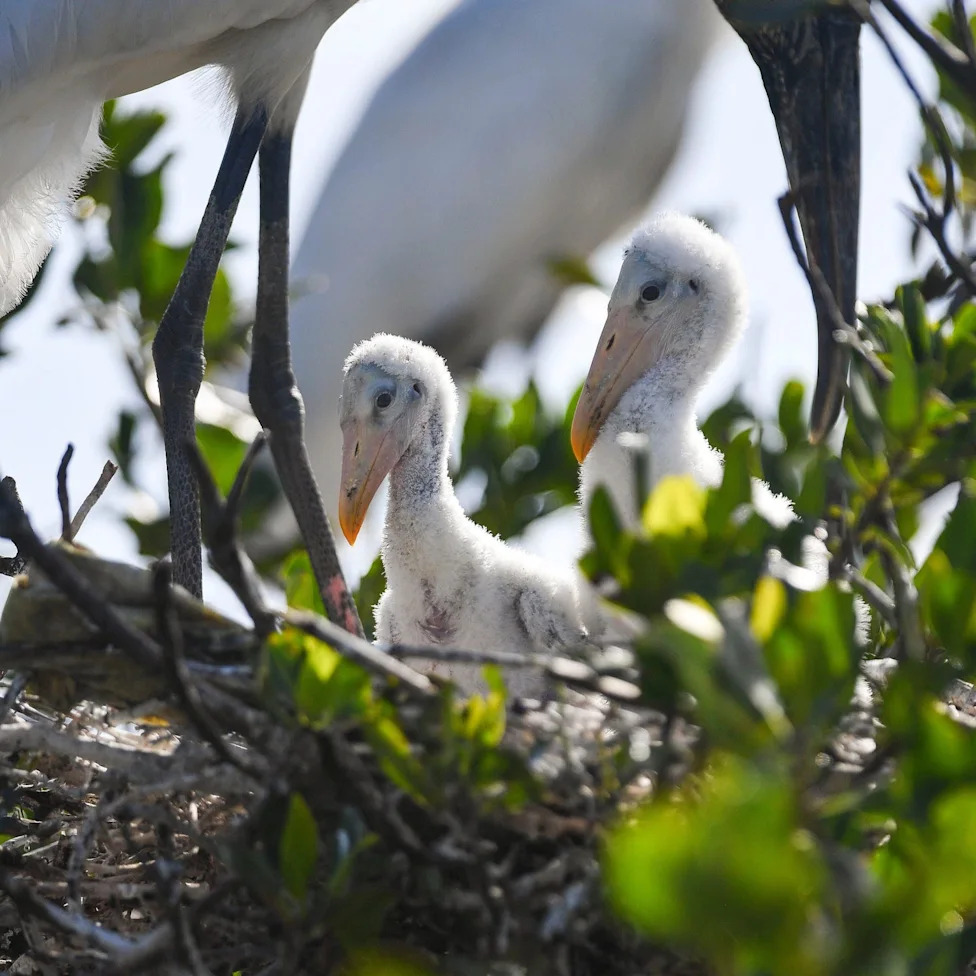
Wood stork chicks are seen in the nest on a protected island in the Indian River Lagoon near Sewall's Point, Florida in April 2023, during a bird count by Florida Fish and Wildlife Conservation Commission biologists.(Crystal Vander Weit/TCPalm/ USA TODAY NETWORK)
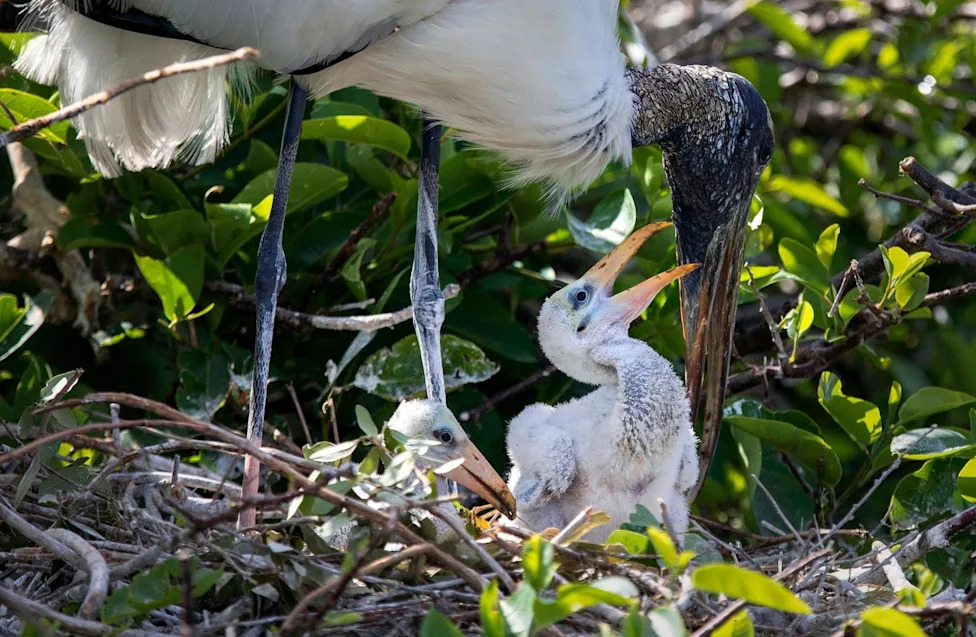
A wood stork nestling squawks in its nest at the Wakodahatchee Wetlands in Delray Beach, Florida on April 9, 2021. The baby birds create quite a racket while nesting, compared to their normally silent parents.(Lannis Waters / USA TODAY Network)
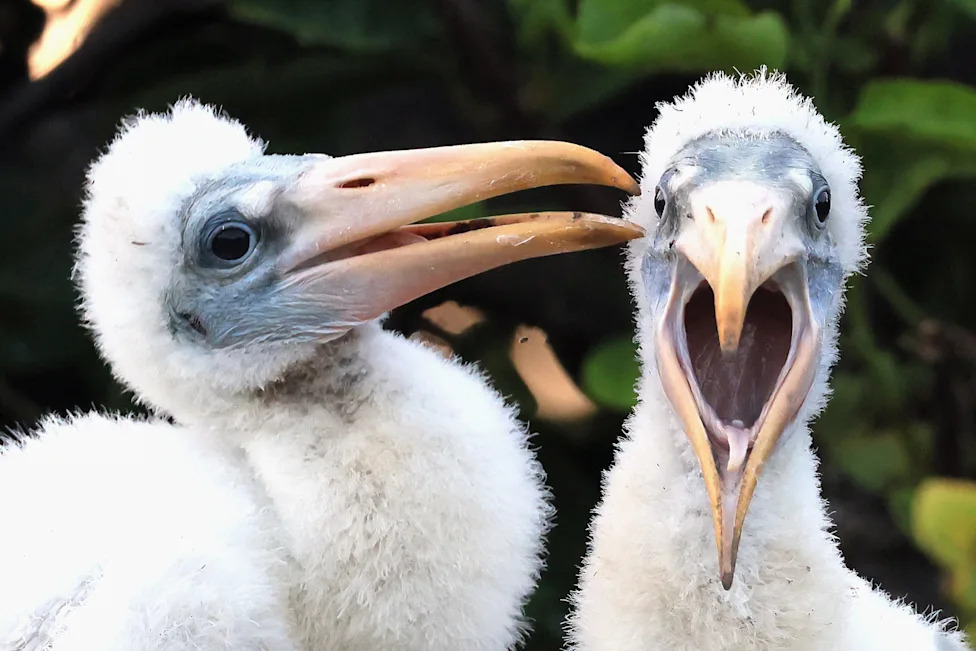
Two juvenile wood storks sport still yellow beaks at the Wakodahatchee Wetlands in Delray Beach, Florida in May 2025..(Bruce Bennett, Getty Images)
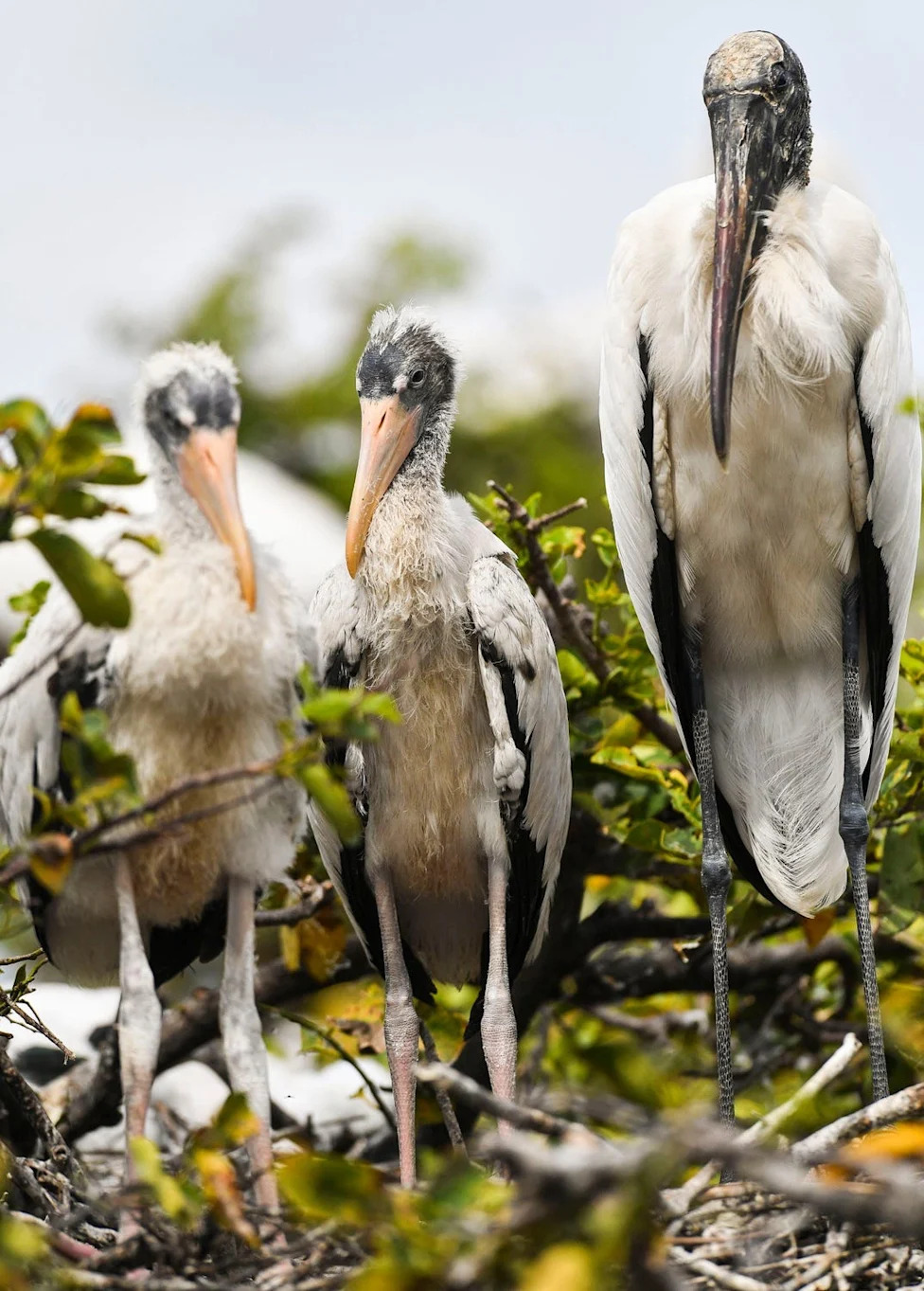
Wood storks at the Wakodahatchee Wetlands just west of Delray Beach in May 2023.(Crystal Vander Weit/TC Palm / USA TODAY Network)
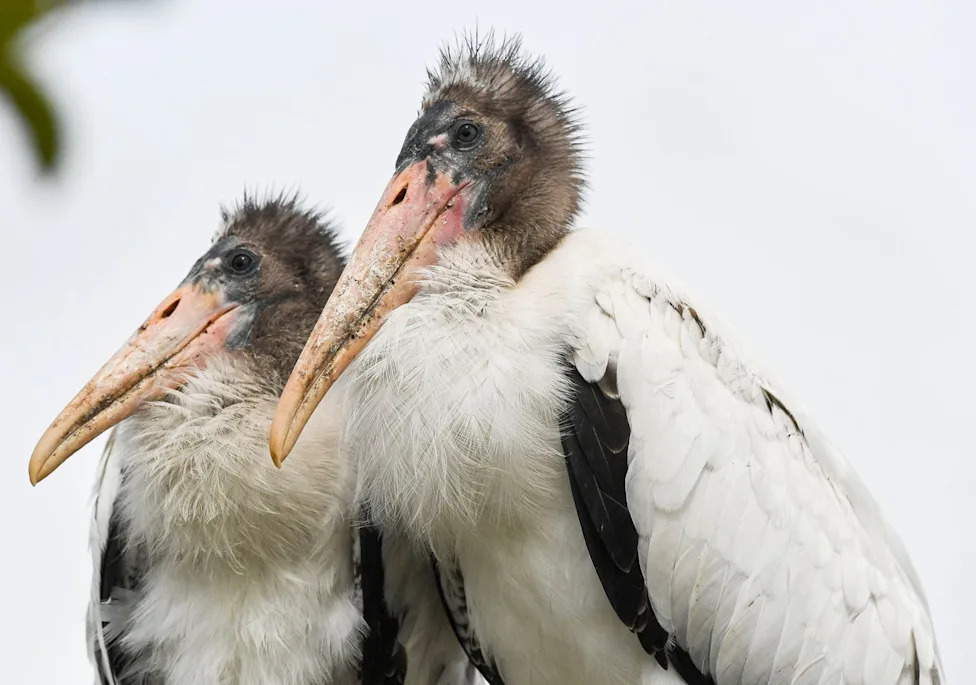
Young wood storks at the Wakodahatchee Wetlands just west of Delray Beach in May 2023.(Crystal Vander Weit/TCPALM / USA TODAY Network)
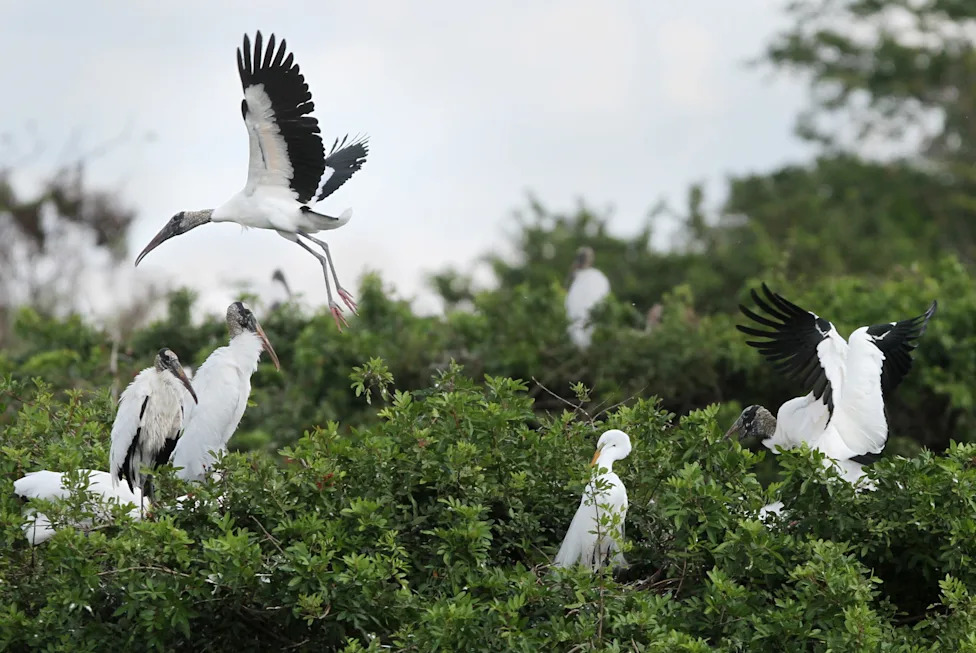
A wood stork lands on a nest on Lake Somerset, in Lakeland, Florida on Feb. 22, 2013.(Rick Runion | The Ledger)
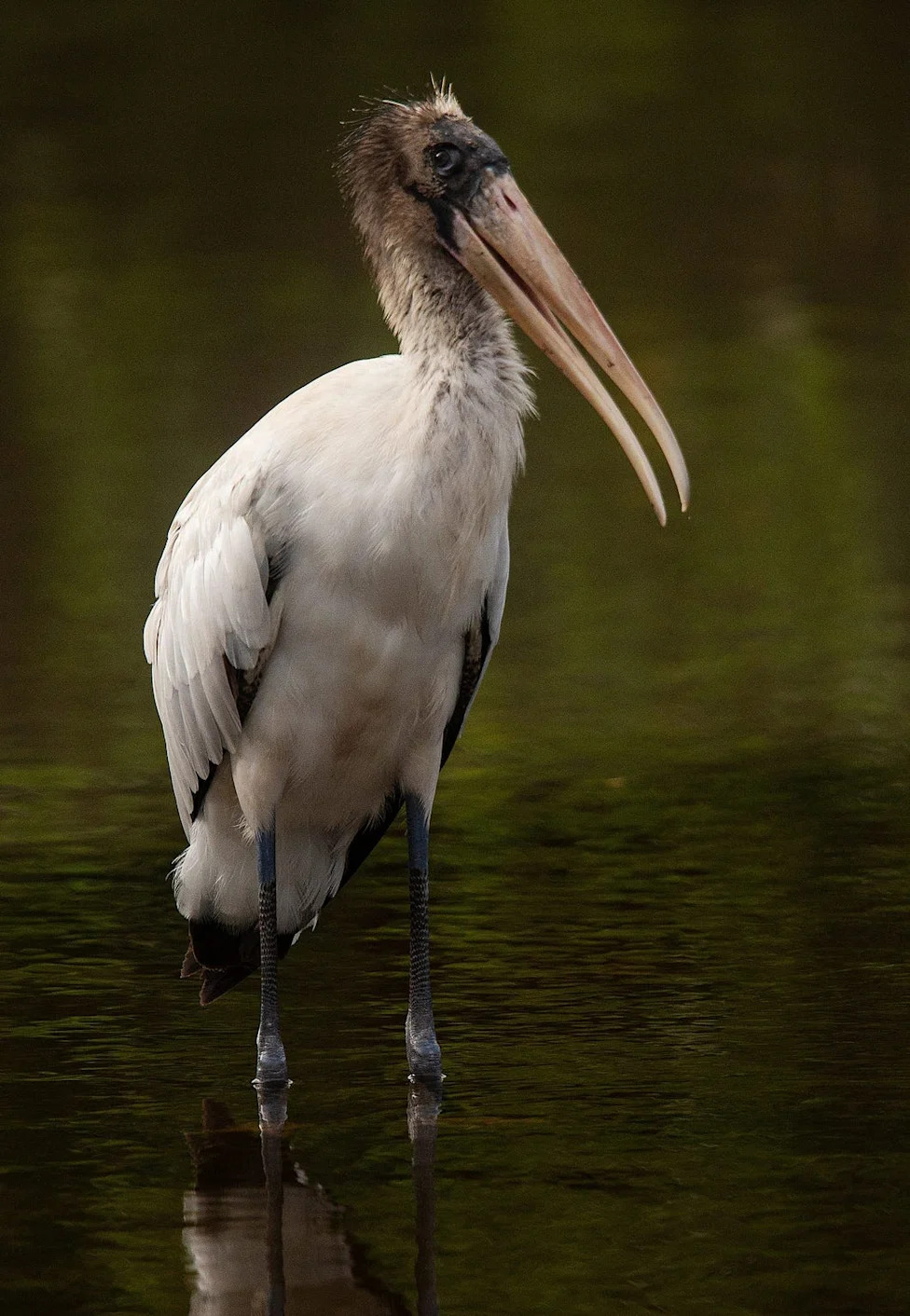
A wood stork hangs out in a waterway at Bunche Beach in Lee County on Nov. 13, 2023.(Andrew West/The News-Press / USA TODAY Network)
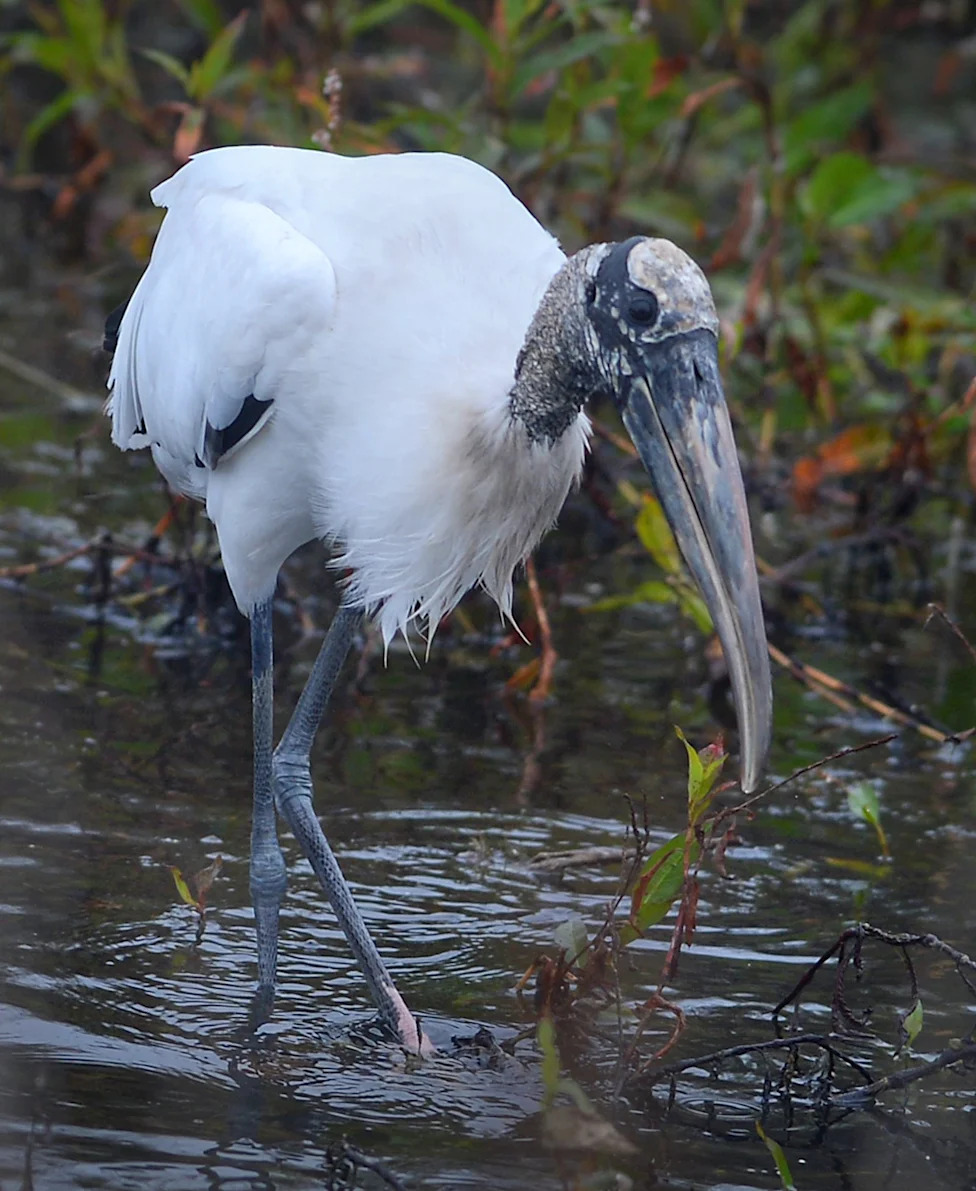
A wood stork forages at the Celery Fields, a stop on the Great Florida Birding Trail, in Sarasota, Florida on Nov. 15, 2012 on Thursday.(Dan Wagner, Sarasota Herald-Tribune)
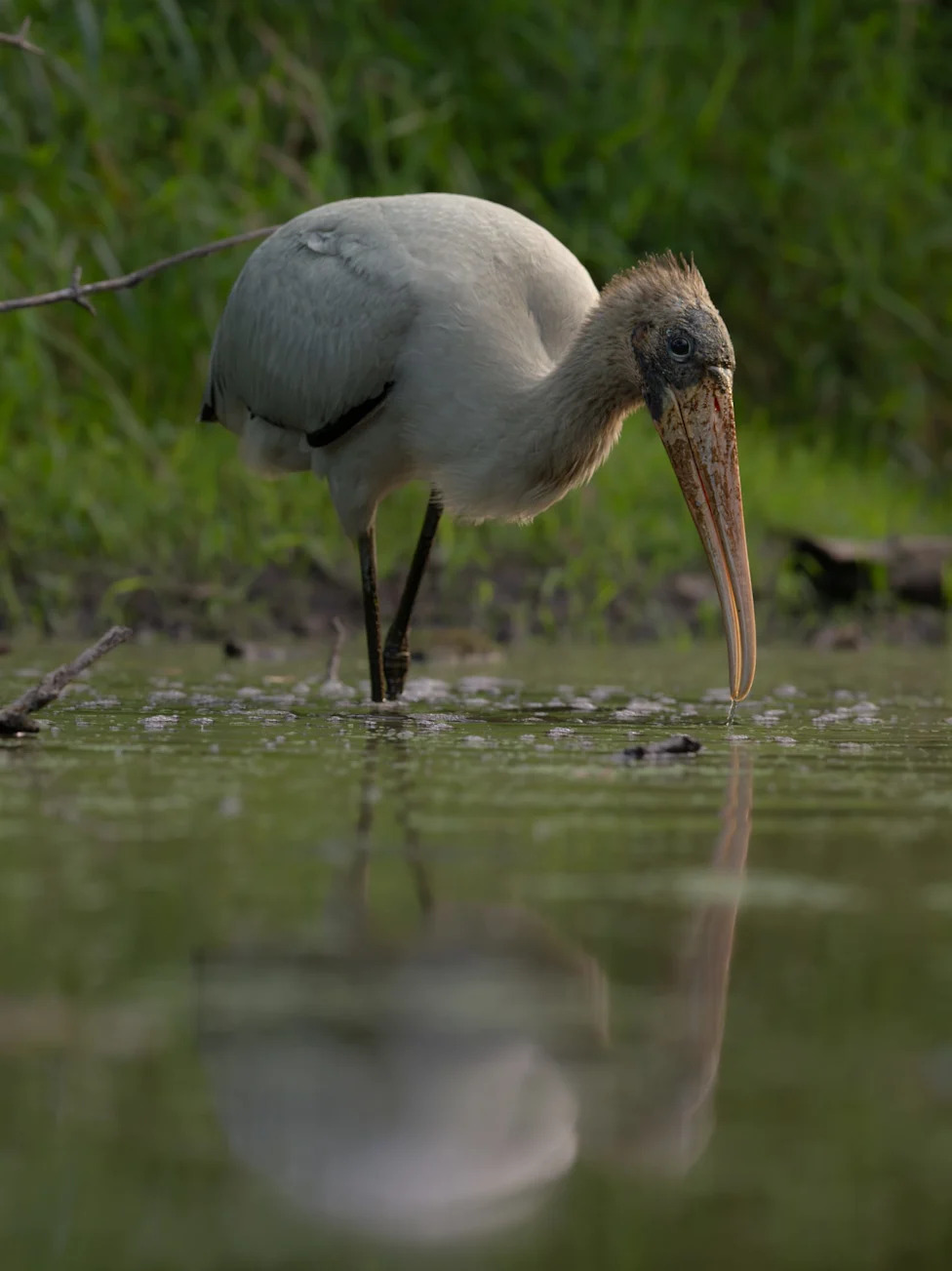
A wood stork forages in shallow water in a rare Wisconsin sighting on Aug. 11, 2025 at Mud Lake State Wildlife Area near Watertown.(Josiah Santiago)
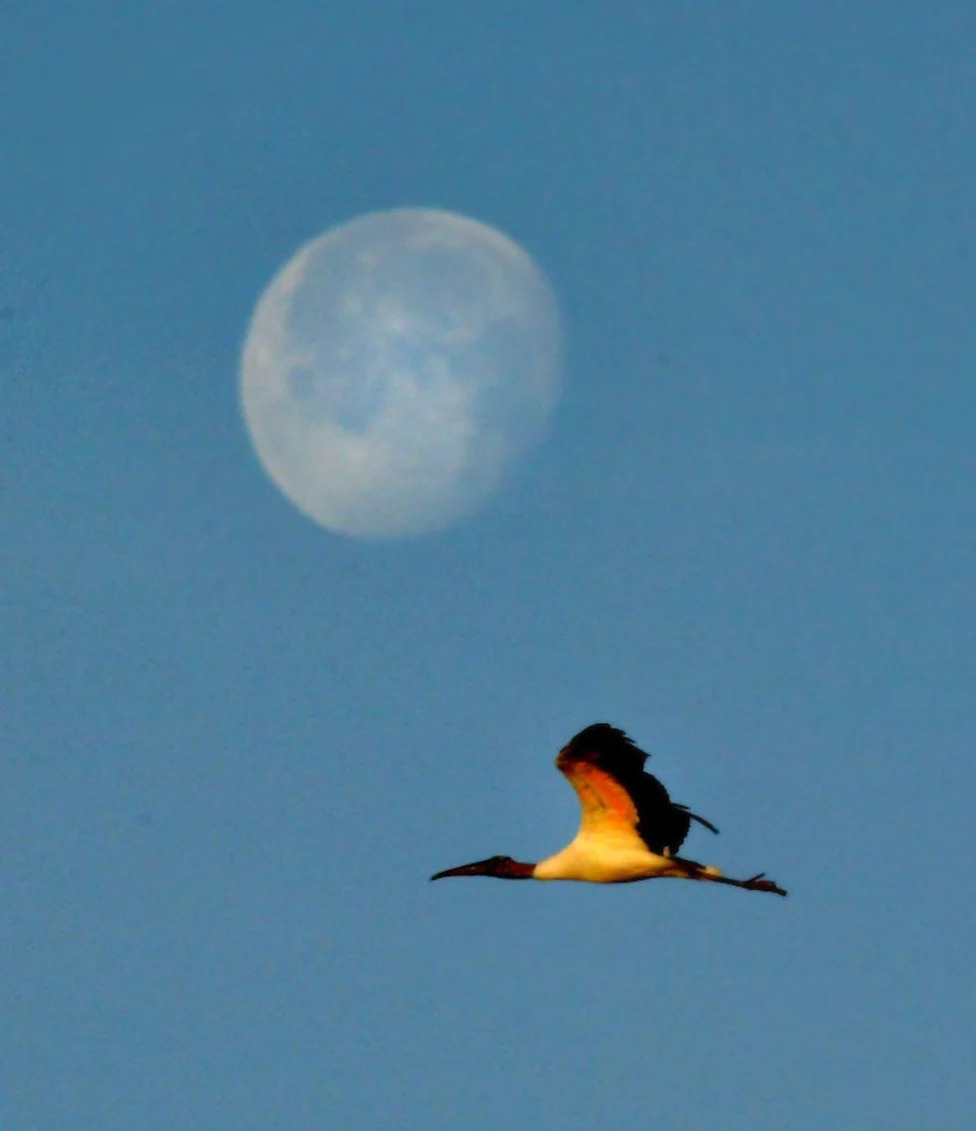
A wood stork glides as the sun sets over Florida's Tomoka Basin near Ormond Beach.(Jim Tiller)
Help us improve.