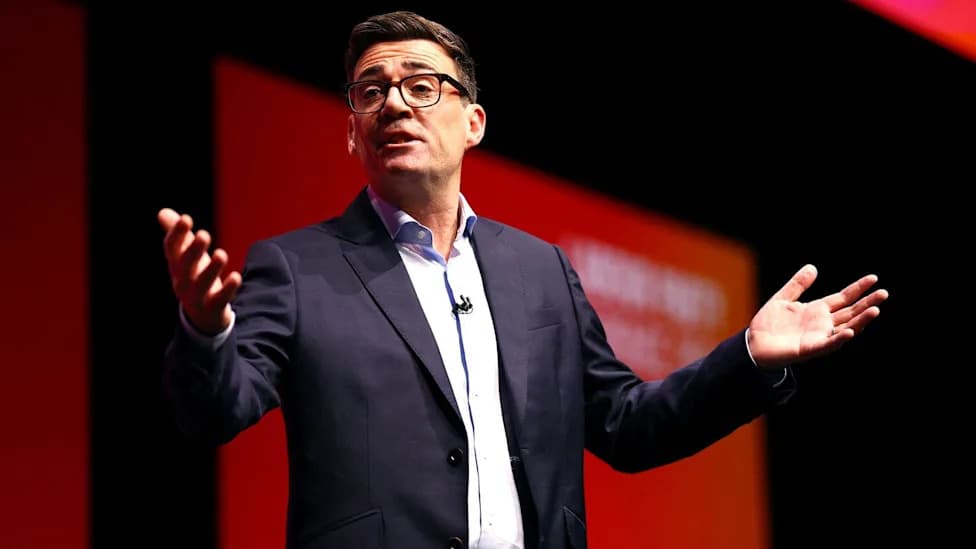
Prime Minister Andy Burnham has proposed allowing English city-region mayors and strategic authorities to retain a share of income tax and some business rates as part of a major devolution drive. Metro mayors are expected to keep business rates from April 2027 and a portion of income tax from April 2028, while headline tax rates would remain unchanged. Critics say the plans lack detail and risk creating regional inequalities; ministers say an equalisation system and full details will accompany the autumn budget.
Burnham Unveils Major Devolution Plan: Mayors To Keep Share Of Income Tax And Business Rates
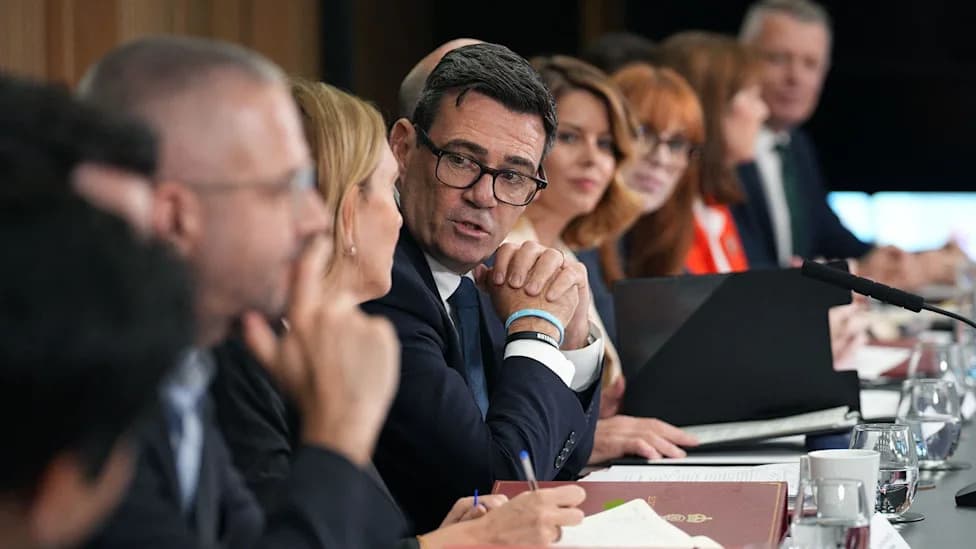
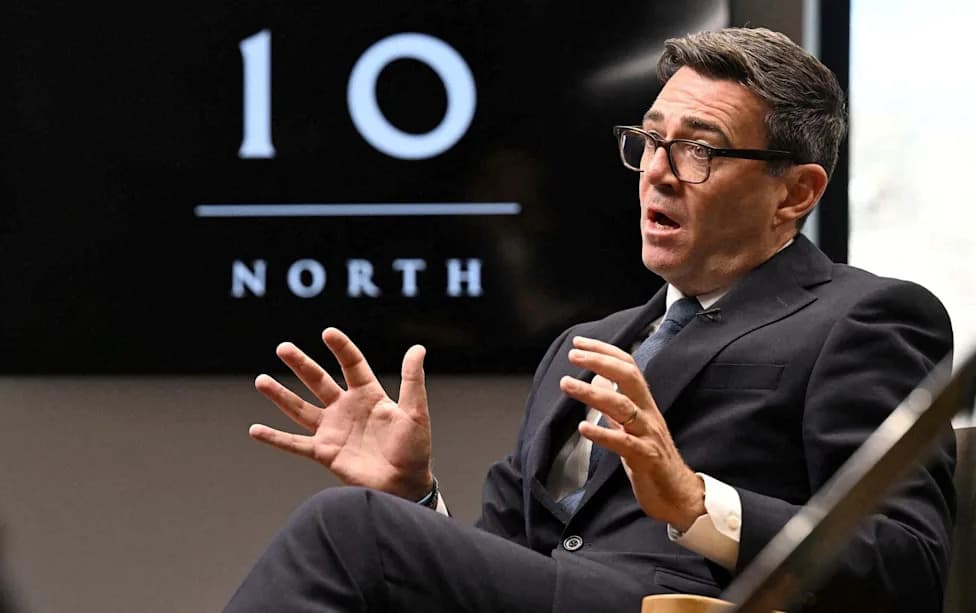
Burnham held his first meeting at No 10 North in Manchester last week [Christopher Furlong / Pool via AFP]
Prime Minister Andy Burnham has announced a significant devolution package that would allow city-region mayors and strategic authorities in England to retain a share of income tax revenue and keep a portion of locally collected business rates. The move is presented as a core part of his pledge to shift power away from Westminster and give local leaders greater control over services including housing, transport and skills.
What the Plan Proposes
Under the proposals, strategic authorities will be able to retain some business rates raised in their areas and receive a share of income tax revenue. The government has not yet fixed the exact share to be devolved; further detail will be published alongside Chancellor John Healey's first autumn budget.
Timeline
Officials say metro mayors are expected to begin retaining some business rates from April 2027, and to receive a portion of income tax from April 2028. The headline income tax rates (for example the 20% basic rate on earnings from £12,571 to £50,270) will not change under the proposals.
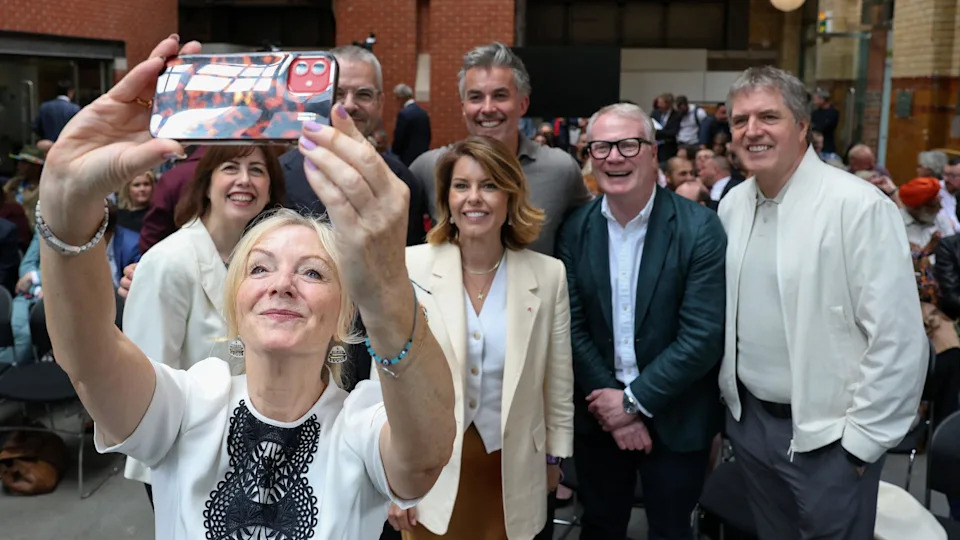
Labour mayors, including Tracy Brabin - pictured here taking a selfie - have welcomed the devolution of tax revenues [Reuters]
How Powers Will Be Exercised
Devolution will not be limited to areas with directly elected mayors. New "strategic authorities"—bodies that bring together multiple local councils to make collective decisions on regional issues—can exercise devolved powers. For example, the Lancashire strategic authority will include Blackburn with Darwen, Blackpool and Lancashire County Council areas even though that area does not have a single elected mayor.
Reactions And Concerns
"More of the taxes raised in a community will stay in that community," Prime Minister Burnham said, framing the plan as a way to reward local economic growth.
Responses have been mixed. Some Labour metro mayors welcomed the change as a way to reinvest local growth into local services. Opponents across several parties warned the plan lacks detail and could create regional inequities. Critics say areas with weaker economies, or places without mayors, risk losing out unless a robust equalisation system is put in place.
Labour backbencher Perran Moon warned of a possible "two-tier system" for areas without mayors. Conservative shadow chancellor Sir Mel Stride said the package is "short on detail" and contains "no new money". Tees Valley Mayor Ben (Lord) Houchen called the move a "tax grab" and said he would prefer tax cuts or local rebates—an approach ministers say would not be allowed under the current proposals.
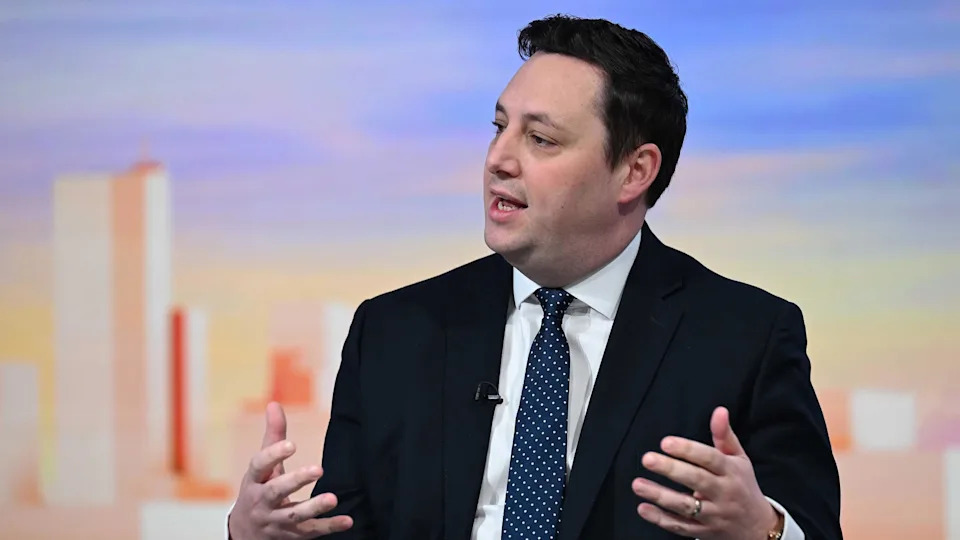
Conservative Tees Valley Mayor Lord Houchen has branded the plans a 'tax grab' [BBC]
Design Challenges And Context
Officials are still working through the mechanics, including how to compensate areas that raise less tax. One think tank, Re:State, has floated a proposal to allocate mayors 2.5p of every pound raised by the 20p basic rate of income tax in their areas. Treasury sources say some mayors could have more money if they expand their local tax base, but the detailed equalisation and distribution formulae remain under development.
The plan also comes against the backdrop of a highly centralised UK tax system. According to the OECD, only 5.8% of national taxes in the UK are raised at the local level—the lowest share in the G7. By comparison, subnational shares are much higher in countries such as France (20.4%), Japan (36%) and the United States (45.7%).
Next Steps
Downing Street's Manchester-based team, dubbed No 10 North, is developing a "local first" test that will require ministers to justify why powers should remain at Whitehall rather than be devolved. Full policy details and any equalisation measures are expected to be published alongside the Chancellor's autumn budget.
While the announcement marks a high-profile step in Burnham's plan to rebalance power across the country, many of the practical questions about funding formulas, safeguards for less prosperous areas and the precise scope of devolved responsibilities remain to be answered.
Help us improve.