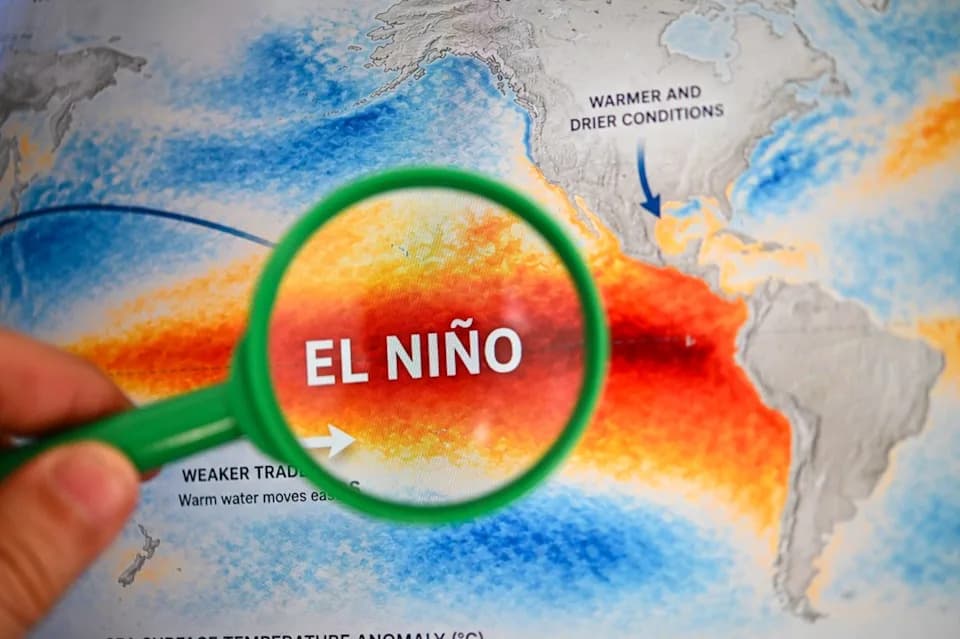
NOAA issued an El Niño advisory on June 11 after persistent above-average Pacific temperatures and now estimates an 81% chance the event could become "very strong". Forecasters warn it could rival the damaging 1982–83 and 1997–98 events, likely peaking this winter and continuing into 2027. Impacts may include increased heat, heavier rainfall and floods in some areas, drought in others, and shifts in hurricane activity — but uncertainties remain.
A ‘Super’ El Niño Is Brewing: NOAA Warns Of A Possible Very Strong Event
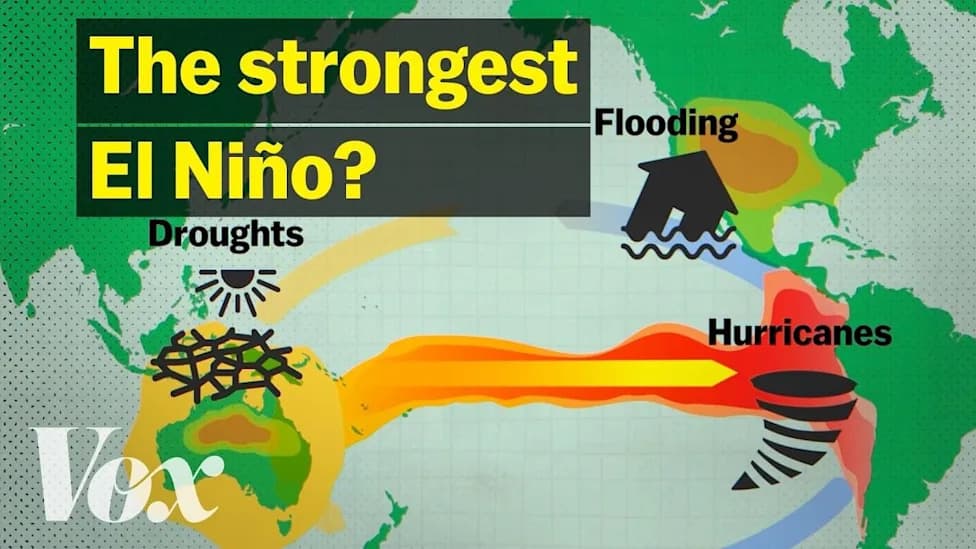
Image of Vox video depicting "The strongest El Nino" with graphics of drought, hurricanes and flooding.
On June 11, the National Oceanic and Atmospheric Administration (NOAA) issued an El Niño advisory after sea-surface temperatures in the equatorial Pacific remained above average for several months. While El Niño events recur every two to seven years, forecasters warn this episode could become unusually powerful — a so-called “super” or “Godzilla” El Niño.
How This El Niño Could Unfold
NOAA currently gives an 81% chance that the event will intensify to a "very strong" level, potentially rivaling the historic 1982–83 and 1997–98 El Niños. Models suggest the event will likely peak this coming winter and persist into 2027, but exact timing and regional impacts will depend on how ocean and atmospheric patterns evolve.
Why El Niño Changes Global Weather
El Niño alters atmospheric circulation by warming the central and eastern tropical Pacific Ocean. That shift rearranges jet streams and storm tracks worldwide. Typical consequences include amplified heat and heavy rainfall in parts of the Americas, heightened flood risk in some regions, and drought in areas such as Australia and parts of Southeast Asia. In addition, El Niño often suppresses Atlantic hurricane activity (due to increased wind shear) while enhancing tropical cyclone activity in the central and eastern Pacific.
What Communities Should Expect
Expect a mixture of hazards rather than a single outcome: hotter global temperatures, heavier winter precipitation in some regions, intensified droughts elsewhere, and disruptions to agriculture, water supplies, and ecosystems. Local impacts will vary, so communities should monitor regional forecasts and advisories from national meteorological services.
Uncertainty And Monitoring
Climate models provide useful guidance but cannot predict every local consequence. Scientists emphasize uncertainty in the magnitude and precise timing of impacts; ongoing observations and seasonal forecasts will refine expectations as the event develops.
Resources
For official updates and detailed outlooks, follow NOAA's Climate Prediction Center and the World Meteorological Organization. Additional reporting and analysis are available from major outlets and scientific briefings.
Relevant links: NOAA El Niño/La Niña | NOAA Climate Prediction Center | WMO Seasonal Outlook
Help us improve.