NASA's Curiosity rover produced a 340-image panorama (June 19–20, 2026) of Valle Grande in Gale Crater, revealing a dense field of polygonal fractures—1.5–3 inches (4–8 cm) across—wrapping a 20-foot sand-capped butte named Miraflores. Scientists are testing two formation hypotheses: desiccation (mud) cracks from repeated wet–dry cycles, or fractures caused by burial and compaction. Chemical analysis is underway to distinguish these scenarios. Earlier in 2026 Curiosity also found 20+ organic molecules nearby, indicating ancient, potentially life-supporting chemistry (but not evidence of life).
Curiosity’s 340-Image Panorama Reveals Honeycomb Fractures That Could Unlock Mars’s Watery Past
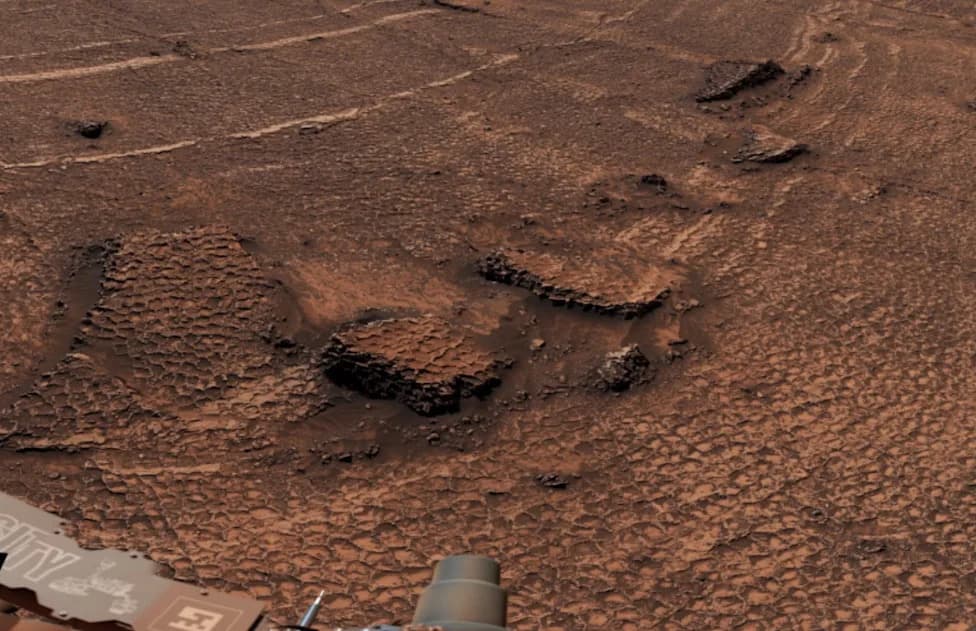
Image: NASA/JPL-Caltech/MSSS
NASA's Curiosity rover stitched a 340-image panorama on June 19–20, 2026, of a valley called Valle Grande inside Gale Crater and discovered an unexpectedly dense field of polygonal fractures. The small, honeycomb-like cracks—each about 1.5 to 3 inches (4–8 cm) across—stretch as far as Curiosity's Mast Camera can see and wrap around a 20-foot sand-capped butte named Miraflores.
What the Images Show
The mosaic captures dozens of tightly packed polygons tiling the ground like a geological mosaic. This is the densest concentration of such features that Curiosity has documented in a single location. Team scientists have measured the fractures’ shapes and are studying their chemistry to determine how they formed.
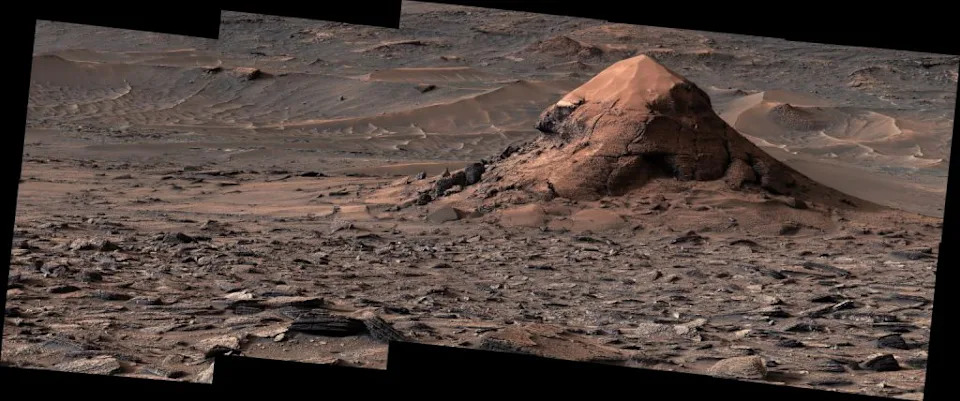
Image: NASA/JPL-Caltech/MSSS
“It took our breath away,” said NASA scientist Ashwin Vasavada.
Two Leading Formation Hypotheses
Researchers are weighing two main explanations:
- Mud-Crack Hypothesis: The polygons are desiccation cracks left behind when wet sediment repeatedly dried and contracted—similar to patterns found on modern lakebeds that dry out.
- Burial-and-Compaction Hypothesis: The fractures formed as overlying material compressed water-rich sediment, squeezing out fluids and causing the rock to crack as pressure conditions changed.
No single mechanism has been confirmed yet; that uncertainty is central to the investigation.
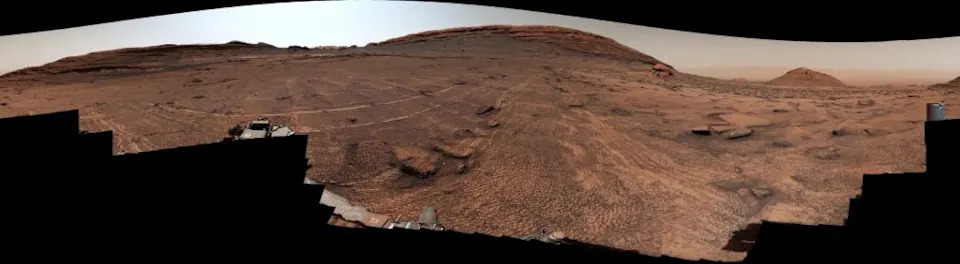
Image: NASA/JPL-Caltech/MSSS
Why This Matters
Polygonal terrain can preserve key information about the environmental conditions present when the features formed. If scientists can decode the mineralogy and geochemistry preserved in and around the fractures, they may be able to determine whether Valle Grande was once a lakebed, a stream-fed plain, or simply buried wet sediment. That reconstruction would improve our understanding of Mars’s ancient climate and hydrology.
Earlier in 2026, Curiosity also detected more than 20 organic molecules in nearby clay-rich sandstones. Those molecules do not constitute evidence of past life, but they do indicate that ancient Mars hosted chemical conditions potentially favorable to life.
The rover's analysis of the honeycomb fractures is ongoing. The formation story remains an open case, and researchers expect further data—especially compositional measurements of fracture fills and adjacent rocks—to clarify which scenario is most likely.
Image credit: NASA/JPL-Caltech/MSSS
Help us improve.