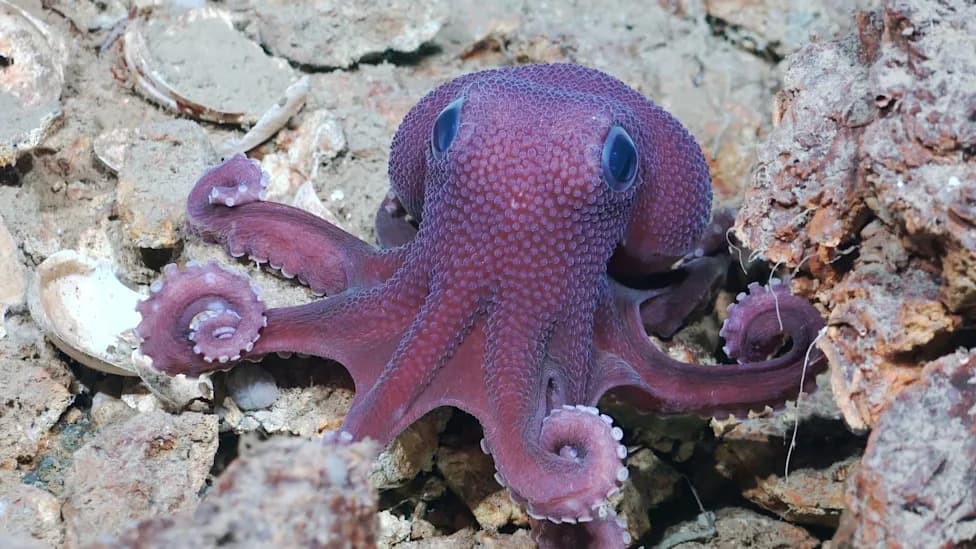
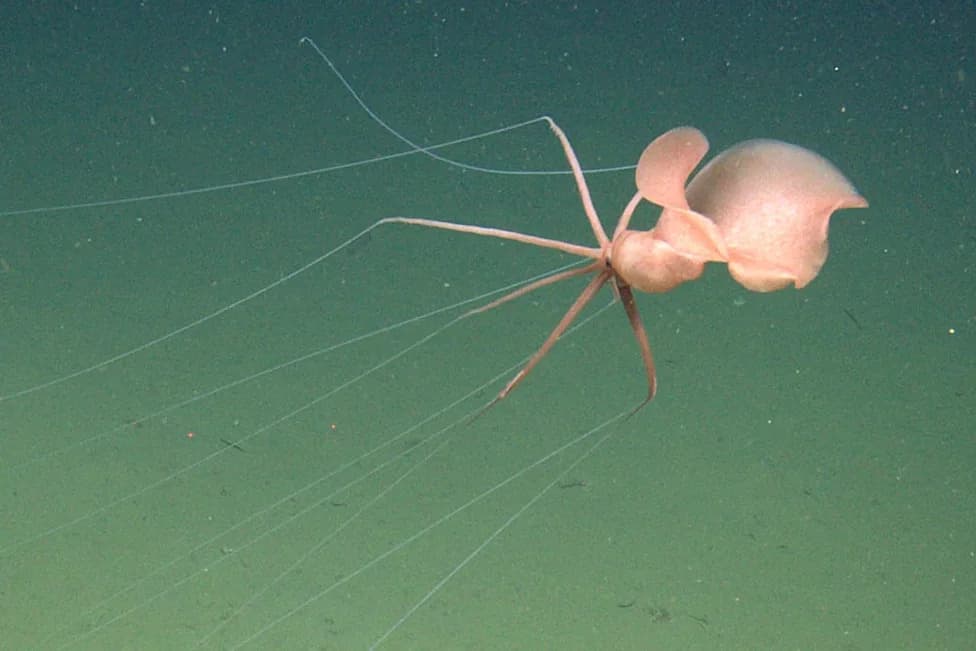
The Schmidt Ocean Institute filmed a coral-colored flapjack octopus (genus Opisthoteuthis) off Trinidad and Tobago at a depth of 3,412 feet (about 1,040 meters). The cirrate octopus used small, ear-like fins to hover and flattened into a pancake-like shape as it moved near the seafloor. The footage was captured during the first detailed deep-sea study of the islands led by Dr. Diva Amon and a largely Trinbagonian team. Experts say adults can reach about 20 inches and feed on small worms and crustaceans.
Rare 'Flapjack' Octopus Filmed 3,412 ft Deep Off Trinidad and Tobago
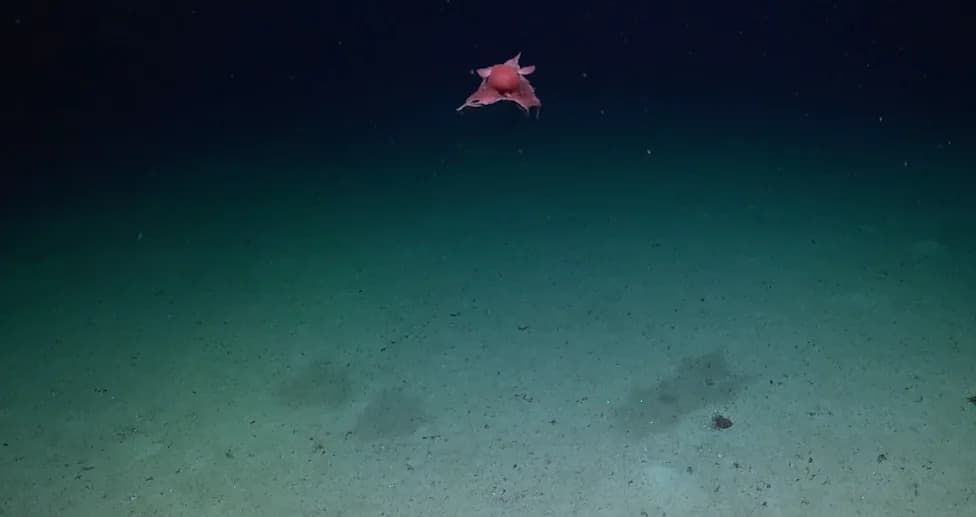
The flapjack octopus swimming toward the robotic submersible led by Schmidt Ocean Institute research teams.
Researchers with the Schmidt Ocean Institute captured striking footage of a coral-colored flapjack octopus (genus Opisthoteuthis) during an expedition off the coast of Trinidad and Tobago. The animal was recorded hovering just above the seabed at a depth of 3,412 feet (about 1,040 meters), approaching a robotic submersible operated by the research team.
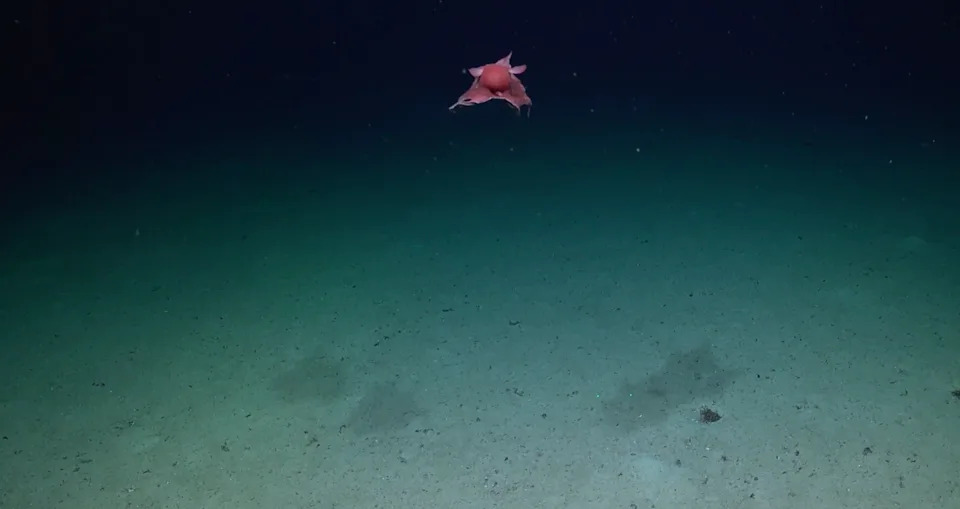
The flapjack octopus swimming toward the robotic submersible led by Schmidt Ocean Institute research teams.
Opisthoteuthis species—commonly called flapjack octopuses—are cirrate octopuses with flexible, umbrella-shaped bodies. When they settle on the seafloor their bodies often flatten into a pancake-like profile, which gives them their nickname. They use small, fin-like flaps on either side of the head—sometimes described as "elephant ear" fins—to steer and hover through deep water.
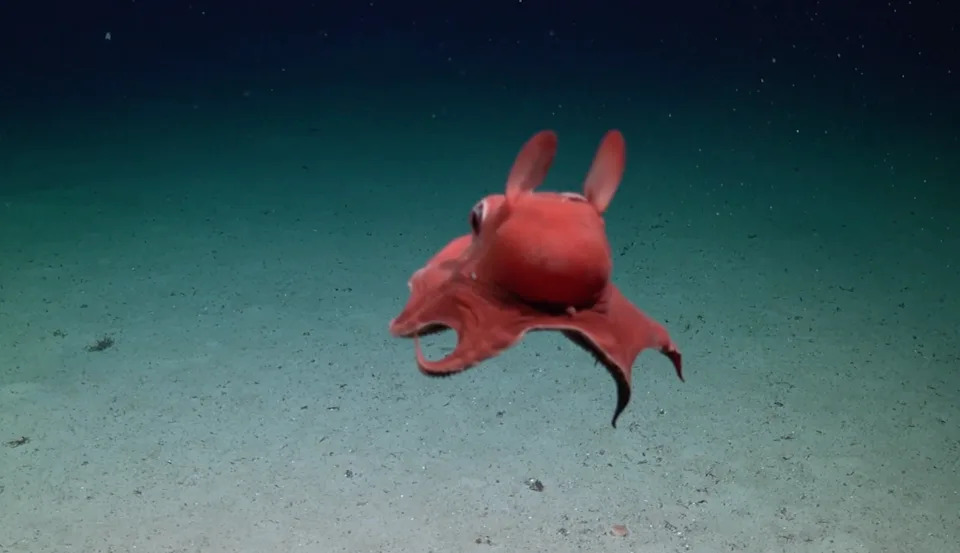
Still shows the flapjack octopus' fins, helping it to swim.
Video from the Schmidt Ocean Institute shows the octopus gliding toward the camera, briefly entering the frame as researchers observed and commented. As it moved away, it stirred up sediment from the seafloor. The encounter is notable because these animals dwell at great depths and are seldom observed except by remotely operated vehicles and robotic submersibles.
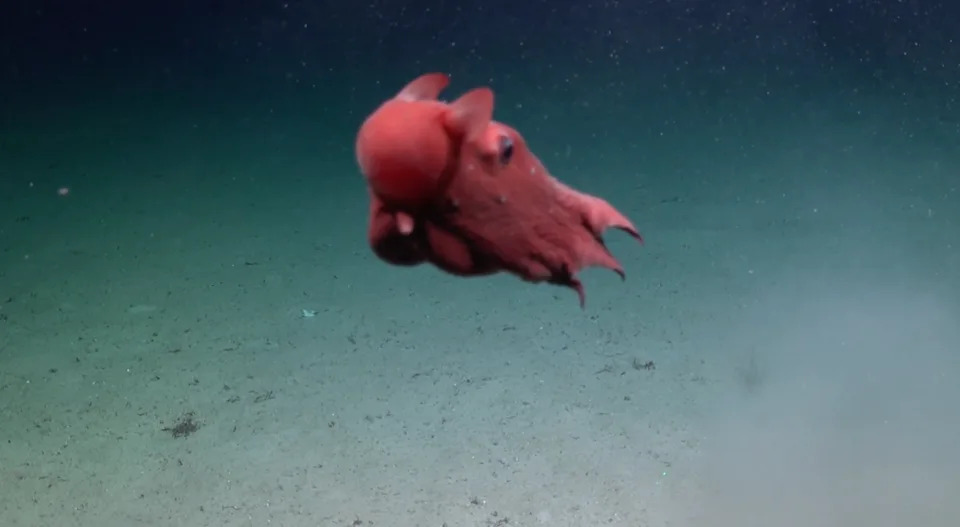
Still shows the octopus propelling forward and out of frame.
Size, Diet and Scientific Context
According to the Monterey Bay Aquarium Research Institute (MBARI), a fully grown flapjack octopus can reach about 20 inches (roughly 50 centimeters) in length. Their diet typically consists of small worms and crustaceans found on or near the seabed.
The sighting was made during the first detailed deep-sea study of Trinidad and Tobago's offshore waters, led by Dr. Diva Amon in collaboration with SpeSeas and a largely Trinbagonian research team, the Schmidt Ocean Institute said. The nonprofit institute supports oceanographic research, discovery and information sharing, and footage like this helps scientists better understand deep-sea biodiversity.
"Wow, look at that. This is the deep sea, guys. So beautiful," a researcher can be heard saying in the clip as the octopus passes the submersible.
Why it matters: Every deep-sea observation adds to our knowledge of poorly studied ecosystems. Rare recordings of species like the flapjack octopus help scientists document distribution, behavior and the health of deep-sea habitats.
Help us improve.