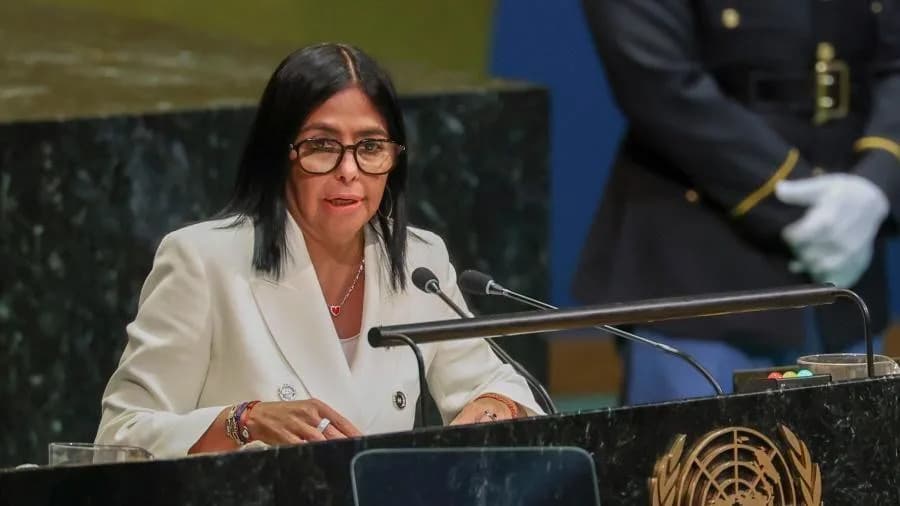
Delcy Rodríguez—once a leading figure in Chavismo and Nicolás Maduro’s deputy—now governs Venezuela and has struck an unprecedented, transactional rapprochement with the United States. Washington supervises a mechanism that controls most oil-export revenues, conditions disbursements, and influences key appointments in exchange for investment, flights and reconstruction aid. Early economic signs are encouraging, but critics warn the arrangement risks sacrificing sovereignty, democratic reform and accountability for human-rights abuses. Rodríguez argues she is acting in Venezuela’s interest, while her political future depends on navigating U.S. demands and restoring public trust.
How Delcy Rodríguez Shifted From Chavista Insider To A U.S.-Aligned Leader
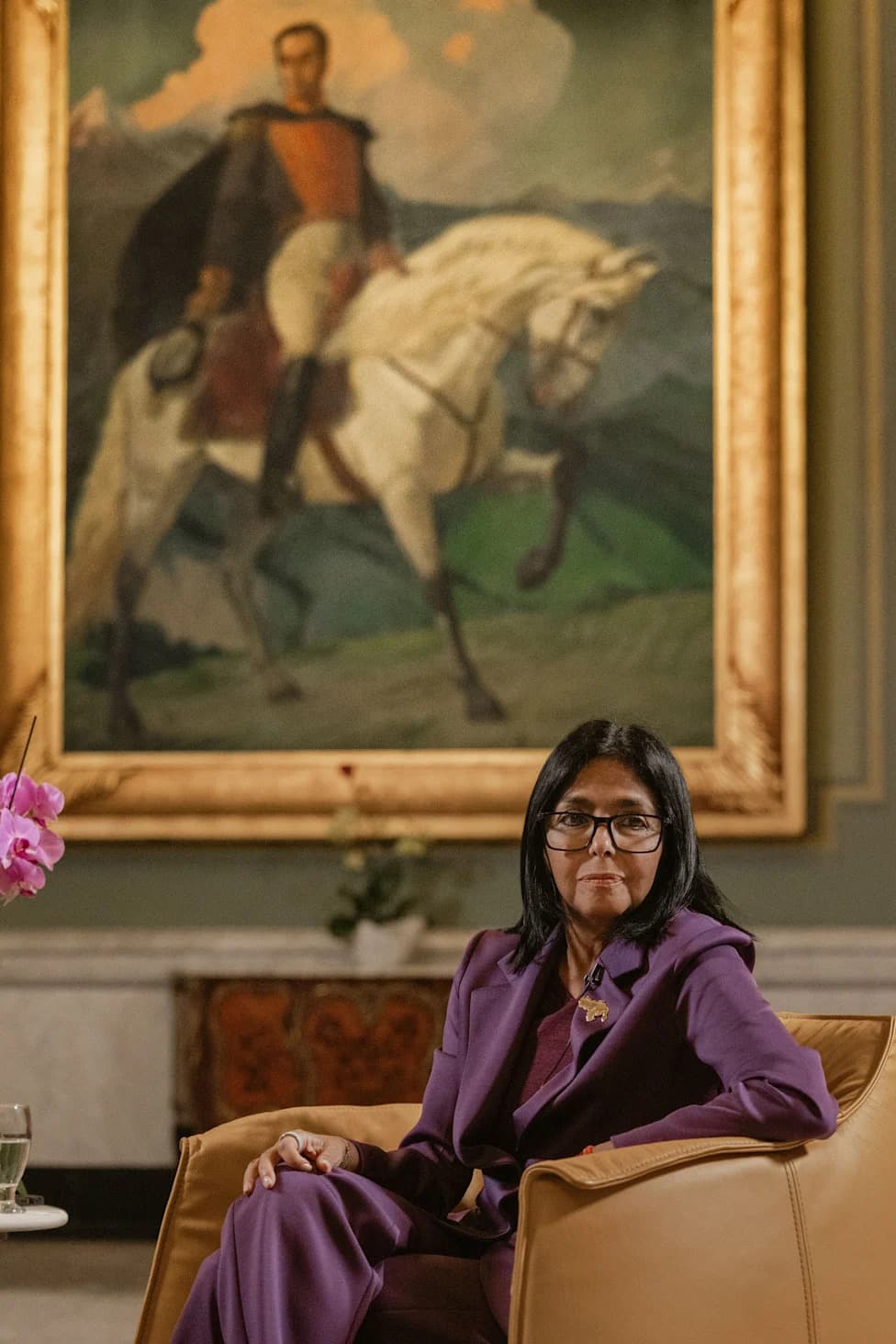
Acting President of Venezuela Delcy Rodríguez on June 16, 2026 at the Miraflores Palace. —Fabiola Ferrero for TIME
Delcy Rodríguez governs Venezuela from the Miraflores Palace in central Caracas, a 19th-century neoclassical mansion whose gilded portraits and manicured gardens belie the turbulence of the country she now leads. Once a stalwart of Hugo Chávez’s inner circle and long Nicolás Maduro’s deputy, Rodríguez has become the public face of a dramatic rapprochement with the United States after Maduro’s removal.
A Fragile New Partnership
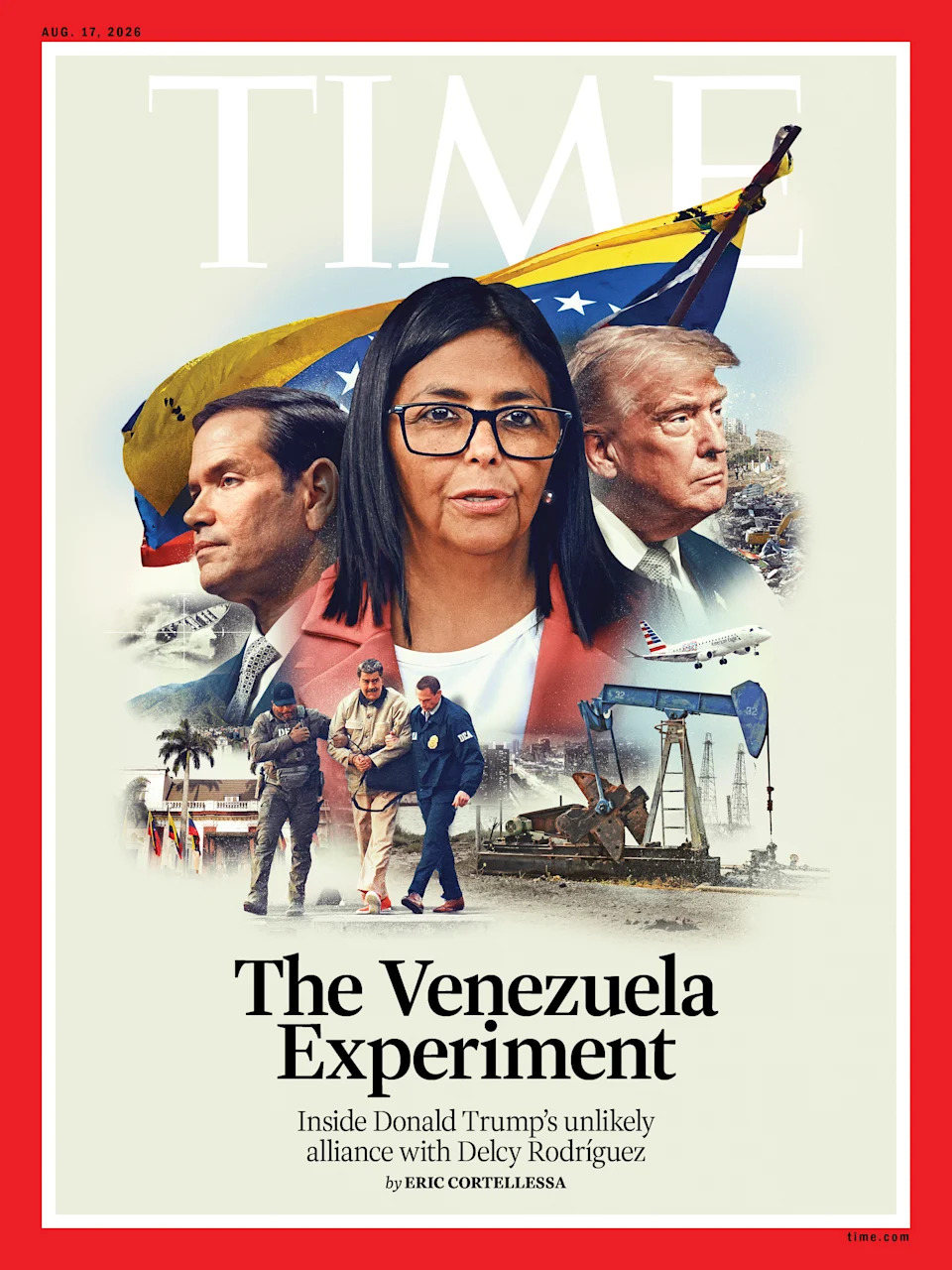
Since assuming power in January, Rodríguez—57—has cultivated close ties with President Donald Trump and Secretary of State Marco Rubio. In an arrangement described to reporters by U.S. and Venezuelan officials, Washington now supervises a mechanism that controls most oil-export revenues and disburses funds to Caracas conditionally, effectively giving the U.S. substantial influence over Venezuela’s public finances and the reopening of its energy sector.
“I’m starting out by acting in good faith and trusting that these relationships can develop in good faith,” Rodríguez told the author in a rare interview. “My strategy has always been to ensure peace and tranquility in the country—tranquility and social and economic well-being.”
Economic Signals—and Costs
Signs of economic recovery have emerged: cranes dot Caracas again, store shelves are fuller, the dollar circulates openly, and major American firms such as ExxonMobil, ConocoPhillips, Halliburton and GE Vernova have resumed talks or operations. Commercial flights between the U.S. and Venezuela resumed for the first time since 2019, and foreign executives and diplomats have returned to meet on energy deals and infrastructure projects.
But these gains come with political costs. Under the U.S.-overseen framework, Washington monitors and conditions oil revenues, consults on key appointments, and participates in security cooperation. Critics argue the arrangement undermines Venezuelan sovereignty and risks entrenching a new elite that benefits from foreign investment while leaving deeper democratic reforms and accountability unaddressed.
Security And Human Rights
Washington and Caracas now cooperate on intelligence and counternarcotics operations. Officials say this cooperation helped locate and neutralize Niño Guerrero, leader of the Tren de Aragua criminal organization. Thousands of detainees have been released under an amnesty law encouraged by the U.S., and Rodríguez has invited the U.N. Human Rights Office to audit the process.
Yet human-rights experts and opposition figures remain skeptical. International investigators and rights organizations have repeatedly accused the prior regime of arbitrary detention, torture and extrajudicial killings; many critics say Rodríguez was part of that system. Opposition leader and Nobel laureate María Corina Machado has accused Rodríguez of capitulating to Washington to secure personal political survival.
How Maduro Fell—and What Followed
The transition accelerated after a U.S. military operation at Fort Tiuna led to Nicolás Maduro’s capture and transfer to the United States on drug and weapons charges. Rodríguez says she consulted regional partners—including Qatar—during the crisis and agreed to U.S. conditions amid intense pressure. Officials describe a transactional deal: Venezuela retains a nominally sovereign government under Rodríguez while ceding significant influence over finances and security to the United States in exchange for investment and stability.
Questions About Democracy And The Future
Rodríguez has enacted an amnesty law and presided over releases of detainees, but she has taken few concrete steps toward rapid political liberalization. U.S. officials and analysts caution that the current U.S. priority—stability and economic reopening—may not immediately translate into free and fair elections. Rodríguez says Venezuela will hold elections “when it is ready” and has not committed to a timeline; she also declined to say whether she would run for president.
The government points to disaster relief after a June earthquake that killed more than 5,000 people and caused an estimated $6.7 billion in damage: the U.S. provided a $300 million reconstruction package and military support for relief operations. Supporters cite such aid as evidence that the U.S.-Venezuela partnership can bring tangible benefits, while critics say it does not excuse the lack of accountability or democratic safeguards.
Outlook
Venezuela’s near-term trajectory will hinge on three interlocking variables: whether U.S. economic engagement and oversight translate into broad-based recovery, whether the Rodríguez government pursues genuine institutional reform and transparent elections, and whether future U.S. administrations continue this transactional strategy. For now, Rodríguez’s political survival appears tied to her ability to balance Washington’s demands with domestic pressures—and to persuade Venezuelans that restored ties and investment will lead to real improvements in everyday life.
As Rodríguez and international partners negotiate investment, energy deals and rebuilding projects, the deeper questions about sovereignty, justice and democratic renewal remain unresolved.
Help us improve.