
The VoteHub analysis finds that Republican-led redistricting efforts in the South following the Supreme Court's Louisiana v Callais decision appear to have increased Black voter turnout and shifted many counties leftward. Of 78 Black Belt counties tracked, all but one shifted toward higher Democratic turnout compared with 2024. Primaries held after the ruling—especially in Alabama and Louisiana—saw pronounced turnout gains in majority-Black counties.
Republican Redistricting Push Spurs Surge in Black Voter Turnout, Analysis Finds
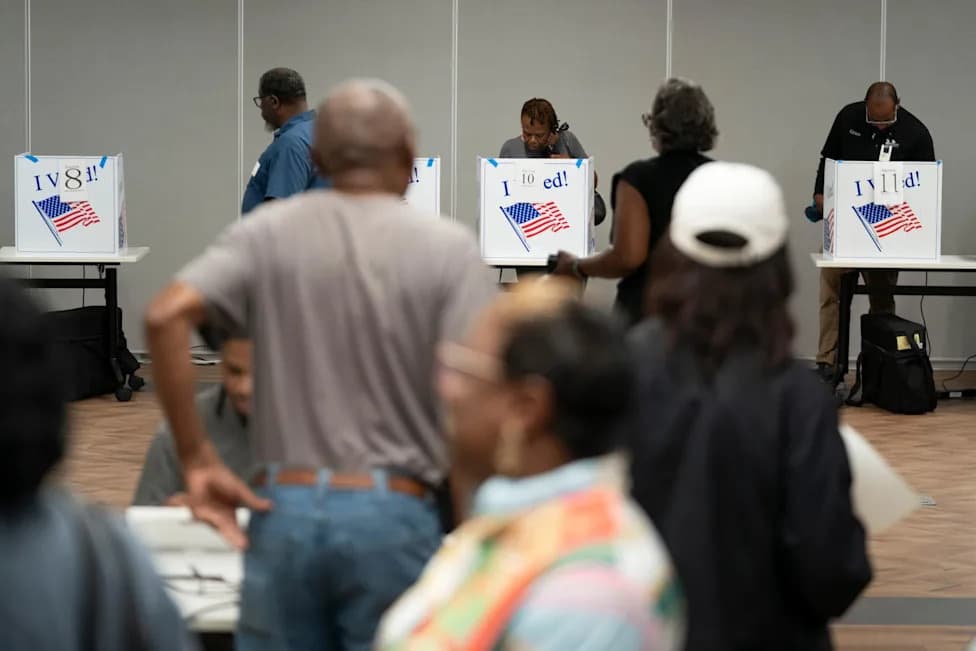
People vote at a polling place in Columbia, South Carolina, in May.Photograph: Sean Rayford/Getty Images
A new VoteHub analysis of Black voters across the Southern United States finds that Republican-led efforts to redraw congressional maps after the Supreme Court's Louisiana v Callais decision appear to have galvanized turnout in majority-Black counties and pushed many counties toward the Democratic column.
After the Supreme Court effectively weakened Section 2 of the Voting Rights Act in late April, state legislatures in several Southern states moved quickly to revise congressional boundaries. Louisiana, Florida, Tennessee and Alabama pursued new maps immediately, and Mississippi’s governor publicly urged a pre-midterm redrawing.
VoteHub Findings
VoteHub examined 78 counties in the Black Belt and found a clear pattern: all but one of the tracked counties shifted left in partisan turnout compared with 2024, and majority-Black counties that voted after the Callais decision experienced notable surges in participation.
The effect was especially visible in states that held primaries after the ruling. In Louisiana—the case at the center of the decision—officials set aside previously cast votes while maps were redrawn. Alabama moved quickly to split several majority-Black districts, and both South Carolina and Georgia initiated redistricting moves that would have diluted Black political influence (though neither ultimately completed such changes at that time).
Alabama showed some of the strongest mobilization. Greene County exceeded 50% turnout in its primary, a positive turnout differential of 27.6 percentage points. Bullock, Lowndes, Macon and Montgomery—counties targeted by redistricting in Alabama’s 2nd Congressional District—also registered substantial turnout gains.
In Louisiana, Black voters made up 35.7% of the primary electorate while representing 32.1% of the state population. Overall turnout rose across parties and racial groups in Louisiana; 30.9% of Black residents cast a primary ballot—3.2 percentage points higher than the share of white voters who voted.
By contrast, states that held primaries before the Callais ruling—such as Mississippi and North Carolina—saw much smaller differences: majority-Black counties in those states outpaced statewide turnout by only about 1.1 percentage points on average.
What This Suggests
The VoteHub data suggest that perceived or actual attempts to dilute Black voting power can trigger countervailing mobilization: when communities feel their representation is under threat, turnout may increase and alter partisan turnout patterns. This dynamic was particularly evident in locations where redistricting moves were rapid and highly publicized.
Help us improve.





















