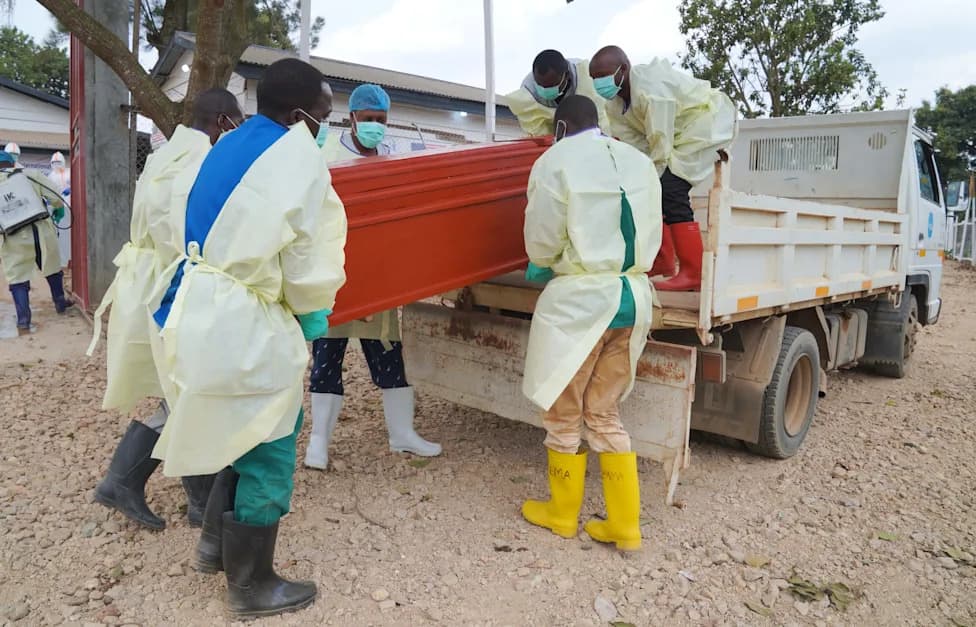
Hilleman Laboratories will fast-track an rVSV-based vaccine against the Bundibugyo Ebola strain, with MSD/Merck providing technical advice and CEPI funding. WHO experts consider rVSV the "most promising" single-dose platform because it builds on the licensed Ervebo technology. Developers hope the new shot will be refrigerator-stable, easing deployment in remote outbreak zones. The DRC epidemic — now the third-largest on record — has 3,360 confirmed cases and 1,487 deaths since May.
Singapore Lab to Fast-Track rVSV Vaccine Targeting Bundibugyo Ebola
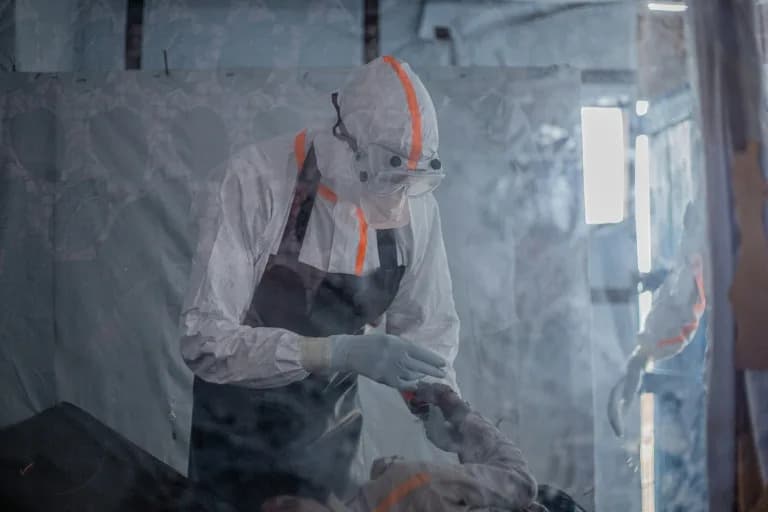
Nearly 1,500 people have died in DR Congo from the Bundibugyo strain of Ebola, for which there are vaccines or treatments (BENEDICTION MURHABAZI)
Hilleman Laboratories in Singapore said Thursday it will accelerate development of an rVSV-based vaccine aimed at the Bundibugyo strain of Ebola, calling the single-dose approach the "most promising" candidate to curb a severe outbreak in the Democratic Republic of Congo (DRC).
Why rVSV Is Promising
World Health Organization experts have flagged the rVSV platform as the leading option because it uses the same viral-vector technology as Ervebo, the only Ebola vaccine currently licensed (which targets the Zaire strain). Hilleman said it will push the rVSV Bundibugyo candidate into human clinical trials, working with MSD (Merck in North America) and supported by funding from the Coalition for Epidemic Preparedness Innovations (CEPI).
"We're racing to develop a Bundibugyo vaccine and make doses for clinical trials," Hilleman CEO Raman Rao said in a statement.
Partnerships, Funding and Technical Support
Hilleman Laboratories is a joint venture between MSD and the Wellcome Trust. MSD — which developed and manufactured Ervebo — will act as a technical adviser, offering expertise on the rVSV platform. CEPI has pledged funding to support this rVSV candidate alongside other vaccine efforts targeting Bundibugyo, and the organisations said they aim to ensure rapid and affordable supply to outbreak-affected and low- and middle-income countries if trials and regulatory reviews are successful.
Storage, Timeline and How the Vaccine Works
Ervebo requires ultra-low-temperature storage, which complicates field deployment in remote regions. Developers hope the Bundibugyo rVSV vaccine will remain stable for months under standard refrigerator conditions, making distribution cheaper and logistically simpler.
The rVSV platform uses a modified vesicular stomatitis virus (an animal virus) as a vector to deliver a protein from the Bundibugyo ebolavirus to the human immune system, prompting a protective immune response. WHO advisers cautioned in May that it would likely take seven to nine months before an rVSV Bundibugyo vaccine could be ready for clinical assessment.
Context: The Outbreak
The current epidemic in the DRC is now the third-largest Ebola outbreak on record. Since May, authorities have confirmed 3,360 cases and 1,487 deaths, with the outbreak concentrated in the northeastern Ituri province. Uganda, which borders Ituri, has reported 20 confirmed cases and two deaths. The Bundibugyo strain was previously rare, and there are currently no authorised vaccines or specific treatments for it.
This announcement follows a separate recent development: Oxford University’s Bundibugyo vaccine candidate dosed its first volunteer last week as part of a rapidly launched clinical trial.
Ebola is a viral haemorrhagic fever transmitted through close contact and exposure to infected bodily fluids, and it poses a serious public-health challenge in conflict-affected and hard-to-reach areas.
Help us improve.