The U.S. Army tested the maritime variant of its electronic warfare system “Hammer of the Gods” off the U.S. West Coast during Project Convergence Capstone 6 in mid‑July. The portable counter‑PNT device jams positioning, navigation and timing (PNT) signals such as GPS to degrade the accuracy of long‑range artillery, guided missiles and cruise missiles. It also establishes a resilient communications network to keep friendly forces linked in contested electronic environments. The exercise demonstrated successful deployment, operation and recovery in real maritime conditions while integrating Army, Navy and Space Force elements.
“Hammer of the Gods” Goes to Sea: Army Tests Maritime System That Jams Enemy GPS and Protects Forces
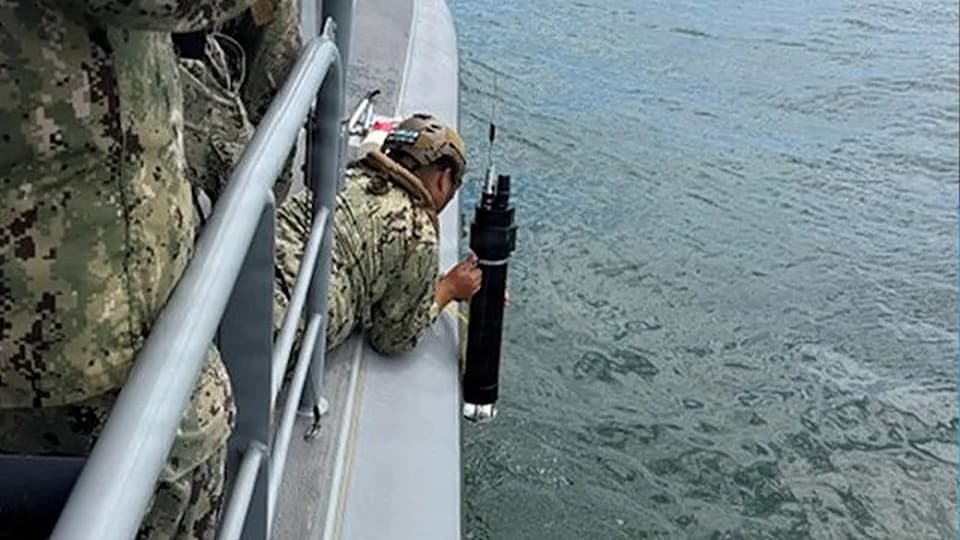
The Hammer of the Gods was tested overseas for the first time in mid-July.
The U.S. Army has publicly announced the first overseas maritime trial of its electronic warfare system dubbed “Hammer of the Gods.” The seaborne variant was tested off the U.S. West Coast in mid‑July as part of Project Convergence Capstone 6 (PC‑C6), marking the first official at‑sea demonstration of the capability.

U.S. Army soldiers march during a military parade on Armed Forces Day in Vilnius, Lithuania, Nov. 25, 2023.
What the System Does
Hammer of the Gods is a portable counter‑PNT (positioning, navigation and timing) system designed to covertly disrupt radio signals — including GPS — that precision weapons rely on. By jamming or degrading PNT inputs, the system reduces the accuracy of long‑range artillery, guided missiles and cruise missiles, increasing the chance of missed targets and mission delays for an adversary.

Multiple U.S. Army soldiers walk behind a U.S. flag.
Keeping Friendly Forces Connected
In addition to its jamming functions, the system creates a resilient communications network so friendly forces can maintain command-and-control and situational awareness even under heavy electronic attack. The system links military devices to enable troops to “shoot, move and communicate” in degraded electromagnetic environments.
Exercise and Integration
According to Army officials, the PC‑C6 exercise demonstrated that the maritime counter‑PNT package could be successfully deployed, operated and recovered in realistic sea conditions. The trial brought together elements from the U.S. Army, Navy and Space Force—including U.S. Space Forces Pacific, Naval Base San Diego and the U.S. Army Space and Missile Defense Command—to integrate space, cyber and conventional capabilities during the operation.
Significance
Officials described the event as an important step toward fielding layered, domain‑integrated defenses and offensive counter‑PNT options at sea and across joint operations. The maritime debut expands the Army’s ability to contest adversary use of GPS and other PNT sources beyond landward environments.
Note: The trial focused on demonstrating deployment, operation and recovery in maritime conditions; officials emphasize that the capability both degrades adversary navigation and supports resilient communications for friendly forces.
Help us improve.