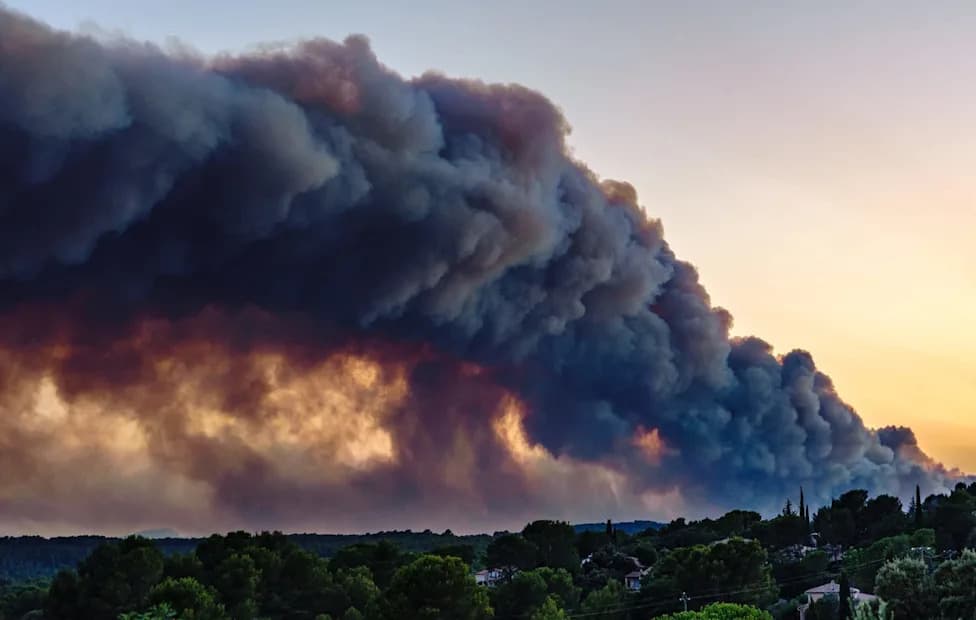
Two firefighters were killed on Crete while crews in southwestern France battled the huge Gironde wildfire, which has grown to roughly four times the size of Paris. Dry conditions, repeated heat waves and strong winds have driven fires across France and Spain and forced about 330,000 people to evacuate at the crisis peak. Investigators say routine brush‑clearing near a high‑voltage line may have sparked the Gironde blaze, and officials warn that forecasts of 40 °C (104 °F), gusting winds and severe drought could quickly reverse containment gains.
Two Firefighters Killed on Crete as Massive Gironde Wildfire Rages — Blaze Four Times the Size of Paris
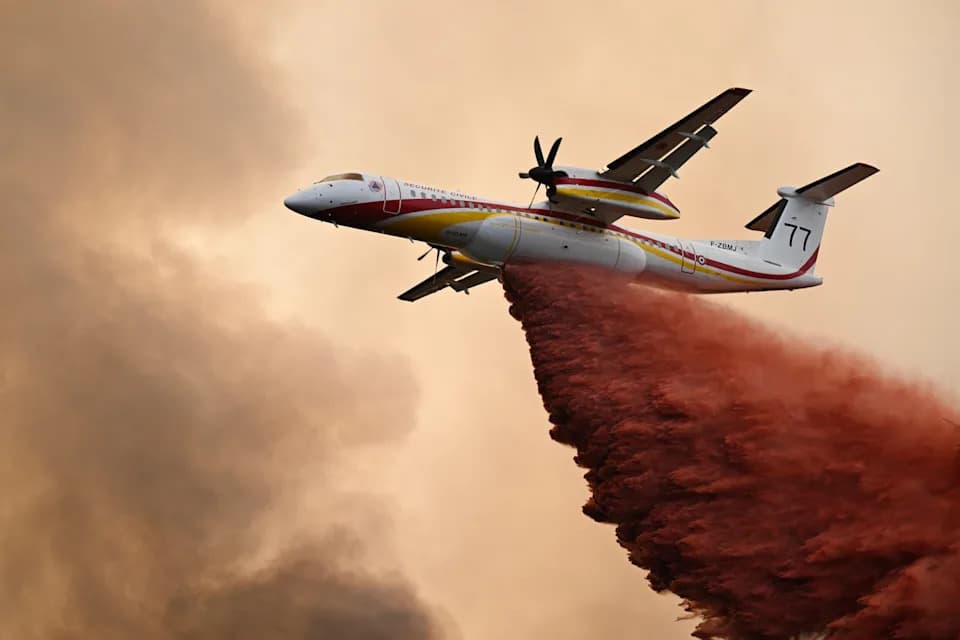
A De Havilland Canada Dash 8-400 drops fire retardant over a forest near Saint-Jean-d'Illac, during wildfires in southwestern France, Tuesday, July 28, 2026. / Credit: AP Photo/Emma Da Silva
Two firefighters were killed Wednesday while battling a wildfire on the Greek island of Crete as crews in southwestern France continued to fight a vast blaze that has swollen to roughly four times the area of Paris. Across Western Europe, a dangerous mix of extreme heat, prolonged drought and strong winds has fueled and complicated firefighting efforts.
Fatalities in Crete
Greece's fire service said the two firefighters died in the Rethymno region while about 125 colleagues worked to contain fires fanned by strong winds. Four helicopters and four water‑dropping planes were deployed. Officials said the circumstances of the deaths were not immediately clear and described the victims as having fallen "in the line of duty to protect the lives and property of citizens and the natural environment."
Gironde: France's Biggest Wildfire Battle
In France, the sprawling Gironde fire remained the country's primary active front after outbreaks in the Landes and Var departments were brought under control. At its peak, the crisis forced roughly a third of a million people (about 330,000) to evacuate across France and Spain; in Gironde alone more than 250,000 people were ordered to leave over the weekend.
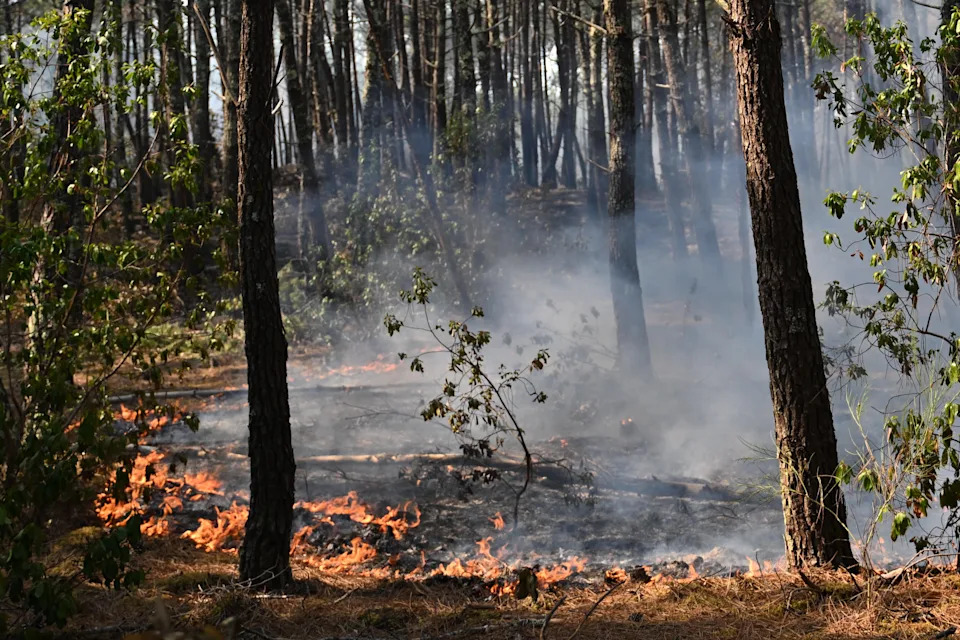
A fire burns in a forest near Claouey, during wildfires in southwestern France, Wednesday, July 29, 2026. / Credit: AP Photo/Emma Da Silva
Authorities reported that the blaze did not spread during a relatively calm night, but warned that forecasts of temperatures near 40 °C (104 °F) and strengthening afternoon winds could quickly reverse that temporary lull. More than 2,200 firefighters and over 20 aircraft — supported by regional and European partners — remained mobilized.
How the Fire May Have Started
Investigators suspect routine brush‑clearing near a high‑voltage line owned by power‑grid operator Enedis ignited the Gironde fire while contractors used a brush‑cutting machine. Prosecutor Renaud Gaudeul said the landscape was so dry that even work that appeared to comply with safety rules may have sparked the inferno.
Local Response and Community Effort
At a command post in Lège, firefighters monitored three principal danger zones: northern Cap‑Ferret; the wooded corridor around Marcheprime, Cestas and Saint‑Jean‑d'Illac; and a military site near Martignas. Officials said they "strike quickly and strike hard at any new smoke emissions," reflecting a rapid‑response strategy to new outbreaks.
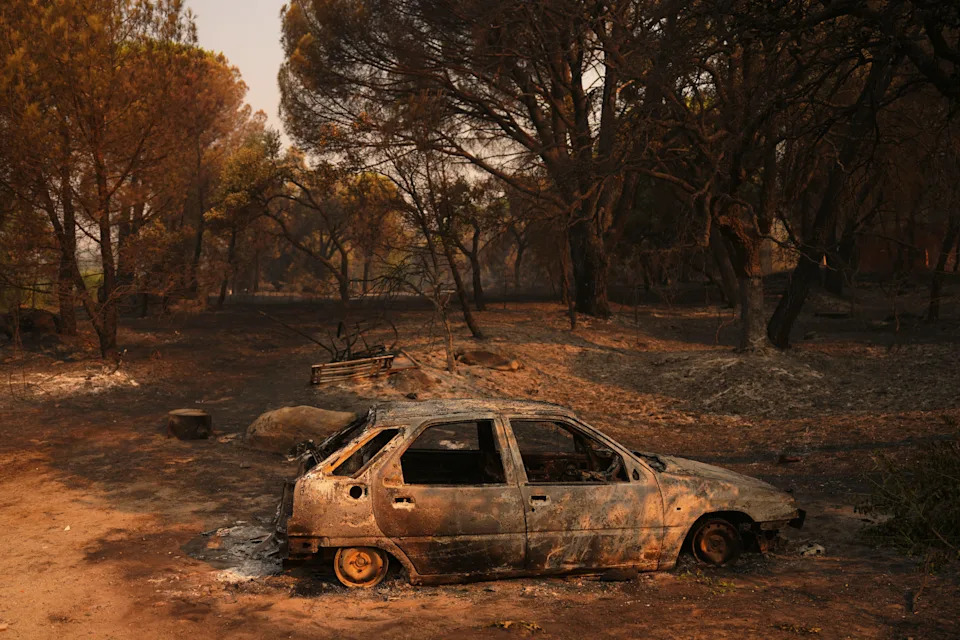
A car burned by a wildfire sits in Piedralaves, Spain, as the fire continues to spread, Tuesday, July 28, 2026. / Credit: AP Photo/Manu Fernandez
Civilians also pitched in: volunteers cleared dirt tracks, a digger operator plowed through smoldering soil to stop spot fires, and residents pumped lake water into tanks to refill firefighters' cisterns. "If one day the fire starts in our neck of the woods, I know very well that all the people here would do the same for us," said Flavien Dubuch, who came from Saint‑Émilion to help.
Wider Impact and Environmental Context
More than 1,160 square kilometers (about 448 square miles) have burned across France this year, the Interior Ministry said. Smoke from the Gironde and Landes fires raised particulate pollution across the region, prompting air‑quality warnings.
Climate scientists and the EU Copernicus climate service note that Europe is warming faster than other continents — more than twice the global average — and Western Europe recorded its hottest June on record. Consecutive heat waves have dried vegetation and lowered humidity, creating abundant fuel for wildfires and increasing the risk of extreme fire behavior, including pyrocumulonimbus clouds: the Gironde blaze produced France's first recorded pyrocumulonimbus, a sooty, electrified cloud that generated lightning, violent winds and spot fires.
Outlook
Météo‑France warned of continued high wildfire risk as drought now stretches across mainland France and Corsica and soils approach the record dryness seen in August 2022. Authorities warned that despite containment gains, hotter, drier and windier conditions could quickly undo progress and prompt new evacuations.
Note: The situation remains fluid. Emergency services continue to work around the clock, and residents in affected areas are urged to follow official evacuation orders and safety guidance.
Help us improve.