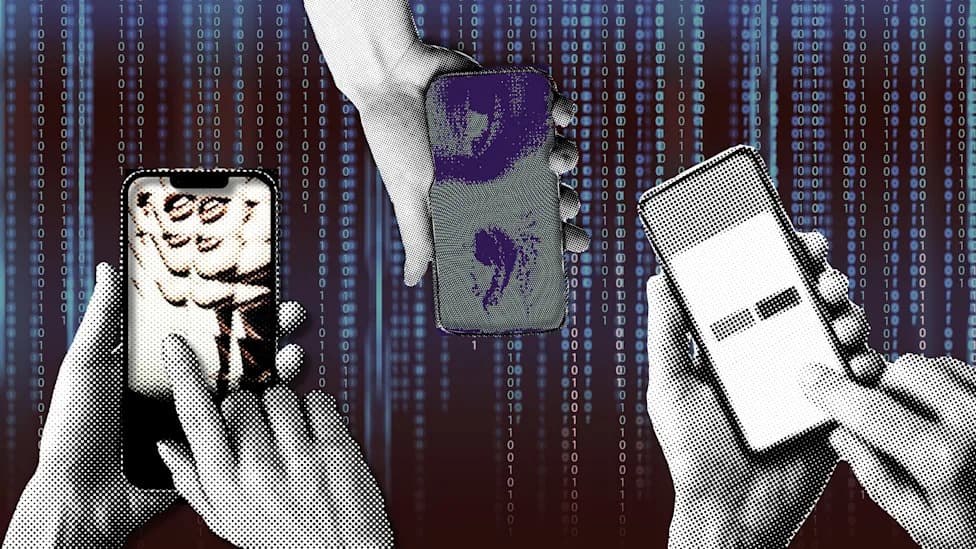
The National Center for Digital Sexual Crime Response in Seoul employs 23 specialists who removed 318,000 images and videos last year for some 10,600 victims, about 75% of whom were women and girls. AI-generated deepfakes have surged worldwide — up 550% between 2019 and 2023 — and most of the content targets women. South Korea has strengthened penalties and built an integrated removal-and-support system, but advocates say long-term change requires addressing patriarchal attitudes and improving gender education.
South Korea’s Women Web Sleuths Battle Surge in AI Deepfake Porn
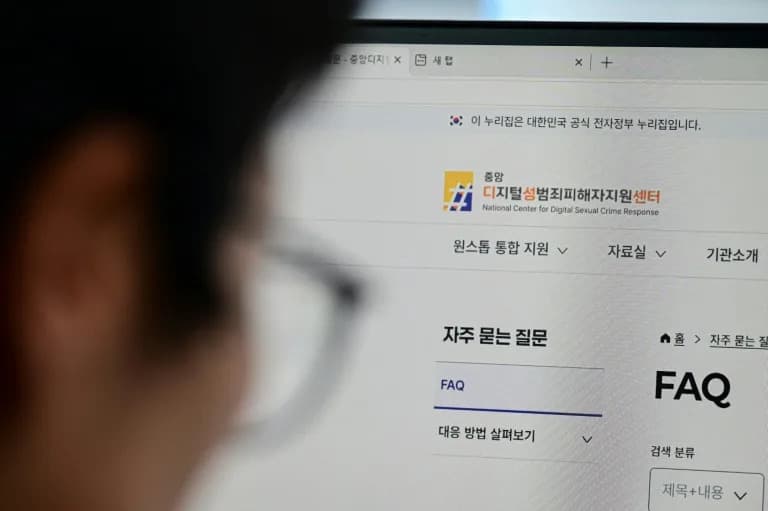
The head of the National Center for Digital Sexual Crime Response Kim Mi-Soon browses through their internal website in Seoul (Jade GAO)
Under banners proclaiming "Solidarity" and "We Stand Together With Victims," a team of women digital investigators in Seoul is racing to remove an alarming wave of illegal AI-generated pornography and other exploitative material online.
Who They Are
Based in a light-filled office, the National Center for Digital Sexual Crime Response employs 23 specialists who trawl the web, file takedown requests and support victims through legal and counselling services. The centre operates alongside 17 regional hubs and has expanded into a national response network to coordinate removals and prosecutions.
The Problem
South Korea — a global tech leader in smartphones and memory chips — has also become a hotspot for "digital sex crimes." Hidden spy cameras, sextortion chatrooms and the circulating of intimate images without consent have long victimised women. The latest escalation is AI-driven deepfake pornography: attackers use generative tools plus a victim's photo to fabricate sexually explicit images and videos.
"South Korea acted faster than others because not only did digital sex crimes become common earlier, but women also spoke out quickly and vigorously," said Kim Mi-soon, head of the government-established centre.
Scale And Impact
Last year the centre reported removing 318,000 videos and photos — deepfakes, spycam footage and intimate images shared without consent — on behalf of about 10,600 people, roughly 75% of whom were women and girls. Global research from web-safety firm Security Hero found deepfake circulation surged 550% between 2019 and 2023, with nearly 98% of that content comprising AI-generated pornography of women and many victims concentrated in South Korea.
While high-profile targets such as K-pop stars are often targeted, deletion specialists say ordinary women and increasingly younger victims are being ensnared by more sophisticated deepfakes. Police data indicate digital sex crimes now account for roughly 40% of all sexual offences in the country.
How The Centre Responds
The team combines human investigators with its own AI monitoring tools to detect exploitative content and messages that target children. They provide counselling, legal advice and help collect evidence for prosecutions. Victims also receive practical support — for example, financial assistance to obtain a trauma diagnosis used in court proceedings.
One 33-year-old victim, identified only by her surname Kim, said the centre's support helped her feel "healed" after deepfakes of her circulated in 2024 via encrypted apps beyond the immediate reach of investigators.
Laws And Wider Challenges
South Korea criminalises deepfake pornography: possession can carry up to three years in prison while creators face up to seven years. Penalties were toughened in 2024 after investigations uncovered Telegram chatrooms sharing AI-generated sexual footage of acquaintances, classmates, colleagues and relatives, sometimes produced from images taken from victims' social media profiles.
Experts praise Seoul’s approach. Clare McGlynn, a law professor at Durham University, said the country is "leading the way" by combining technology, support services and legal measures. But campaigners warn that enforcement and removals alone will not solve the problem: they point to patriarchal attitudes that normalise treating women as sexual objects and call for long-term cultural change.
"Unless we tackle this fundamental cause by fostering greater gender equality in society and strengthening gender-equality education in schools, no amount of removal efforts will be enough," said Kim Yeo-jin, head of the Korea Cyber Sexual Violence Response Center.
The centre's work illustrates a model of rapid response and victim support, but experts and activists agree that legal, technological and cultural measures must advance together to curb the evolving threat of AI-enabled sexual abuse.
Help us improve.