
After a deadly 2023 raid on Kankara in Katsina State cost Safiya Musa her husband and two children, she and her surviving children became displaced and settled in a camp in Jibia. A UNDP-backed Climate Security Project provided handbag-making training, sewing machines and materials, helping her rebuild a modest, dependable income. While the business offers food and some independence, ongoing insecurity, limited capital and market disruptions threaten its sustainability and complicate Safiya's decision about whether to return home.
A Sewing Machine and Survival: How a Displaced Nigerian Mother Rebuilt Her Life After a Deadly Raid
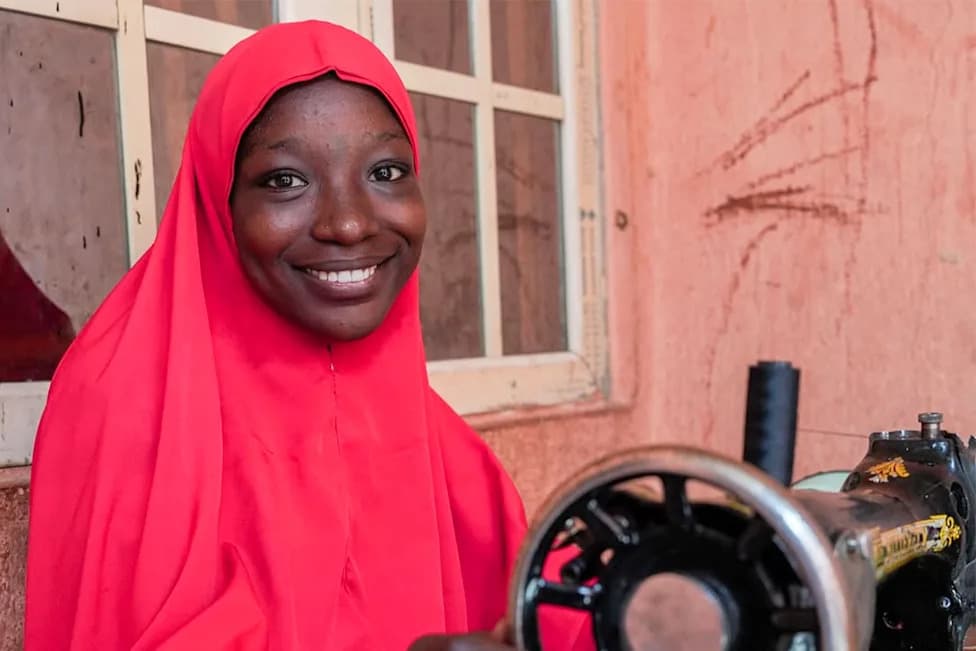
Zainab is one of the women making bags [Handout/UNDP]
Jibia, Katsina State — For Safiya Musa, a secondhand sewing machine has become both a lifeline and a fragile symbol of independence after violence destroyed her home and family.
Attack, Loss and Displacement
In 2023 armed bandits attacked Kankara, a small farming town in Katsina State where Safiya and her husband had settled after leaving their native Batsari. The raid — reportedly intended to abduct the town head — left about 20 people dead. Safiya later learned that her husband and her two youngest children, who had been playing outside, were among those killed. Her three older children were staying with relatives and survived.
Following the attack, Safiya first fled to Batsari to reunite with her older children. When violence reached that area as well, she moved again with her surviving children to a displacement camp in Jibia, near Nigeria's border with Niger.
"Minutes later, silence overwhelmed the atmosphere... Then I started thinking about my husband, who had left for the farm, and my children, who were outside playing with other kids." — Safiya Musa
Learning to Sew, Earning to Live
After arriving in Jibia, Safiya survived by taking odd jobs such as grinding grain. Her circumstances began to change when she was selected for a handbag-making training programme run by the United Nations Development Programme (UNDP) through its Climate Security Project. The initiative provides vocational training and equipment to women affected by conflict so they can start small businesses.
In March 2024 the project trained 20 women in Jibia and provided sewing machines and materials. With new skills and equipment, Safiya began cutting fabric, stitching designs and producing handbags to sell in local and cross-border markets.
Income, Challenges and Community Impact
The income has helped Safiya feed and support her children and reduced her reliance on precarious day labour. Other women in the programme reported similar gains: 30-year-old Karima Sule, a displaced resident of Jibia, said she earns about $50 a month from handbag sales and uses the income to help her husband and pay school fees.
But running a small enterprise in a conflict-affected area brings persistent hurdles. Safiya’s main challenge is access to working capital: when she runs out of materials she cannot restock and loses customers. Renewed outbreaks of violence also depress market activity, interrupt trade and reduce demand.
Security experts warn that as displaced women build visible economic activity they may face new risks. Abdussamad Ahmad Yusuf, a human security researcher at HumAngle, said kidnapping for ransom has become more targeted and recommended that authorities perform regular conflict and security risk assessments to identify hazardous trading routes, markets and emerging threats.
The Katsina government established a Community Watch Corps in 2023 to enlist local residents in gathering intelligence and responding to attacks. Officials say security has improved in some areas, but many displaced families remain unsure whether it is safe to return home.
A Difficult Choice
Safiya hopes to return to her hometown one day to reunite her children with relatives. But the small business she built in Jibia complicates that decision. Leaving the enterprise could mean sacrificing her independence and a steady income at a time when safety and livelihoods remain uncertain.
"I want to go back home because my children need their relatives, but I am afraid of losing this business. If I cannot continue it there, how will we survive?" — Safiya Musa
The story of Safiya and other displaced women in Jibia highlights how targeted economic support — even as modest as a sewing machine and training — can restore dignity and resilience. It also underscores the need for integrated responses that pair livelihood support with security planning and improved access to capital so fragile gains are not lost.
Help us improve.





















