Curiosity photographed an unusually dense field of small polygonal fractures in Valle Grande on the slopes of Mount Sharp. The 360-degree panorama taken June 19–20 (sols 4,930–4,931) shows polygons about 1.5–3 inches (4–8 cm) across—an unprecedented concentration in one place. Scientists say the features could result from drying mud, compression, or thermal contraction, and are analyzing shape and chemistry to determine their origin.
Curiosity Finds a 'Sea' of Tiny Polygons on Mars — Clues to Ancient Water in Valle Grande
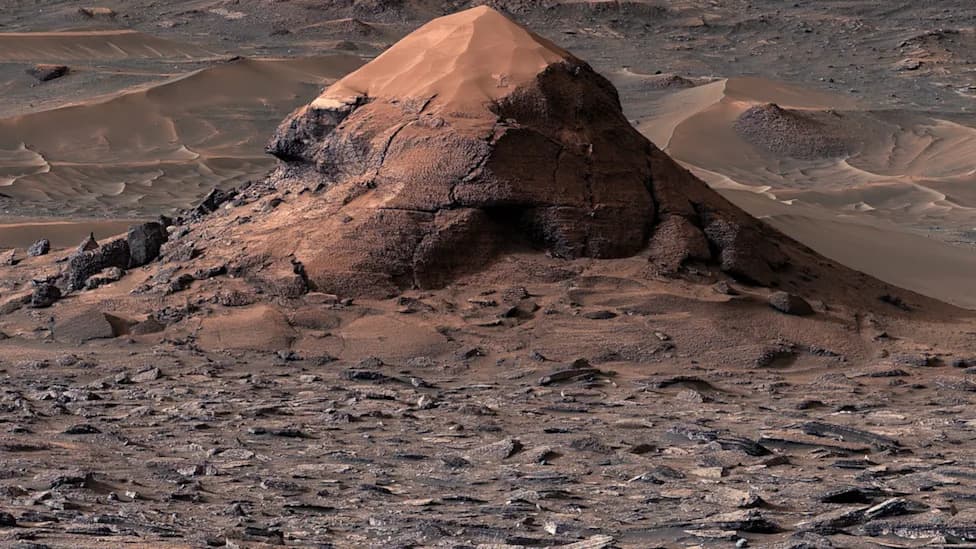
Curiosity has spent over a decade traversing Mount Sharp on Mars.
NASA's Curiosity rover has spent nearly 15 years exploring Mars, and since 2014 it has been slowly climbing Mount Sharp, a roughly three-mile-tall mound at the center of Gale Crater. While the mountain is cold and dry today, scientists believe its lower slopes once channeled streams into a broad lake billions of years ago.
In a striking discovery, Curiosity captured a 360-degree panorama inside a valley called Valle Grande on June 19–20 (the rover's sols 4,930 and 4,931). The image reveals an exceptionally dense field of polygonal fractures—small, honeycomb-like shapes—each about 1.5 to 3 inches (4–8 cm) across. Researchers say they have never seen such a concentrated patch of these features in a single location on Mars.
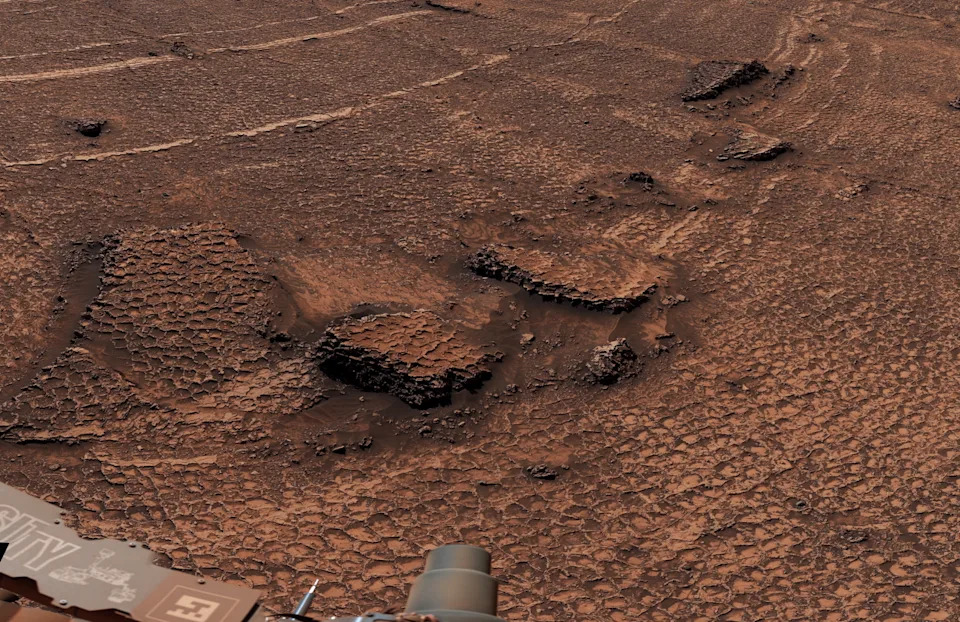
Scientists have never seen so many polygonal fractures concentrated in one location. Credit:NASA / JPL-Caltech / MSSS
How the Polygons May Have Formed
Similar polygonal patterns observed elsewhere on Mars and Earth are often linked to drying mud, but there are multiple processes that can produce them. Possible formation mechanisms include:
- Desiccation of wet sediment (mud cracks) as water evaporated or drained away.
- Geological compression that fractures the ground into polygonal blocks.
- Thermal contraction from repeated, large temperature swings that expel moisture and crack the surface.
"We've seen a lot of fascinating landscapes through Curiosity's eyes, but this sea of polygons took our breath away," said Ashwin Vasavada, a NASA project scientist. "We measured their shapes and chemistry carefully and are hopeful there are clues in the data as to how these features formed."
Nearby Landmark: Miraflores Butte
The polygon field surrounds a sand-capped butte nicknamed Miraflores, which Curiosity imaged earlier. On June 11 the rover's Mast Camera assembled an 11-image portrait of the roughly 20-foot-tall (about 6-meter) butte. Miraflores now tapers to a pointed top but was once much broader before billions of years of erosion carved it into its present form—the same long-term processes that shaped the Valle Grande landscape.
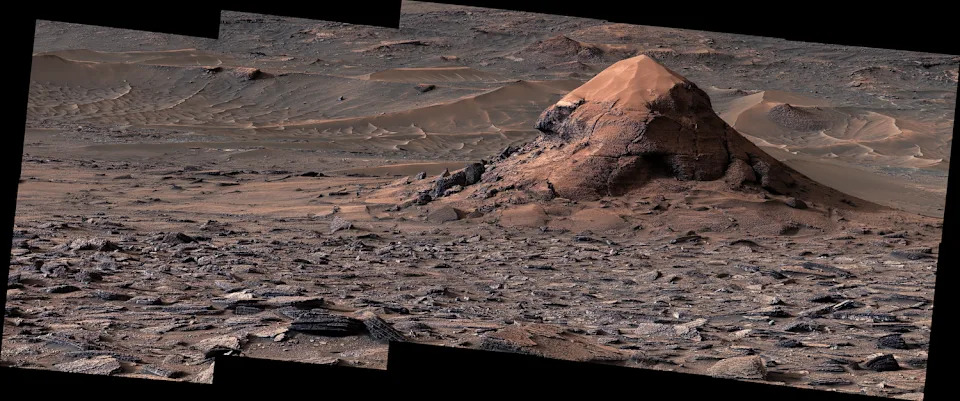
The butte's shape was shaped over billions of years by slow erosion. Credit:NASA / JPL-Caltech / MSSS
Why This Matters
Finding a concentrated expanse of small polygons helps scientists probe past environmental conditions on Mars. Measurements of shape, distribution and chemistry of these fractures can help determine whether they formed in standing water, seasonal wetting and drying, or through other geological processes. Each possibility carries different implications for Mars' wetter past and its potential habitability.
Image credit: NASA / JPL-Caltech / MSSS
Help us improve.