Researchers from WHOI and Universidad de Concepción have described Dulcibella camanchaca, a new four‑centimetre predatory crustacean collected nearly 8,000 m deep in the Atacama Trench. Genomic and morphological analyses show it represents a previously undescribed genus, highlighting the trench as an endemic hotspot. The discovery demonstrates that active predation and complex food‑web interactions occur even in the extreme pressure and darkness of the Hadal zone.
Ghostlike Predator Found Nearly 8,000 m Deep in the Atacama Trench — A New Genus
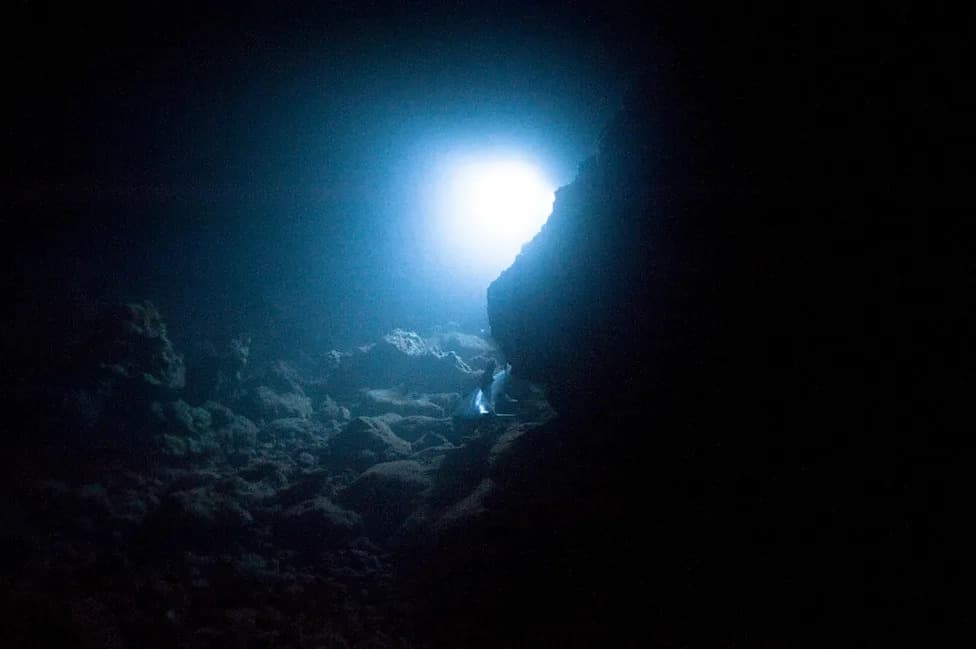
A New Predator Emerged From the Deepest OceanGiordano Cipriani - Getty Images
Scientists have discovered a ghostlike predatory crustacean nearly 8,000 metres below the ocean surface in the Atacama (Peru–Chile) Trench. The small animal, roughly four centimetres long, was collected during a 2023 survey and has been described as both a new species and a previously undescribed genus — a finding that highlights how much remains unknown in Earth’s deepest habitats.
Discovery and Study
During a 2023 expedition led by the Instituto Milenio de Oceanografía (IMO) from Universidad de Concepción aboard the research vessel Abate Molina, researchers recovered four specimens from about 8,000 m (≈25,246 ft) depth in the Atacama Trench. The animals were frozen after recovery and later examined using detailed morphological study and genomic sequencing. The results were published last year in the journal Systematics and Biodiversity.
What It Is
The new crustacean was named Dulcibella camanchaca, an epithet referencing words for “darkness” used by peoples of the Andes — a fitting name for a creature that lives well beneath the aphotic zone. Both DNA and physical traits indicate that this animal is not only a new species but belongs to a new genus, underscoring the evolutionary distinctiveness of life in the Atacama Trench.
Biology and Adaptations
Although only about four centimetres long, D. camanchaca is an active raptorial predator. It uses specialized grasping appendages to clamp onto and consume smaller crustaceans. Its pale, almost spectral carapace gives it a ghostlike appearance, but its behavior is unmistakably predatory. The specimens are adapted to extreme hydrostatic pressure — roughly 800 times the pressure at Earth’s surface — and to complete darkness below the aphotic zone.
Significance
"Most excitingly, the DNA and morphology data pointed to this species being a new genus too, emphasizing the Atacama Trench as an endemic hotspot," said Johanna Weston, lead author and Hadal zone specialist at Woods Hole Oceanographic Institution (WHOI). Carolina González, co‑lead from IMO, added that the discovery "underlines the importance of continued deep‑ocean exploration, particularly in Chile's front yard," and that further discoveries are expected as sampling continues.
Broader Context
The find also complements humanity’s wider interest in hidden oceans: on October 14, 2024, NASA launched the Europa Clipper mission to investigate the habitability of Europa’s subsurface ocean. While missions like Europa Clipper expand our search for life beyond Earth, discoveries such as Dulcibella camanchaca remind us that Earth’s deep-sea environments still yield surprising and ecologically complex organisms.
Conclusion
Finding a small, active predator thriving in the Hadal zone reinforces that extreme conditions do not preclude complex food‑web interactions. As researchers continue to sample, sequence, and study these depths, the Atacama Trench may reveal additional endemic species and new branches of life adapted to the ocean’s deepest darkness.
Help us improve.