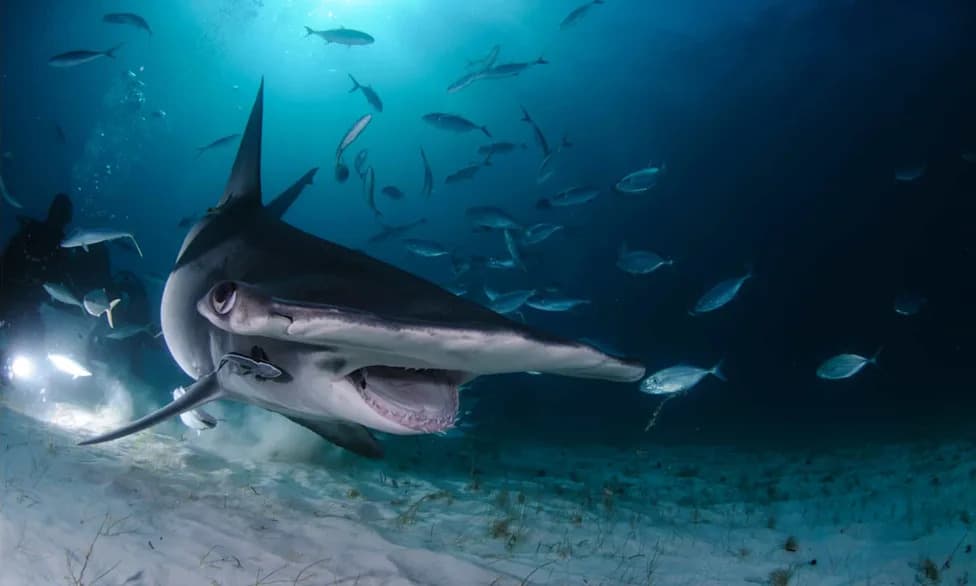
The Atlantic Shark Institute (ASI) recorded and tagged its first hammerhead shark off Block Island, Rhode Island, after an unexpected encounter during a Southern New England research outing on July 24, 2026.
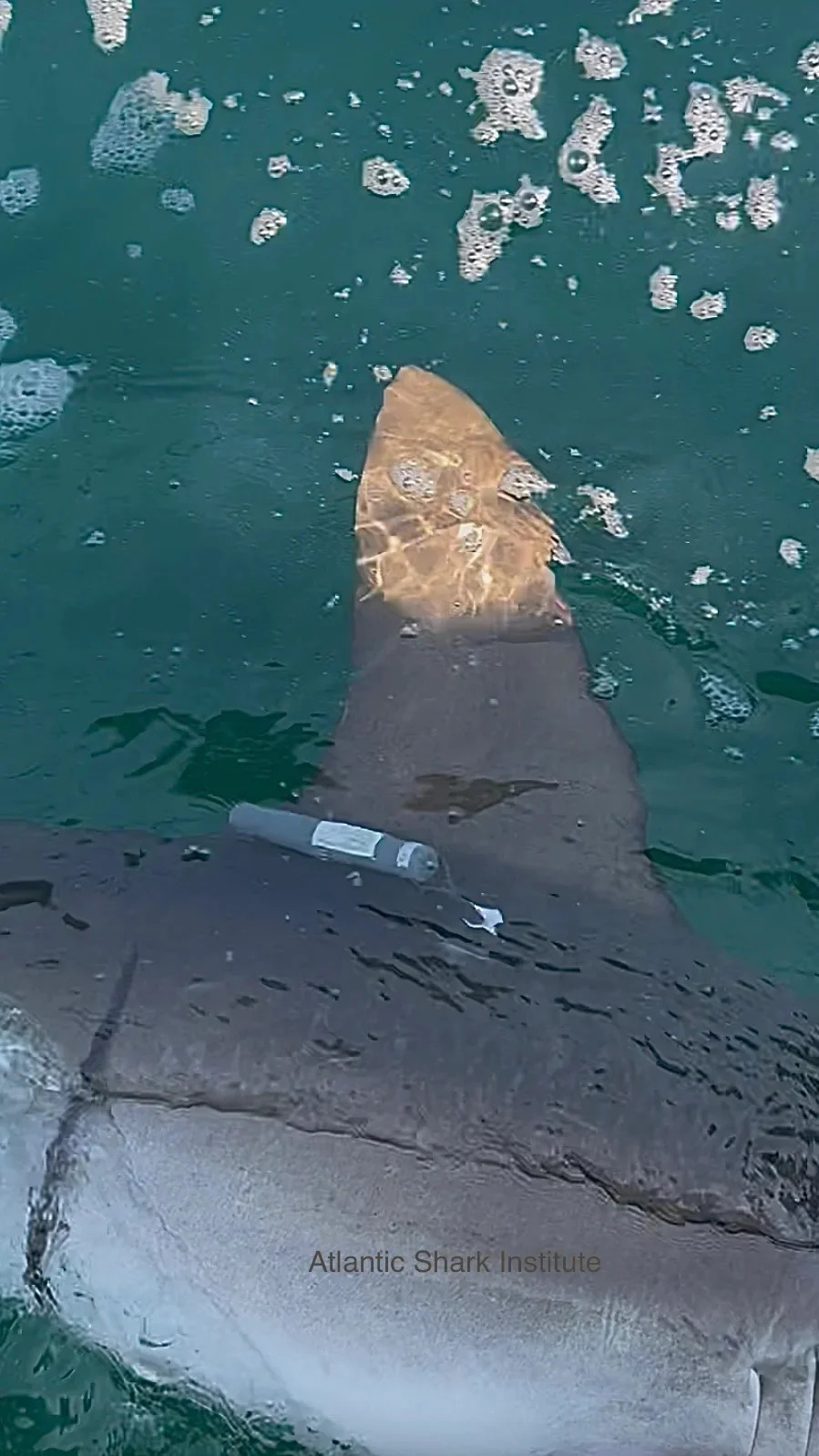
The tag placed on the smooth hammerhead shark by Atlantic Shark Institute
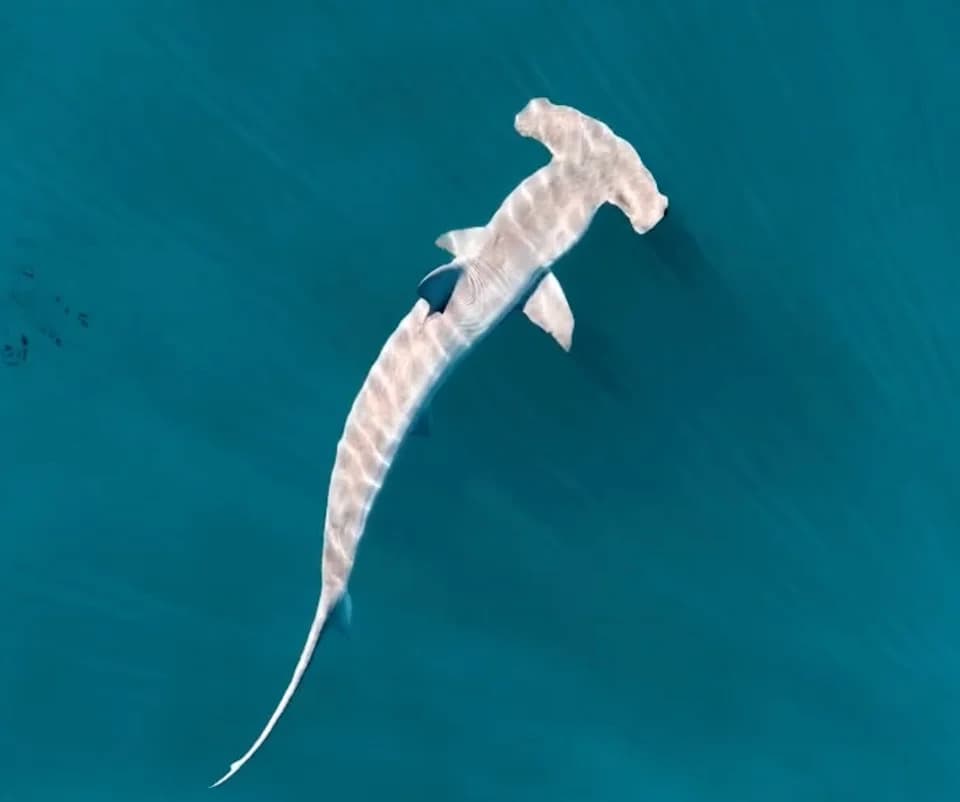
While the ASI team was targeting sandbar sharks, researchers spotted a very large, endangered scalloped hammerhead and captured striking video of the animal as it swam through the clear Atlantic waters. The footage was recorded by Tomas Koeck of Silent Flight Studios.
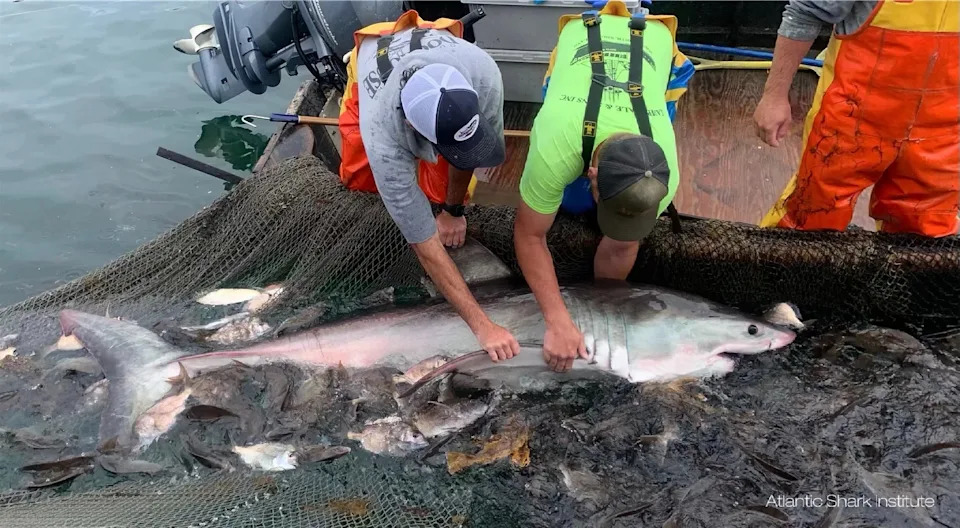
A great white shark tagged by Atlantic Shark Institute near Galilee, Rhode Island.
Although the crew attempted to bait and tag the scalloped hammerhead, that individual would not take the bait and was not tagged. Later in the same expedition the team encountered a roughly 6-foot female smooth hammerhead and successfully attached a combined satellite and acoustic tag.
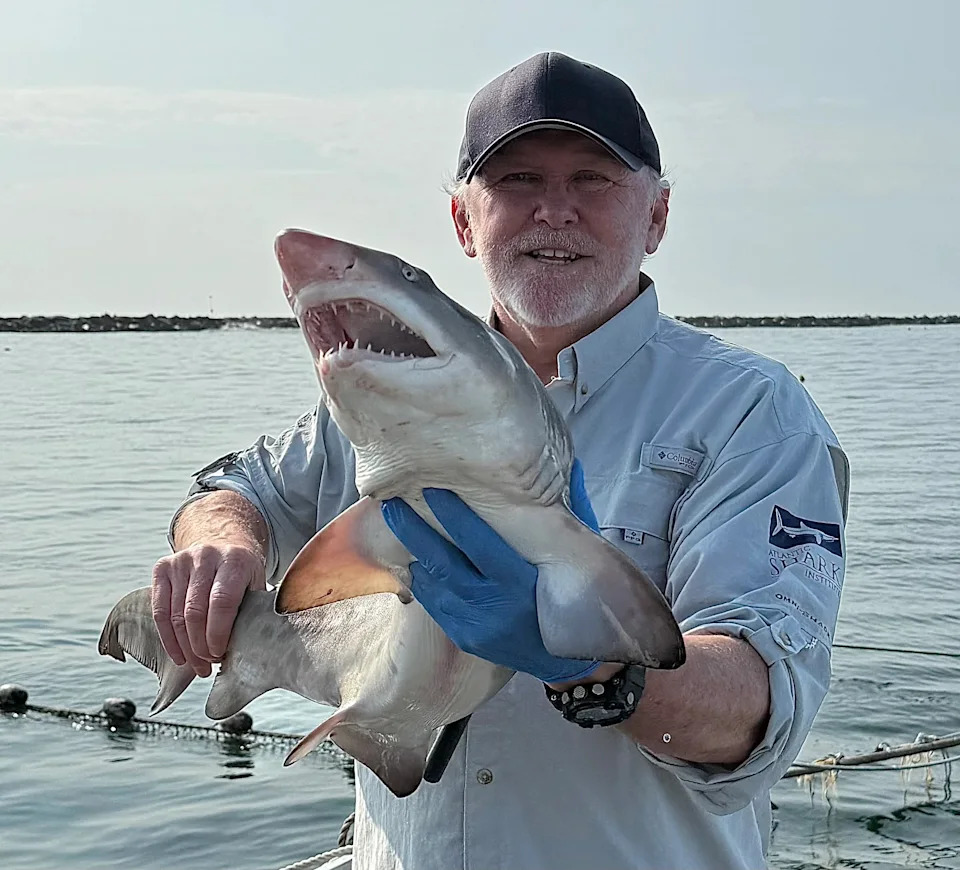
Jon Dodd holding a sand shark he tagged recently.
What The Tag Will Do
The tag placed on the smooth hammerhead will transmit location and movement data, enabling researchers to follow the shark along the U.S. East Coast for a decade or potentially longer depending on battery life and tag retention. ASI deploys both satellite and acoustic tags in New England to study migration routes, habitat use, nursery areas, residency patterns and seasonal movements.
"Hammerhead sharks are among the ocean’s most iconic predators, and documenting this first-ever tagging event by the ASI is an exciting opportunity to showcase the groundbreaking research taking place right here in Rhode Island," said Tomas Koeck.
"With our warming waters, many of the shark species New England residents associate with Florida and southern states are finding our temperatures much more attractive than they were 25 years ago," said Jon Dodd, executive director of the Atlantic Shark Institute. "The arrival of these sharks, and the tagging of our first hammerhead in our waters, raises a lot of questions — and we look forward to answering them with our partners and collaborators."
Research Context And Priorities
Dodd noted that scalloped hammerheads are less common in the region than smooth hammerheads because scalloped hammerheads tolerate a narrower temperature range. The newly deployed tag is an important addition to ASI’s long-running research program, which has tagged between 10 and 15 different shark species across New England projects.
This week alone the institute deployed roughly a dozen tags as part of ongoing fieldwork. As a nonprofit, ASI emphasizes that each tag must support a clear research objective: concentrating multiple tags on several individuals of the same species typically yields stronger scientific insights than distributing single tags across many different species.
To learn more about ASI’s work, visit the Atlantic Shark Institute’s website and follow their updates on Facebook and Instagram. To see more of Tomas Koeck's footage, check out "Ocean State: Rhode Island's Wild Coast," an Ocean State Media docuseries featured on PBS Passport.