
The uncrewed Long March 3B rocket was struck by lightning about 30 seconds after liftoff from Xichang on July 23, but it continued to space and successfully deployed the Tianlian-2 (06) relay satellite. Witnesses captured dramatic footage of a bolt arcing around the vehicle and through its exhaust before returning to earth. China Aerospace Science and Technology Corp. called the mission a "complete success" but did not mention the strike. Engineers say conductive spacecraft shells help protect internal systems, though rare strikes have caused problems historically.
Long March 3B Struck by Lightning 30 Seconds After Launch — Rocket Still Reaches Orbit (Video)
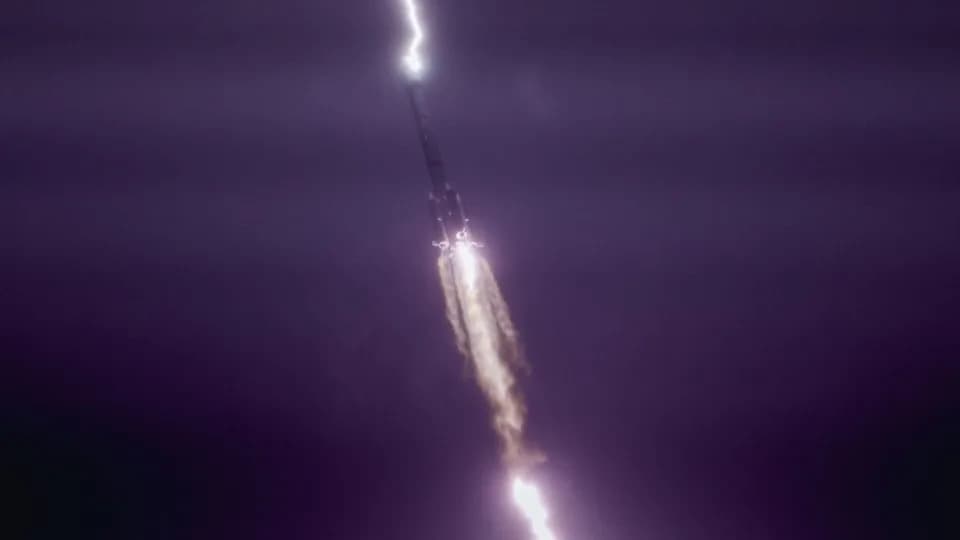
China's Long March 3B rocket was struck by a powerful lightning bolt around 30 seconds after launching on July 23. Despite this, it made it to space and successfully deployed its payload. | Credit: Zhou Quan/VCG via Getty Images
Hundreds of spectators at the Xichang Satellite Launch Center in southwestern China witnessed a dramatic moment on the night of July 23 when a bolt of lightning struck a Long March 3B rocket roughly 30 seconds after liftoff. Despite the spectacular electrical discharge, the uncrewed rocket continued its ascent and successfully deployed its payload into orbit.
What happened
Video and photos from the launch show a jagged lightning bolt arcing around the rocket's body and through its exhaust plume before returning toward the ground. Observers wearing raincoats and carrying umbrellas gasped as the sky lit up, then cheered when the vehicle kept climbing unimpeded.
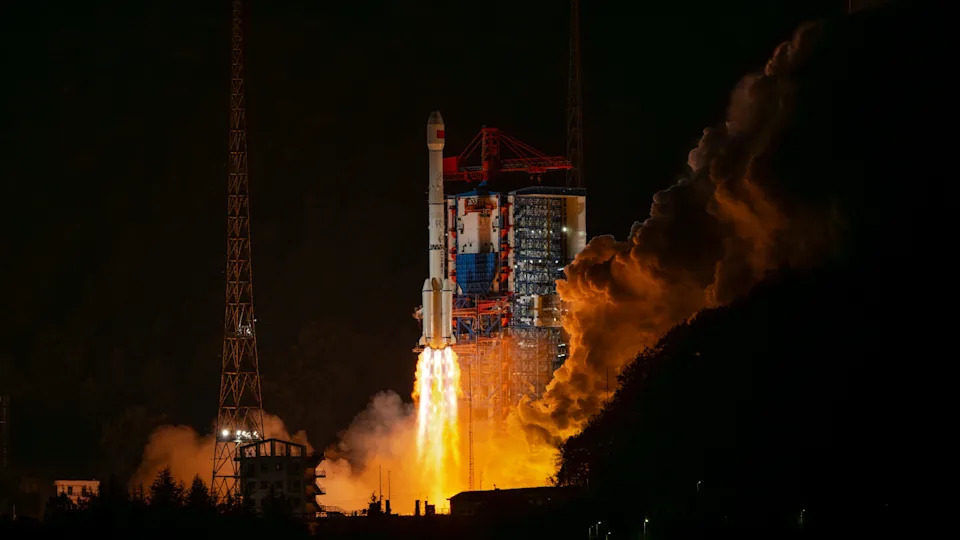
The Long March 3B is one of China's largest rockets and has been used in more than 100 missions since it first launched in 1996. This photo shows a launch on Dec. 9, 2025. | Credit: VCG/VCG via Getty Images
Mission outcome
China Aerospace Science and Technology Corp. later described the flight as a "complete success," saying the Long March 3B properly deployed the Tianlian-2 (06) relay satellite. The official release did not mention the lightning strike.
Why the rocket survived
Modern launch vehicles and spacecraft are engineered with conductive exteriors that channel large electrical discharges around critical systems, a principle similar to a Faraday cage. This design helps protect internal electronics and any crew from transient currents. Commercial airliners use related protections and, according to the U.S. National Weather Service, are typically struck by lightning roughly once per year on average.
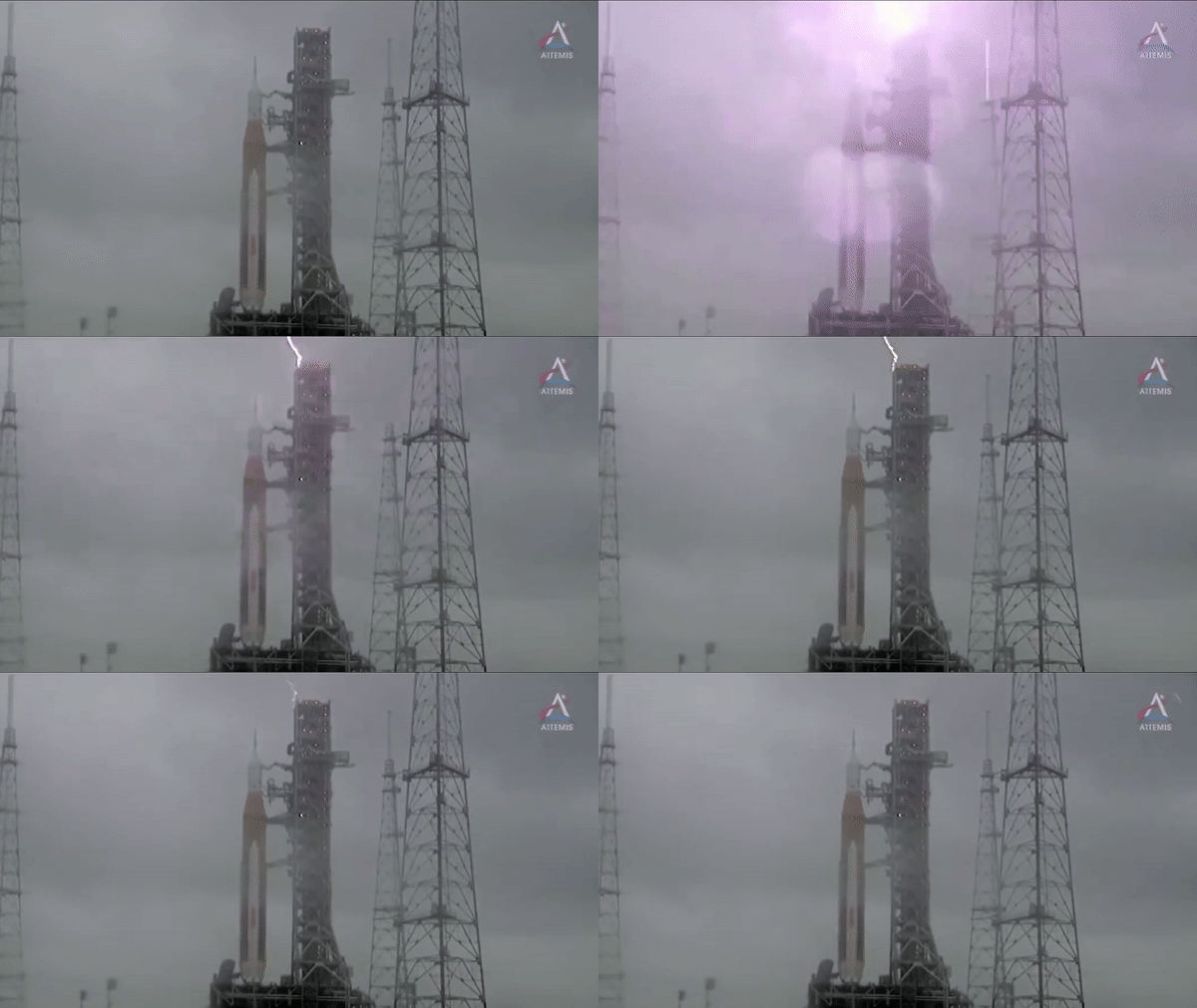
The rocket used in NASA's Artemis I mission was struck by lightning on the launchpad during a "wet dress rehearsal," several months before it launched into space. | Credit: NASA
Context and historical examples
Rockets are generally launched in favorable weather to minimize risks, but rare lightning strikes on ascending vehicles have occurred before. Notable incidents include NASA's Apollo 12 in 1969, when the Saturn V was struck twice shortly after liftoff and suffered sensor issues but completed the mission; a 2019 Soyuz launch reportedly hit by lightning while carrying a communications satellite; and an Atlas-Centaur (AC-67) launch in 1987 that was destroyed after a lightning-induced fault in its guidance computer caused catastrophic failure.
Lightning can also strike rockets on the ground: NASA's Space Launch System experienced a strike during a wet dress rehearsal prior to the Artemis I mission. Modern launch complexes often use lightning-protection towers and other design measures to reduce the likelihood of damaging strikes.
Notes on the strike
Eyewitnesses described the lightning's voltage as extremely high — reports placed it on the order of 100 million volts — though such figures are rough estimates from observers and not official technical measurements. Officials confirmed the satellite reached its intended orbit and the mission objectives were met.
Help us improve.





















