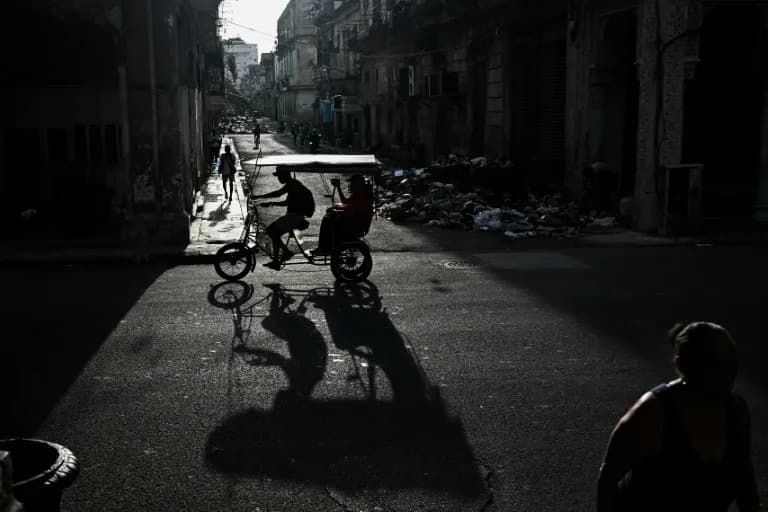
Cuba has loosened long-standing restrictions to allow private firms to run petrol stations, electricity generation, waste collection and medicine production as shortages mounted under an effective US fuel blockade. The decree aims to ease rolling blackouts, water cuts and acute shortages of food and medicines while the government keeps strategic sectors — education, telecoms, media and defence — under state control. Officials say the grid is meeting only 27% of peak demand, leaving a 2,380MW shortfall.
Cuba Lets Private Firms Run Pharmacies and Fuel Stations as Blackouts Bite
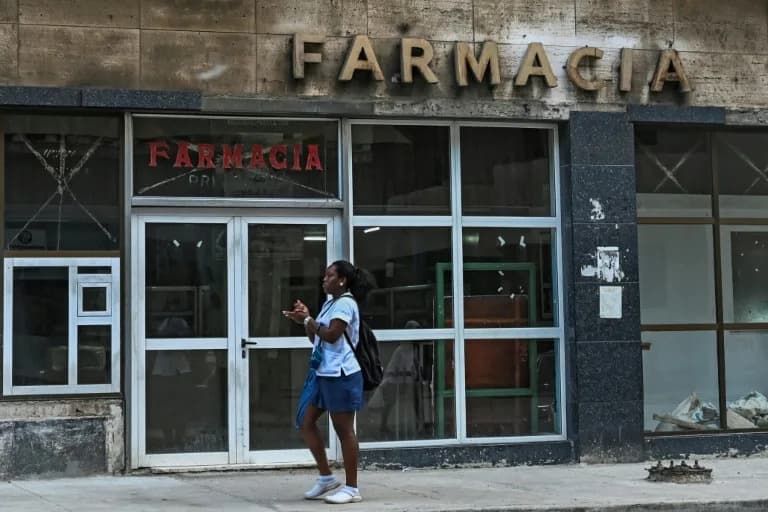
A woman walks past a pharmacy in Havana, where Cuba's communist authorities have announced an opening of sectors of its economy such as petrol stations, medicine sales and electricity generation to the private sector (YAMIL LAGE)
Cuba has issued a broad decree allowing private companies to operate key services — including petrol distribution, electricity generation, waste collection and the manufacture and sale of medicines — as the government struggles to manage acute shortages caused by an effective US energy blockade.
The move, announced as the National Assembly met in Havana, represents a notable loosening of decades-old communist economic controls. It aims to relieve immediate pressures on daily life after months of rolling blackouts, water cuts and shortages of food and medical supplies.
What the Decree Changes
The new regulations lift long-standing restrictions to permit private operation in a range of sectors most affected by the crisis:
- Petrol distribution and retail, including permission for private firms to sell fuel and to import and manufacture electric vehicles.
- Electricity generation, allowing private operators to help supply power.
- Rubbish collection and recycling services to address mounting sanitation problems in cities such as Havana.
- Production and sale of medicines to ease chronic shortages in pharmacies.
What Remains State-Controlled
The government emphasized it will retain authority over strategic sectors considered essential to political control: education, telecommunications, the media and defence. Tobacco sales remain a state monopoly. Oil and mining activities will be opened to private participation but only under state licences.
Why It Matters
Everyday life across the island has been disrupted by a severe fuel squeeze. Officials say Cuba's state electricity provider could meet only about 27% of expected peak demand on a recent day, leaving a 2,380-megawatt shortfall. There have been at least five nationwide blackouts this year and countless local outages; many parts of Havana receive power for only a few hours a day.
“Maybe it will be a good thing because, after all, right now there's nothing,”
said Ana Diago, 66, who retired and later returned to work at a port company. Another resident, 77-year-old Maria Luisa Perez, said:
“There are almost never any medicines in the pharmacy. When you go looking for them, there's nothing there, and then people sell them on the street.”
The National Assembly session included vocal denunciations of Washington and chants of “socialism or death!” — underscoring the political sensitivity of the reforms. Authorities framed the changes as pragmatic measures to stabilize supplies while preserving the state's control over sectors central to its power.
Context: International Pressure
The crisis has intensified since the United States took control of Venezuelan energy assets in late January, cutting off a principal source of fuel for Cuba. Washington has also warned it may sanction other countries that supply oil to the island. The combination of reduced imports, years of under-investment and trade sanctions has pushed Cuba's already fragile infrastructure toward collapse.
Help us improve.