More than half of the world’s migratory bird species are declining, driven by habitat loss, invasive species, collisions, hunting, toxic pesticides and bycatch. Advances in tracking, genetics and citizen science now let researchers follow individuals across full annual cycles and identify where conservation will have the greatest impact. A full annual‑cycle approach — protecting and restoring habitats and reducing threats along migratory routes, combined with stronger international cooperation and proactive government action — can reverse many declines.
More Than Half of Migratory Bird Species Are Declining — How a Full Annual‑Cycle Strategy Can Save Them
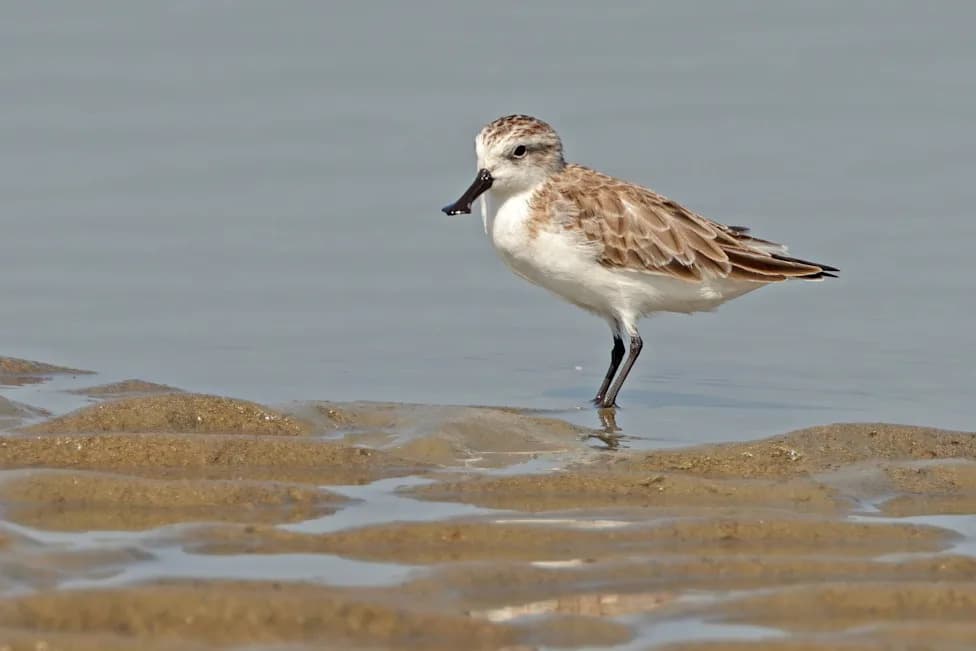
The spoon-billed sandpiper, a small wading bird, flies nearly 5,000 miles (8,000 km) on its annual migration.Tareq's Photography/Wikimedia,CC BY-SA
Every year, billions of migratory birds knit together continents, oceans and ecosystems as they make astonishing journeys between feeding areas and breeding sites. Many of these species are now in serious decline because the chains of habitats they depend on are being lost or degraded and new threats are multiplying.
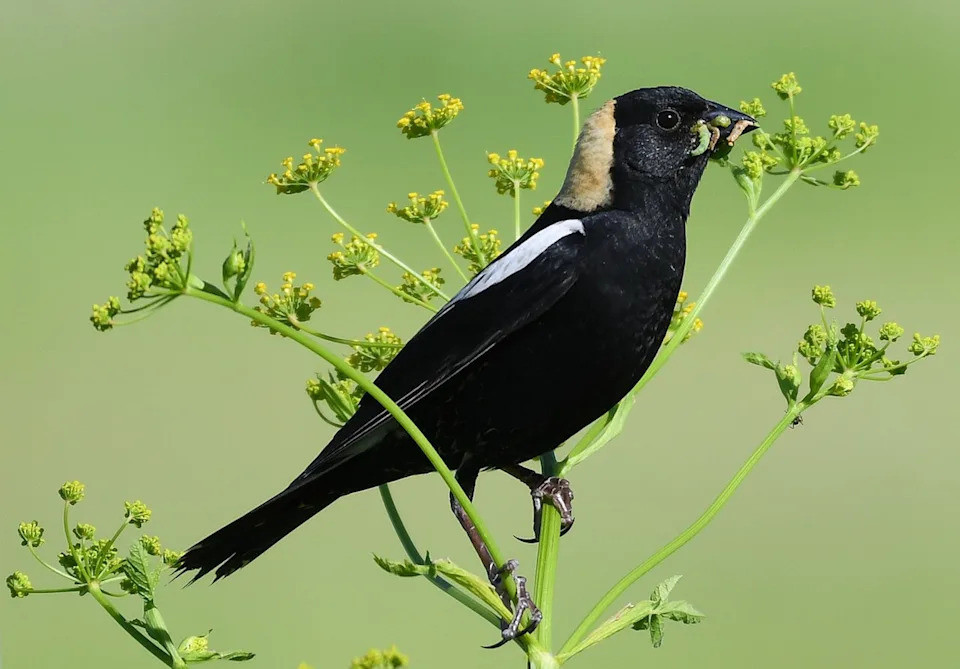
The bobolink breeds in the grasslands of North America, but it makes an epic migration journey to South America each year.Grayson Smith/USFWS.
Examples: The bobolink (Dolichonyx oryzivorus) leaves North American grasslands for the pampas of South America; Newell's shearwater (Puffinus newelli) soars across the North Pacific before returning to Hawaiian breeding sites; and the spoon-billed sandpiper (Calidris pygmaea) migrates from Arctic Russia to the rapidly disappearing tidal mudflats of Southeast Asia. Though ecologically distinct, all three rely on habitat networks spanning thousands of miles.
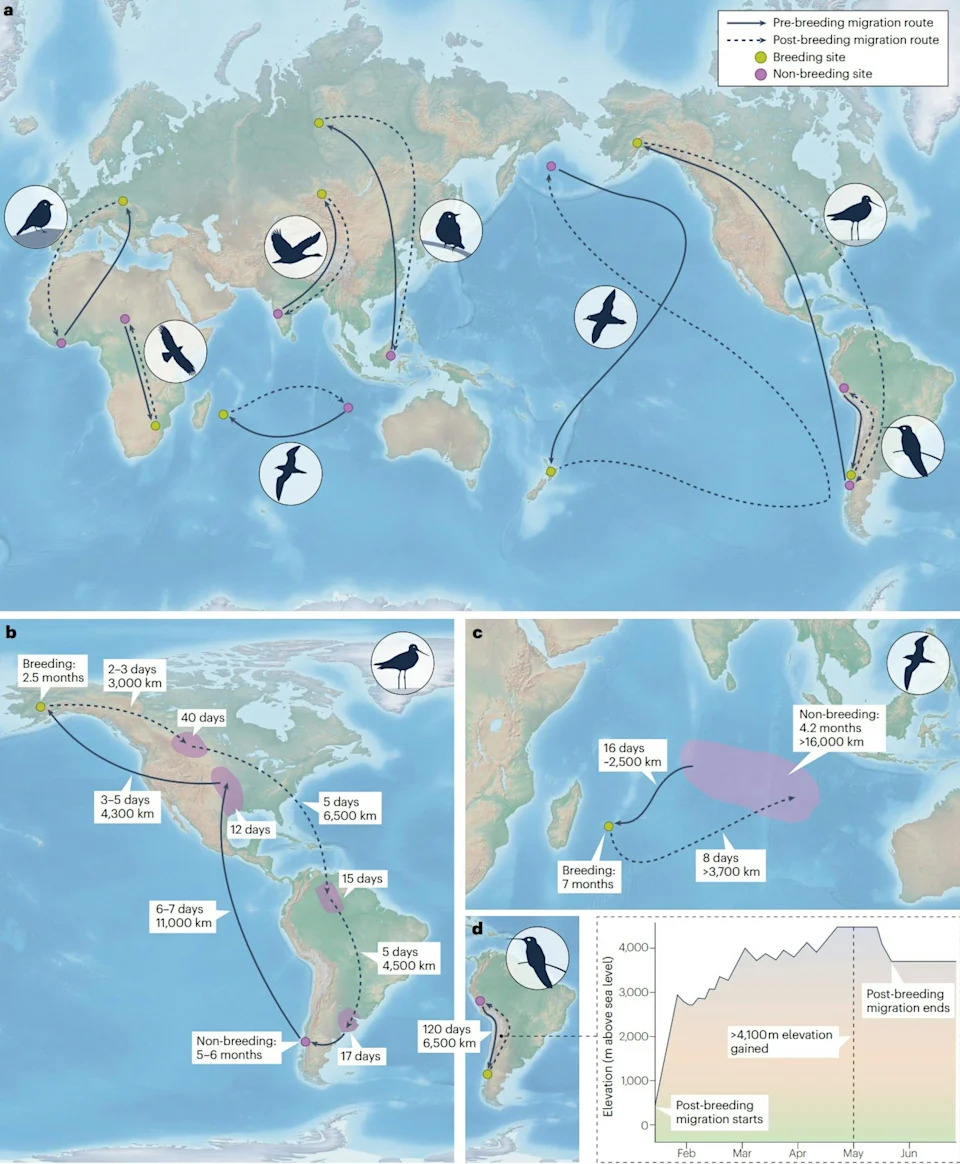
Some of the amazing migrations that take place around the world. (a) The lines reflect prebreeding (solid) and postbreeding (dashed) migration routes of several birds. (b) Some birds, like the Hudsonian godwit (Limosa haemastica), a member of the sandpiper family whose annual cycle is shown here, travel thousands of miles. (c) The Barau's petrel (Pterodroma baraui) spends much of its nonbreeding time over islands and open water. (d) Other species, like the giant hummingbird (P. gigas) found in the Andes mountains, travel to higher elevations after breeding.Nature Reviews Biodiversity/Peter P. Marra, et al., 2026
What the Global Assessment Found
Together with international colleagues, we assessed the status, threats and conservation actions for more than 3,380 migratory bird species. The findings are stark: more than half of the world’s migratory bird species are declining. Causes are multiple and often interactive, including habitat loss and degradation, invasive predators, collisions with buildings and power lines, hunting and capture for the pet trade, toxic pesticides and bycatch in fisheries.
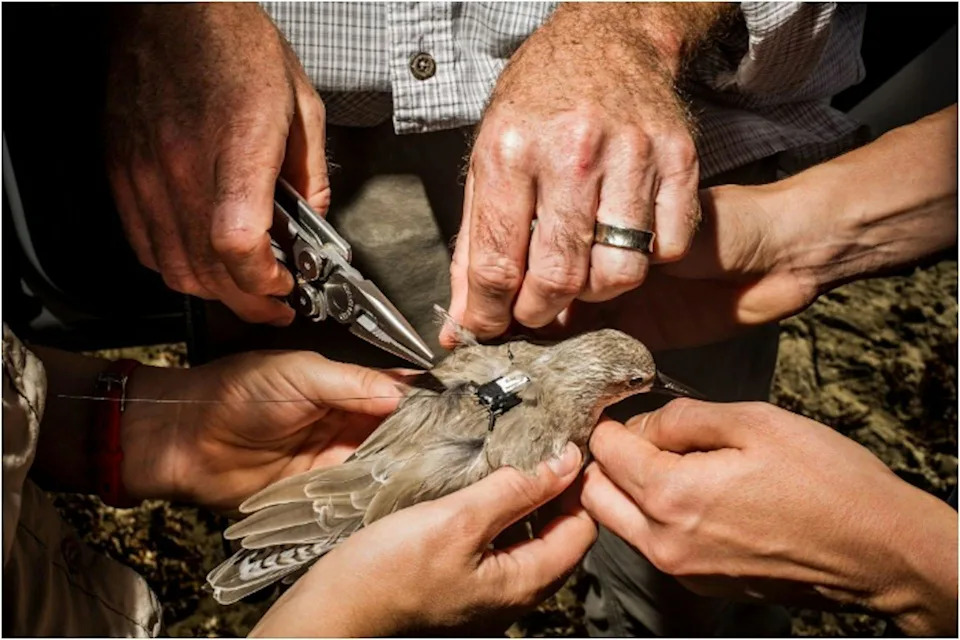
Researchers attach a satellite transmitter to the back of a red knot, a rapidly declining migratory species. Tiny trackers like these show migration routes and help locate the potential harms and ways to help these species. Tim Romano, courtesy of the Smithsonian Institution
New Tools Give Us Hope
Science and technology have advanced rapidly in the past two decades. Miniature satellite tags and radio transmitters let researchers follow individual birds across continents; genetics identify population structure and connectivity; automated telemetry networks, long-term monitoring and citizen-science platforms such as eBird now document trends and movements at unprecedented scales. These tools reveal where and when birds face their greatest risks and where conservation will provide the biggest gains.

Trackers on birds are like tiny backpacks. Smaller than a penny, birds can carry them hundreds of miles, giving scientists insight into their patterns and habitats and ways to help them survive. Tim Romano, courtesy of the Smithsonian Institution
A Full Annual‑Cycle Conservation Approach
Protecting breeding or wintering sites remains essential, but it is not always sufficient. Migratory species require conservation across their full annual cycle: breeding grounds, nonbreeding areas, and stopover sites along flyways. That means combining place-based protections and habitat restoration with threat reduction wherever threats occur, and coordinating actions across national borders.
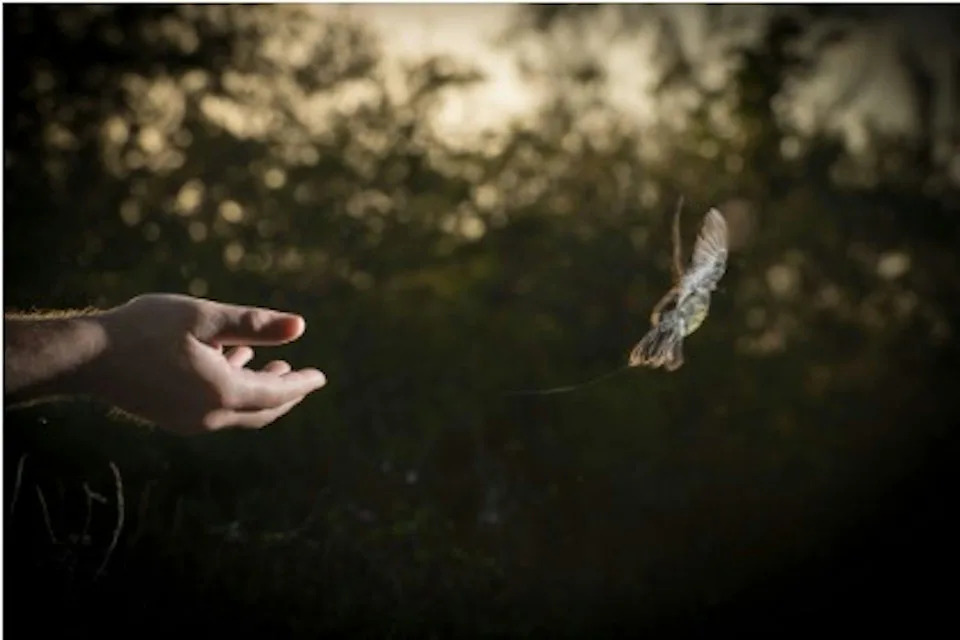
A scientist releases a Kirtland's warbler with its tracker attached. Tim Romano, courtesy of the Smithsonian Institution
Examples of Conservation in Action
The United States initiative Road To Recovery brings together governments, scientists, conservation groups, landowners and communities to form species working groups that identify the pressures on populations and target limited resources where they will be most effective. More than 50 international working groups now develop recovery strategies for species such as bobolinks, lesser yellowlegs and evening grosbeaks. International agreements and flyway partnerships also provide frameworks for cross‑border action, though wider participation and sustained public funding remain critical.
Past Successes Show It Works
When threats are identified and removed or reduced, populations can recover. The near‑collapse of raptors such as the bald eagle, peregrine falcon and osprey due to DDT use is a clear example: banning the pesticide and enacting protections allowed these species to rebound. Similar, targeted efforts can avert further declines among migratory birds if applied proactively and at scale.
What Needs To Happen Next
- Adopt full annual‑cycle conservation planning to protect and restore habitat across migratory routes.
- Expand international cooperation and ensure major range countries participate in multilateral agreements and flyway initiatives.
- Translate new scientific knowledge into on‑the‑ground actions: habitat protection, threat reduction, policy reforms and community engagement.
How You Can Help
Individuals, landowners and businesses can contribute by protecting and restoring habitat, reducing threats such as free‑roaming cats and light pollution, supporting bird‑friendly policies and participating in citizen science projects that track bird populations.
Conclusion: Next spring bobolinks will return to North American grasslands, Newell's shearwaters will cross thousands of miles of ocean back to Hawaii, and spoon‑billed sandpipers will attempt one of the planet's most extraordinary migrations. Whether future generations witness these migrations depends on the choices and conservation actions taken today.
By Peter P. Marra, Georgetown University, and Nathan W. Cooper, Smithsonian Institution. This article is republished from The Conversation.
Help us improve.