Researchers measured magnetic properties in 96 bee species and detected magnetic signatures in 74, suggesting magnetoreception may be more common than previously believed. Measurements came from powdered museum and field specimens analyzed with a magnetometer, and signatures appeared across social, solitary, day- and night-active bees. The team also found magnetic signals in other insects, but emphasized that detecting magnetic particles is not proof of navigation — live behavioral tests are needed to confirm function. The findings raise new questions about the evolution and anatomical basis of magnetoreception and its ecological implications.
Magnetic Bees? Study Finds 74 of 96 Species Carry Magnetic Signatures — An Internal Compass May Be Common
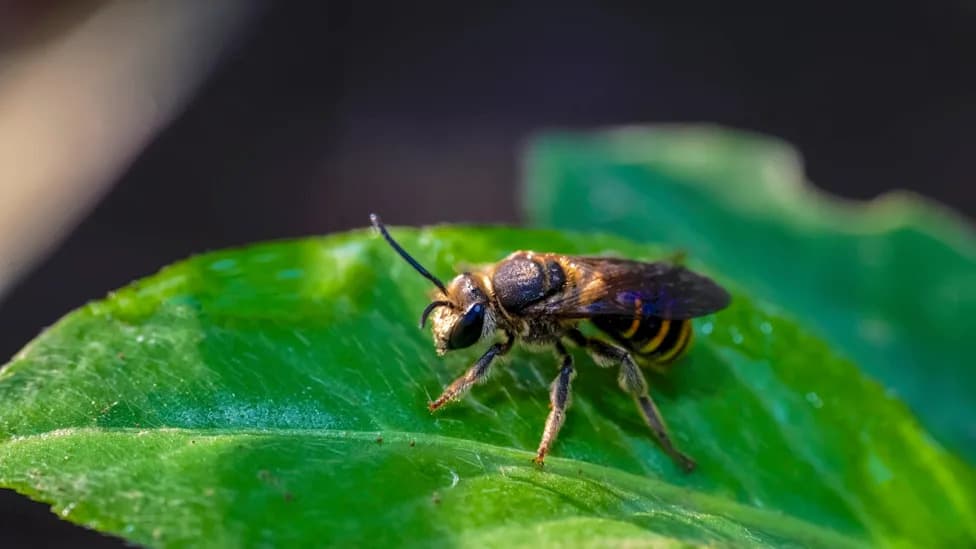
Photo Credit: iStock
New research suggests magnetic properties are far more common across bees than previously thought. In measurements of 96 bee species, scientists detected magnetic signatures in 74 species — roughly 75% — a result that raises the possibility an internal magnetic sense (magnetoreception) may be widespread among bees and perhaps other insects.
How the Study Was Done
The study, published in Science Advances and led in part by Laura Russo of the University of Tennessee, revisited long-standing assumptions about magnetoreception in bees. Rather than testing live insects, the research team analyzed dried museum and field specimens representing diverse branches of the bee family tree. The researchers ground the insects into powder and used a magnetometer to measure magnetic behavior, which revealed detectable magnetic signals in 74 of the 96 species tested.
What They Found
Magnetic signatures appeared across bee types: social and solitary species, day- and night-active bees, ground-nesters and above-ground nesters. Larger-bodied bees tended to generate stronger magnetic signals, and social species were, on average, more magnetic than solitary ones — but the trait was distributed across multiple bee families, not restricted to honeybees.
Broader distribution across insects: the team extended their measurements to other insect groups (including beetles, wasps and flies) and found magnetic signatures there as well, supporting the idea that this trait could be ancient and conserved across insects.
Limitations and Next Steps
The researchers stress that finding magnetic particles in a specimen is not definitive proof that those particles are used for navigation. As they note, the magnetic response should be viewed as an indicator that may correspond with magnetoreception. Behavioral experiments on live insects will be necessary to confirm whether these magnetic particles function as navigational sensors.
Location of magnetic signals: magnetic signatures appeared in several body regions rather than confined to a single organ, which challenges hypotheses that magnetoreception is localized in one spot and suggests researchers may need to rethink where and how magnetic sensing operates in insects.
"We concluded that magnetism is probably an ancient, well-conserved trait," Russo wrote, while also acknowledging the study's limits: "But we cannot prove it."
Why This Matters
If magnetoreception is widespread, even as a backup sense, it could change how scientists understand pollinator navigation, movement through fragmented or human-altered landscapes, and resilience of pollination services important for ecosystems and agriculture. The findings open new avenues for behavioral and physiological research to determine whether and how bees use magnetic cues while foraging and navigating.
Next steps for researchers: conduct controlled behavioral trials with live insects, map the anatomical distribution of magnetic particles in intact bodies, and investigate how environmental changes (e.g., electromagnetic noise, habitat fragmentation) might affect magnetic sensing and pollinator behavior.
Help us improve.