President Trump has actively shaped a $22.5 billion proposal to renovate Washington Dulles International Airport, reviewing 3D models and convening Oval Office design sessions. The plan preserves Eero Saarinen’s signature sloped roof but replaces the long‑running mobile lounges with an underground U‑shaped aerotrain, moving sidewalks and four new linear concourses. About 30 firms bid on the project; the chosen concept relies on MWAA tax‑exempt bonds and significant United Airlines involvement. Separate RFPs will address land‑side development such as parking and a proposed convention center.
Trump Crafts $22.5B Plan to Overhaul Dulles, Axes Iconic Mobile Lounges
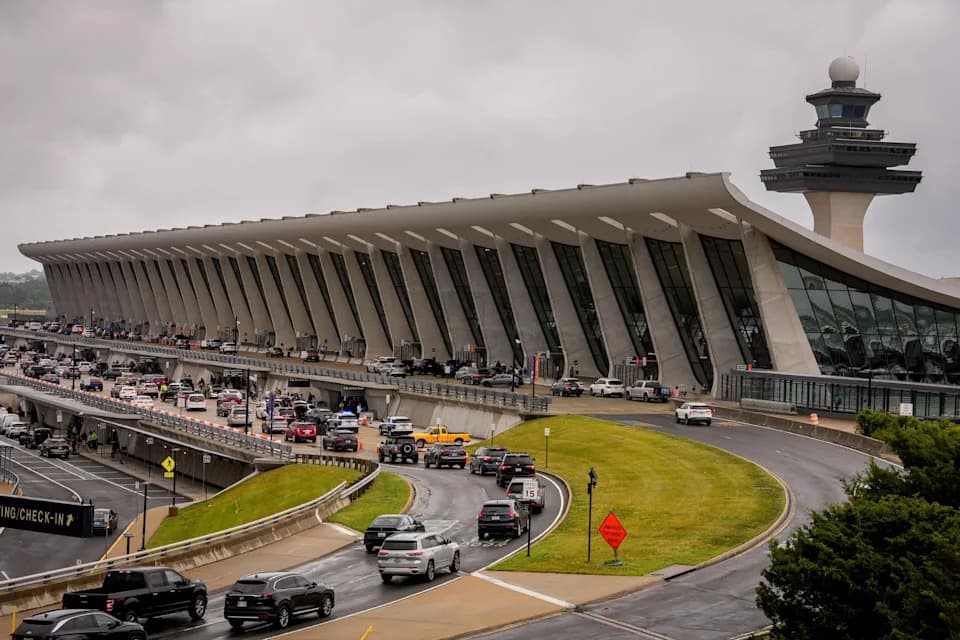
File: Washington Dulles International Airport on May 22, 2026 in Dulles, Virginia. / Credit: Andrew Harnik / Getty Images
President Donald Trump has taken a hands‑on role in shaping a proposed $22.5 billion renovation of Washington Dulles International Airport, asking competing design and engineering firms to produce three‑dimensional tabletop models for review at the White House, multiple sources told CBS News.
White House Design Sessions
Those large scale models were repeatedly brought to and from the White House so the president could examine details and mark up suggested changes to terminal shuttle buses, parking layouts, baggage‑handling systems, underground train concepts and the airport’s overall aesthetic, sources said. Two sources indicated Mr. Trump intended to unveil his preferred concept publicly this week; a formal announcement from the Oval Office with Transportation Secretary Sean Duffy had been scheduled but the timing could shift.
Mr. Trump has described Dulles as a "terrible airport" that was "incorrectly designed," and privately complained about "parking that's two miles away" and the airport's mobile lounge system, which he called "crazy," according to sources.
What the Plan Proposes
The president-backed concept preserves the iconic sloped roof of Eero Saarinen’s main terminal while modernising the interior with a more open foyer and updated ticket kiosks. The centerpiece of the proposal is the removal of the long‑standing mobile lounges — often called "people movers" — that have served Dulles since 1962, replacing them with an underground U‑shaped aerotrain and expanded moving sidewalks to link passengers to the concourses.
The plan calls for a major terminal expansion: four new linear concourses to replace the current A, B, C and D gate areas. The existing C and D gates, built in 1985 as temporary facilities, would be superseded by modern concourses. Parking would be relocated closer to the main terminal to improve passenger convenience.
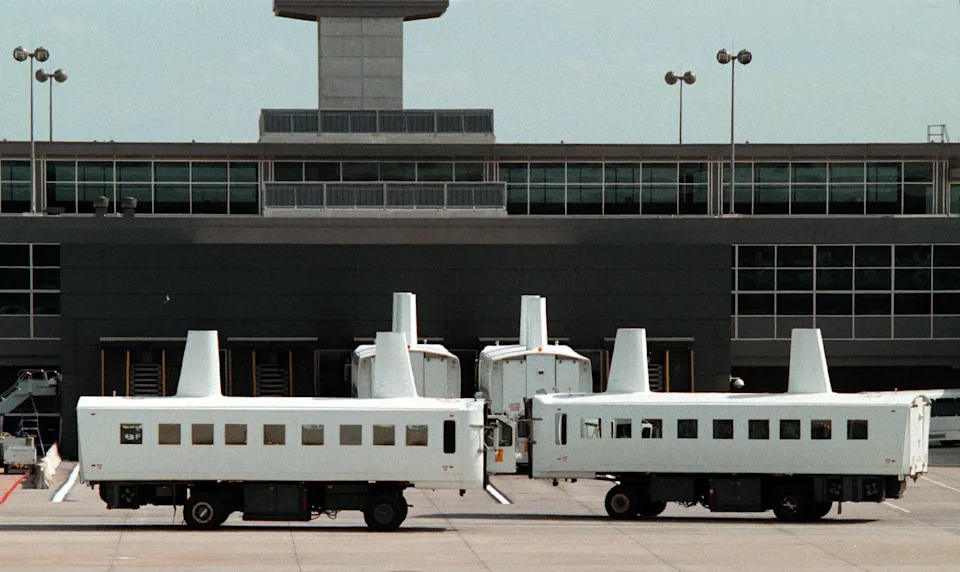
File: Pictured, Dulles 'mobile lounges' transport passengers to far-flung terminals in the airport. / Credit: The Washington Post / By Bill O'Leary TWP via Getty Images
Competition And Selection
About 30 proposals were submitted, including bids from HNTB, STV Group, Jacobs, Ferrovial and AECOM. Executives from development and finance firms participated in Oval Office charrettes to pitch ideas, and the president reportedly pressed advisers by phone with suggestions.
- Ferrovial — the firm behind JFK Terminal 1 — proposed a wavy‑roof main terminal that the president rejected.
- Jacobs offered a high bridge between terminals that would allow aircraft to pass beneath; the design did not win favor.
- HNTB submitted a radical plan that would effectively build a second main terminal across the property; that approach was judged too disruptive to ongoing operations.
- BlackRock proposed financing, building and operating the airport — a move that would have transferred control from the Metropolitan Washington Airports Authority (MWAA) — but that plan raised complications and faced opposition from United Airlines.
Financing And Operations
The president ultimately favored a concept that builds on existing infrastructure and coordinates with United Airlines. Sources said United CEO Scott Kirby met with Mr. Trump during the planning process. Under the Trump‑endorsed approach, MWAA — which can issue tax‑exempt bonds — would finance the work. United would contract for the construction and repay the bond financing through airport operations. One advantage cited for the United proposal: existing runways would not need to be altered.
Separate requests for proposals are expected for public‑private partnerships to develop the land‑side components of the project, such as a proposed convention center and new parking facilities.
Reaction And Next Steps
Frequent fliers at Dulles are likely to notice the removal of the mobile lounges most of all; one regular traveller called the people movers a "mobile torture chamber." The timeline for announcements and contracting could change as MWAA and potential private partners respond to the selected concept.
Help us improve.