In the early 1970s the CIA launched Project Azorian to recover the Soviet submarine K-129, which sank in 1968 about 1,800 miles northwest of Hawaii and rested near 16,500 feet. Using Howard Hughes as a cover story and claiming the vessel would mine the ocean, the agency built the Hughes Glomar Explorer and fitted it with a massive capture device. In July 1974 a partial recovery brought up a section containing six bodies, but the sub broke apart during the lift. Press revelations and congressional scrutiny ended further recovery attempts.
How the CIA Used Howard Hughes and the Glomar Explorer to Recover a Sunken Soviet Sub
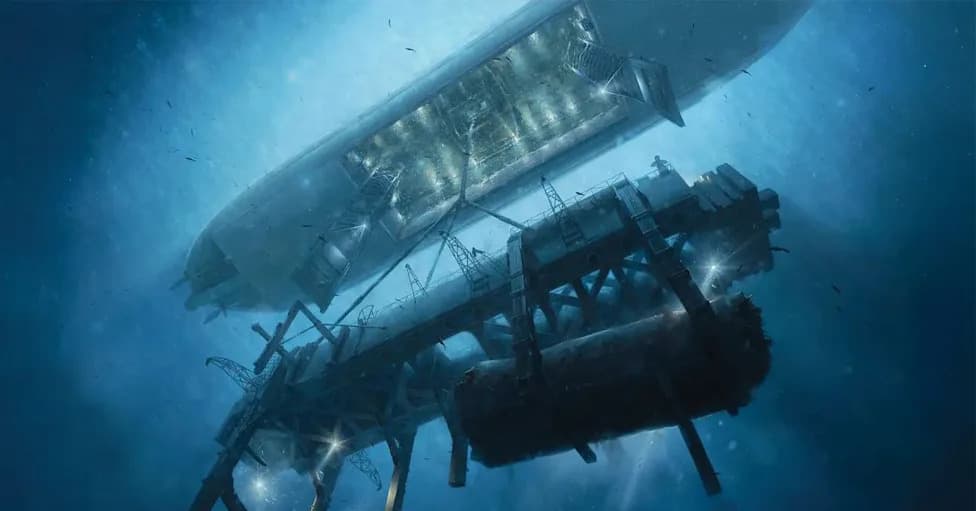
A painting shows the 1974 retrieval of the wreckage of the K-129 submarine by the Hughes Glomar Explorer. (CIA Intelligence Art Collection)
After the Soviet ballistic-missile submarine K-129 sank in 1968, its wreck lay roughly 1,800 miles northwest of Hawaii at an almost unimaginable depth—about 16,500 feet. The CIA wanted to know whether the disabled submarine contained cryptographic or other intelligence of value. To conceal its operation in the tense Cold War atmosphere, the agency adopted an audacious cover: enlist billionaire Howard Hughes and pose the mission as a commercial ocean-mining expedition.
The Plan: Project Azorian and a High-Stakes Ruse
Under the classified Project Azorian, the CIA and its contractors built a unique vessel, the Hughes Glomar Explorer, which the public was told would harvest manganese nodules from the seafloor. In reality, the ship was engineered to locate and lift all or part of the K-129 for forensic and intelligence examination.
Howard Hughes's Role
Howard Hughes lent his name and corporate resources to the cover story. An eccentric, immensely wealthy industrialist with prior government collaborations, Hughes provided the plausible front the CIA needed to explain a large ship operating in remote Pacific waters without attracting Soviet suspicion.
Engineering a One-of-a-Kind Salvage Ship
Built over about two years at a cost of roughly $350 million (contemporary estimates), the Glomar Explorer featured extraordinary innovations: a deep internal moon pool, a massive capture vehicle (often described as a "claw"), an on-deck derrick and stabilizing legs. Engineers lowered the capture vehicle by joining multiple 60-foot pipe sections to reach the seabed and then reversed the process to hoist any recovered section onboard.
The 1974 Attempt and Partial Success
In July 1974, operating in relative secrecy and with Soviet ships nearby, the Glomar Explorer’s capture vehicle seized part of the K-129. During the lift, the submarine fractured; only a portion of the wreck came aboard. That section contained the remains of six Soviet submariners. Decades later, in 1992, then-CIA Director Robert Gates presented evidence of a burial at sea to Russian President Boris Yeltsin.
Exposure, Fallout, and Legacy
Project Azorian’s secrecy unraveled after thieves stole documents from a Los Angeles office of one of Hughes’s companies, and press investigations followed. A 1975 Los Angeles Times article and TV reporting by Jack Anderson revealed links between Hughes, the CIA and the K-129 recovery, prompting congressional scrutiny and making further operations politically untenable. The Soviets also tightened surveillance of the wreck area. The Glomar Explorer never completed another recovery attempt.
Why it matters: Project Azorian remains one of the most ambitious and unconventional Cold War intelligence operations—a blend of cutting-edge engineering, covert policy, and bold deception that still captures public imagination.
Note on sources: Key public details about Project Azorian are drawn from declassified CIA materials, contemporary reporting, and published histories such as Josh Dean’s The Taking of K-129.
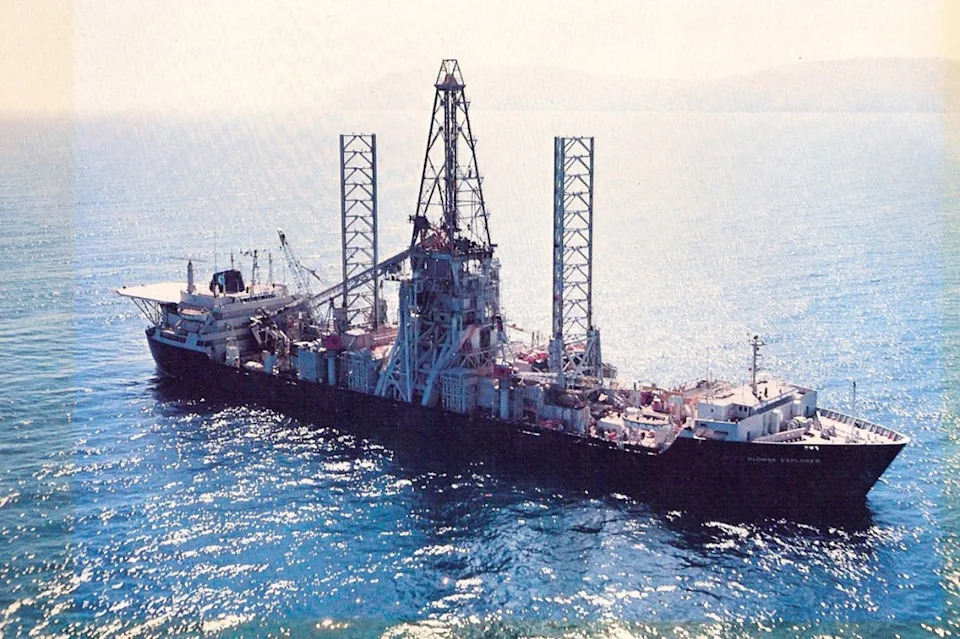
At the time, the Glomar Explorer cost about $350 million to build. (National Security Agency)
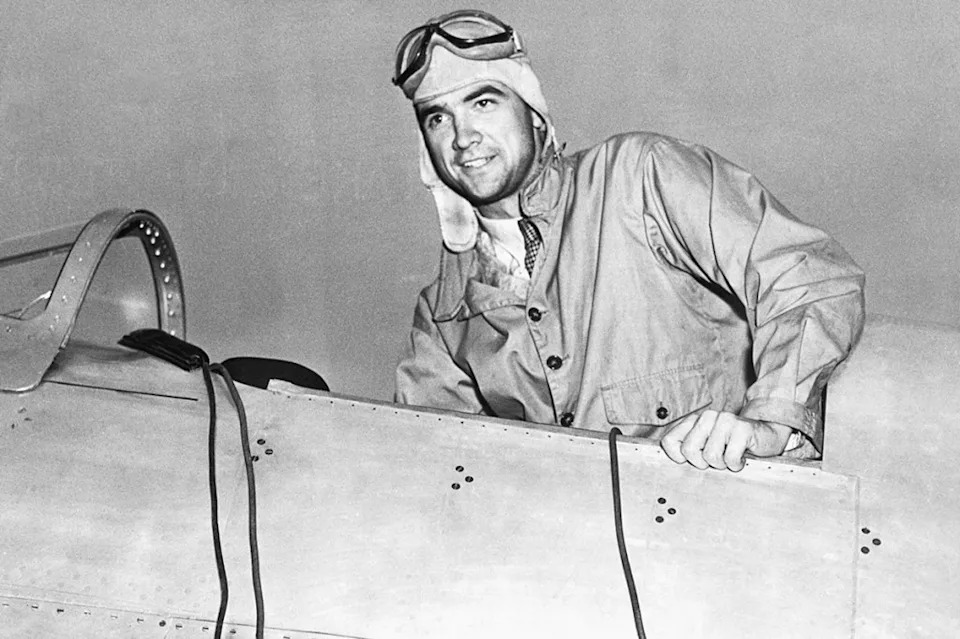
In an undated photo, Howard Hughes looks out of the cockpit of an airplane in a leather flight helmet and goggles. (Getty Images)
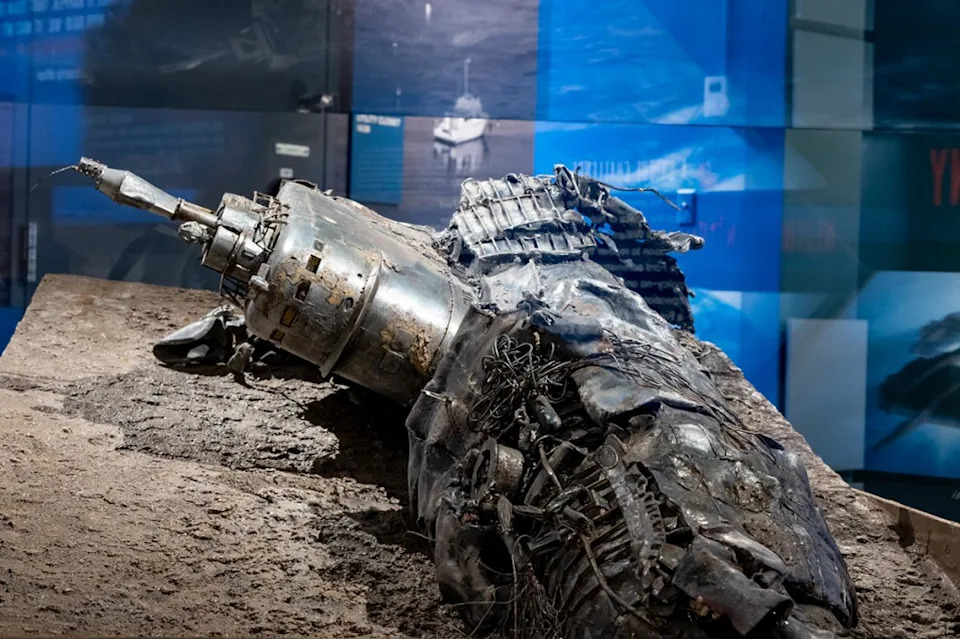
A model of the sunken and deteriorated K-129 submarine that the CIA created during Project Azorian. (CIA)
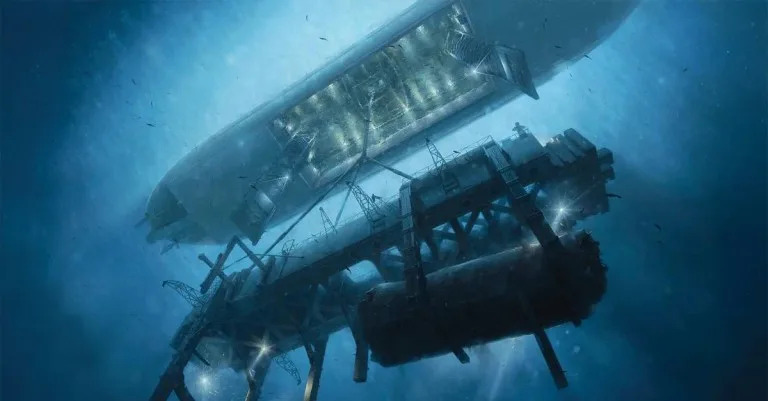
Glomar Explorer Soviet sub
Geocaching
David ayer Heart of the Beast k9
USS Somers mutiny
modern marvels world war II history
Help us improve.