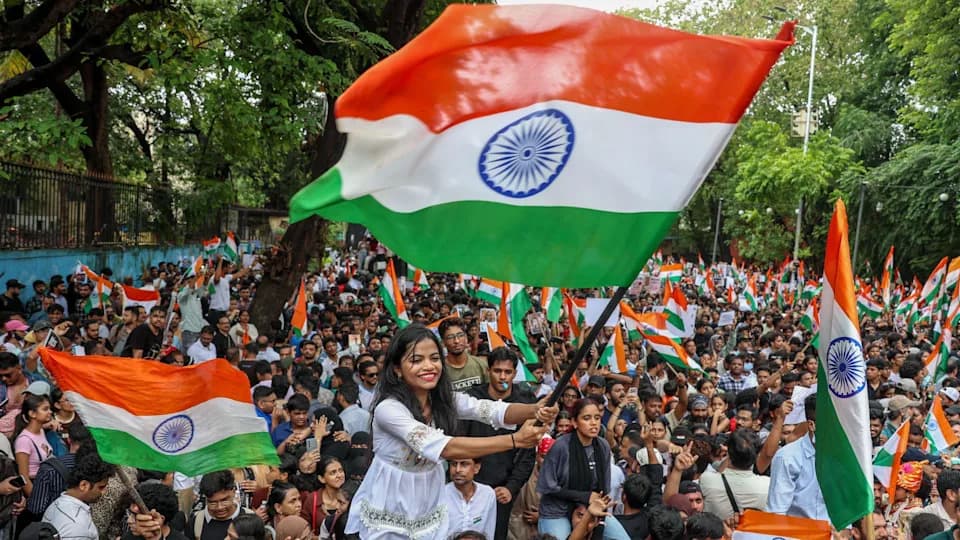
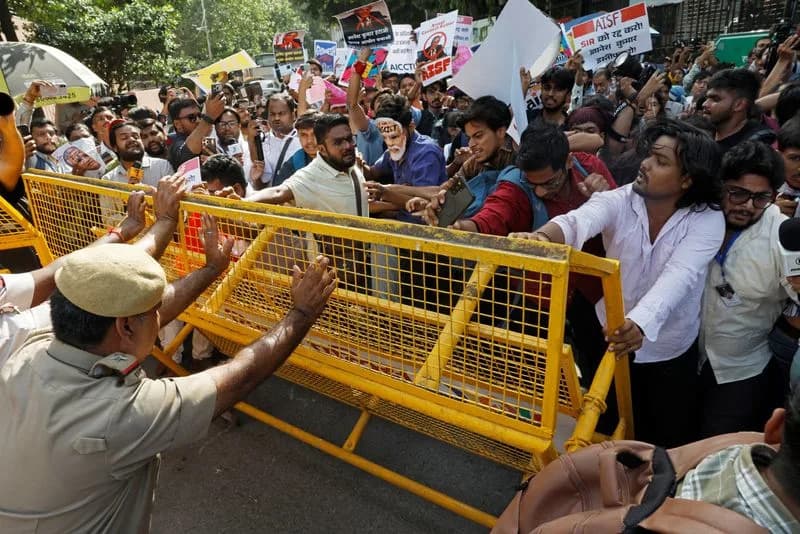
Nationwide youth protests over exam leaks and job prospects forced the Indian government to concede, including the resignation of Education Minister Dharmendra Pradhan and promises not to prosecute many detained demonstrators. The online Cockroach Janta Party (CJP) mobilised millions, using memes and short videos to broaden support and expose vulnerabilities in Prime Minister Narendra Modi's once-dominant narrative. The episode — coming ahead of key state elections — underscores the growing political influence of Gen Z and the power of social media-driven dissent.
Youth-Led Protests Shake Modi's Aura of Invincibility as Government Concedes
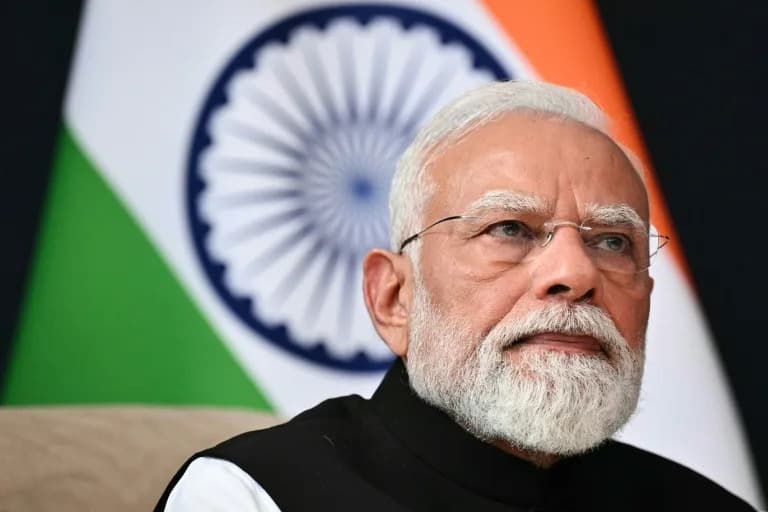
India's Prime Minister Narendra Modi reacts during a bilateral meeting with US President as part of the G7 summit, in Evian, eastern France, on June 17, 2026 (Mandel NGAN)
Indian Prime Minister Narendra Modi's carefully cultivated image of invulnerability was shaken after his government retreated in response to widespread youth-led protests over exam paper leaks and employment prospects.
Rare Public Reversal
Demonstrations organised and amplified online by the Cockroach Janta Party (CJP) spread from New Delhi to cities across India last week and culminated in the resignation of Education Minister Dharmendra Pradhan. The administration also agreed not to prosecute many detained protesters and offered additional concessions — an uncommon climbdown for a leader who has projected firmness since taking office in 2014.
How A Crackdown Backfired
A police attempt to block and disperse crowds marching toward parliament on July 20 backfired, galvanising sympathy for the movement and transforming anger about exam paper leaks into broader youth frustration over jobs and opportunity. Images and video of police action circulated widely online, drawing support from opposition parties and sections of civil society.
'The resignation is definitely a surprise, because it is not in Mr. Modi's temperament to take a back step,' analyst Nilanjan Mukhopadhyay told AFP. 'Twenty-five years of brand building, a lot of it has been very heavily damaged.'
Politics, Power and Timing
The climbdown comes ahead of important state elections in Punjab, Gujarat and Uttar Pradesh and is one of the few occasions public pressure has compelled Mr. Modi, 75, to reverse course since 2014. While the setback has dented the perception of invincibility around Mr. Modi and his ruling Bharatiya Janata Party (BJP), the prime minister remains dominant in national politics. The government has announced plans for legal reforms and promised swift action against those implicated in paper leaks.
Digital Culture and a New Generation of Dissent
Analysts say the protests highlighted a rapidly changing digital landscape. The CJP, launched in May, mobilised millions online and used memes, reels and short videos to spread its message to Gen Z across towns and cities.
'The government focused on maximising network strength, but it did not pay attention to the way that the algorithms changed,' said Joyojeet Pal, a professor at the University of Michigan.
By midweek the CJP boasted more than 26 million Instagram followers versus the BJP's roughly 9.6 million, illustrating how viral content and internet culture can erode traditional narrative control. Even Mr. Modi's attempts to reach younger audiences with vertically shot, selfie-style videos were widely mocked and repurposed into critical memes.
What Comes Next
For India's fragmented opposition, the protests provided a rare opening to pressure the government, but converting youth anger into electoral gains will depend on the opposition's ability to unite behind a credible alternative. Observers say the episode underlined that when formal spaces for criticism narrow, digital platforms become crucial arenas for dissent.
Help us improve.