More than 1,000 death-row prisoners in Unit 2 of Ghezel Hesar Prison in Karaj have entered a third week of a hunger strike to protest executions, and reports say some inmates sewed their lips shut. HRANA says the protest began on July 13 after six prisoners were moved to solitary confinement. The exiled NCRI warned on July 27 that detainees are deteriorating and urged international intervention. The unrest highlights broader concern over Iran's use of capital punishment; Amnesty reported at least 2,159 executions in Iran in 2025.
Over 1,000 Death-Row Inmates Stage Third-Week Hunger Strike at U.S.-Sanctioned Ghezel Hesar; Some Sew Lips Shut
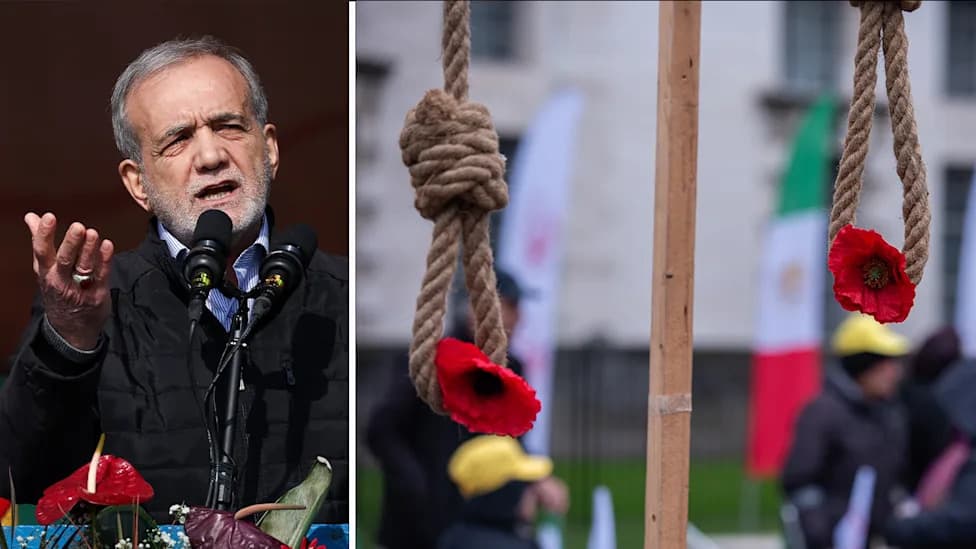
Iranian President Masoud Pezeshkian
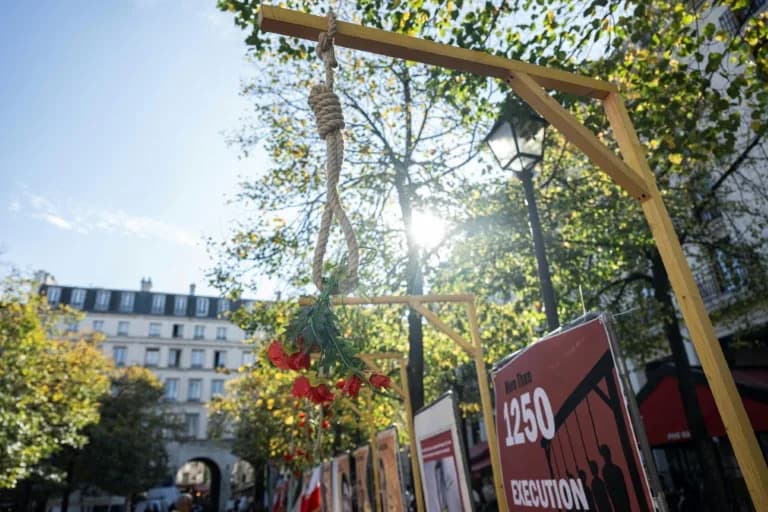
More than 1,000 death-row prisoners held in Unit 2 of Ghezel Hesar Prison in Karaj, near Tehran, have entered a third week of a coordinated hunger strike to protest state executions, and multiple reports say some inmates have sewn their lips shut as an extreme form of protest.
Human Rights Activists News Agency (HRANA) reported the strike began on July 13 after six inmates were transferred to solitary confinement amid preparations for possible executions. Other Iranian human rights groups say many of the detainees involved were convicted on drug-related charges.
Witnesses and media outlets say prisoners have been chanting "No to Execution" and that video footage circulating online appears to show an inmate addressing the camera and saying he would sew his lips shut after days without a response from prison authorities. The Guardian reported a clip that seems to show an unseen person using a needle and thread to stitch the man's lips.
Prisoners' Condition and Calls for Intervention
In a July 27 statement, the exiled National Council of Resistance of Iran (NCRI) reported that detainees in Unit 2 were in "deteriorating physical condition" and urged international organizations and the public to intervene. The NCRI said prison guards had not provided adequate medical attention to striking prisoners.
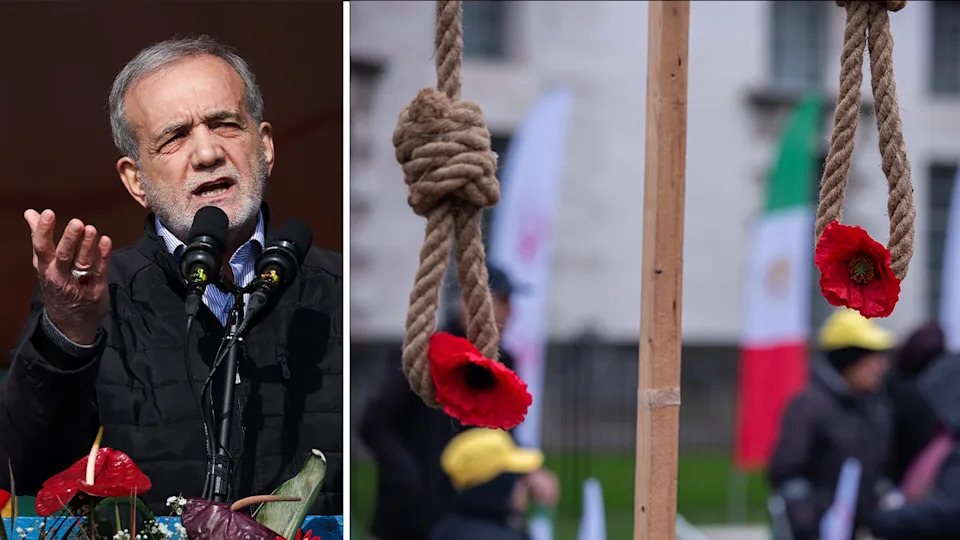
State executions go up under Iranian President Masoud Pezeshkian. 4/22/25
"Although 15 days have passed since the start of this hunger strike, the henchmen of the regime's judiciary have given no response to the striking prisoners," the NCRI said in its statement, calling for urgent action.
Context And International Reaction
The protest has renewed global concern about Iran's use of capital punishment, including for drug-related offenses. The U.S. State Department designated Ghezel Hesar Prison in 2024 for gross human rights violations, citing cruel and inhuman treatment of inmates and reported beatings of political prisoners who had staged hunger strikes.
Amnesty International reported that Iran executed at least 2,159 people in 2025, a figure that helped push Amnesty's global recorded total to at least 2,707 executions across 17 countries — the highest since 1981 (excluding China, where execution figures are state secrets).
This is not the first major unrest at Ghezel Hesar: human rights groups say more than 1,500 inmates staged a six-day hunger strike in October 2025. That earlier protest reportedly ended after senior judicial and prison officials visited the facility and promised a temporary halt to executions and case reviews — promises activists later said were not fully implemented.
Rights groups and international observers are calling for transparent judicial review, independent monitoring of prison conditions, and urgent medical care for hunger-striking detainees. Because details remain contested and some evidence is difficult to verify independently, observers emphasize caution while urging authorities and international bodies to investigate the reported abuses.
Help us improve.