
A 35-day eclipse season brings a total solar eclipse on 12 August (path of totality from Greenland to Spain) and a deep partial lunar eclipse on the night of 27–28 August visible across multiple continents. The lunar eclipse will cover over 96% of the Moon and is expected to produce a prominent "blood moon" effect. The Perseid meteor shower also peaks on 12 August, and the next eclipse season arrives in early 2027 with an annular solar eclipse on 6 February and a penumbral lunar eclipse on 20–21 February.
Eclipse Season Begins: Total Solar Eclipse on 12 Aug Followed by a Major Partial Lunar Eclipse on 27–28 Aug
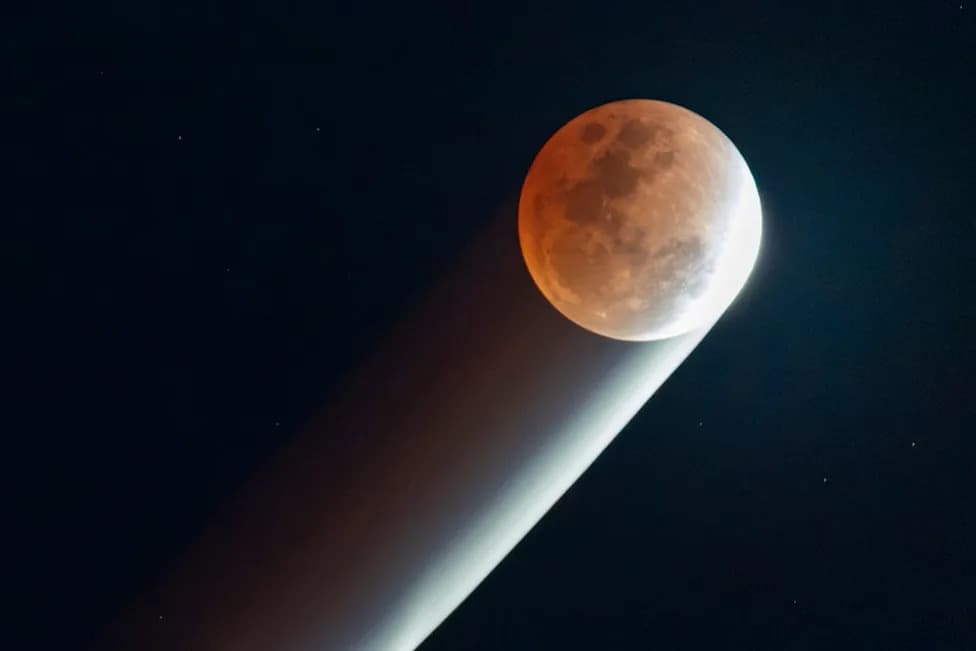
The Moon passes through the Earth’s shadow, resulting in a blood moon lunar eclipse, on 3 March, 2026 in Santa Rosa, Philippines (Getty)
A 35-day "eclipse season" is now underway as the Sun, Earth and Moon align, bringing two notable celestial events just over two weeks apart in August. Skywatchers across large parts of the globe will be treated to a total solar eclipse on 12 August and a deep partial lunar eclipse on the night of 27–28 August.
What to Expect
Total Solar Eclipse — 12 August
On 12 August the Moon will pass directly between Earth and the Sun, producing a total solar eclipse. The path of totality will sweep from Greenland down through parts of the North Atlantic to Spain. Observers within the narrow path will experience daytime darkness and the dramatic corona of the Sun; outside that path a partial solar eclipse will be visible over a much wider area.
Safety: Never look directly at the Sun without proper solar eclipse glasses or a certified solar filter for binoculars and telescopes. Regular sunglasses are not safe for eclipse viewing.
Partial Lunar Eclipse — Night of 27–28 August
On the night of 27–28 August, Earth will move between the Sun and the Moon, casting a deep shadow across the lunar surface. More than 96% of the Moon is expected to enter Earth's umbra, creating a pronounced "blood moon" effect as sunlight is refracted and reddened by Earth's atmosphere. This partial eclipse will be visible from Europe, Africa, North America and South America. In the UK the Moon will appear low in the western sky and enter Earth's shadow shortly before setting at dawn on 28 August.
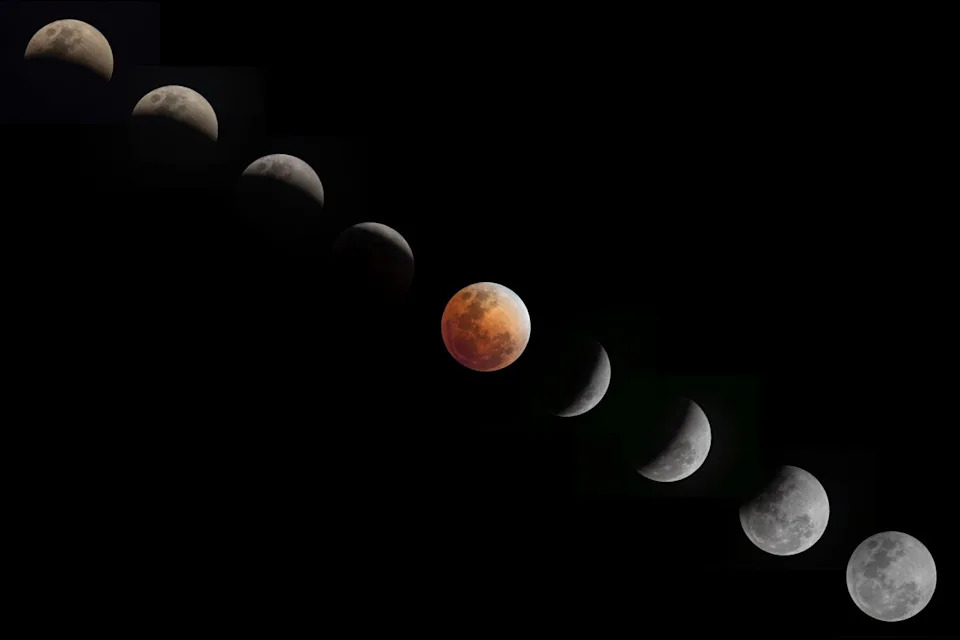
A digital composite of a lunar eclipse over Santa Rosa, Laguna province, Philippines, on 3 March, 2026 (Getty)
Perseid Meteor Shower — Peak on 12 August
The Perseid meteor shower peaks on the night of 12 August, the same date as the solar eclipse. Under dark skies the Perseids can produce up to around 100 meteors per hour at peak activity, offering an excellent night-time spectacle for observers away from light pollution.
Why Two Eclipses So Close Together?
These paired events occur during an "eclipse season," an orbital alignment window that opens roughly every six months when the Sun, Earth and Moon line up with the lunar nodes. Each eclipse season typically produces at least two eclipses — one solar and one lunar — within about a month of each other.
Looking Ahead
The next eclipse season will begin in early 2027. It will include an annular "ring of fire" solar eclipse across parts of South America and Africa on 6 February, followed by a penumbral lunar eclipse on the night of 20–21 February. A major total solar eclipse will then cross Spain and North Africa on 2 August 2027, offering the longest duration of totality visible from land until 2114.
Image credit: A digital composite of a lunar eclipse over Santa Rosa, Laguna province, Philippines, on 3 March 2026 (Getty).
If you plan to observe any of these events, check local timings, weather forecasts and viewing-safety advice from local astronomy groups or observatories. Sky conditions and exact visibility will vary by location.
Help us improve.





















