
August delivers an exceptional lineup of sky events: a Moon–Saturn conjunction on Aug. 3, a six‑planet alignment and both total and partial solar eclipses on Aug. 12, and the Perseid meteor peak overnight Aug. 12–13. The New Moon on Aug. 12 will darken skies, improving Perseid visibility (up to ~100 meteors/hr in ideal conditions). The month ends with a deep partial lunar eclipse that will shadow about 96% of the Moon.
August Skywatching Guide: Six‑Planet Parade, Perseid Peak and Two Eclipses
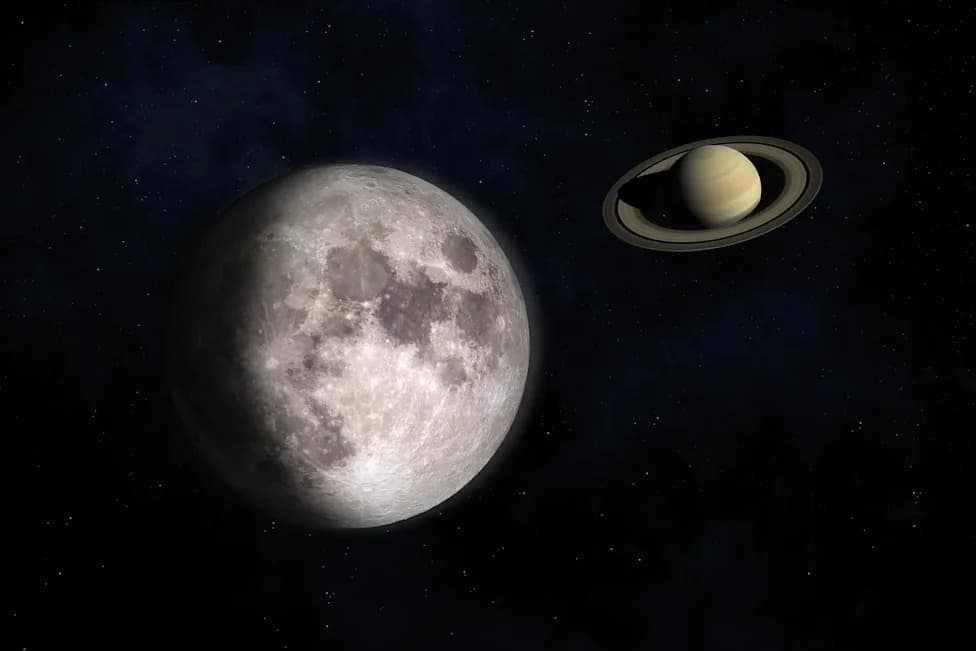
Conjunction Moon and Saturn. Meeting of the Saturn and Moon. Earth and planets of solar system. Elements of this image furnished by NASA. ______ Url(s): https://solarsystem.nasa.gov/resources/843/rare-full-moon-on-christmas-day/ https://science.nasa.gov/missions/cassini/a-valentine-from-cassini-with-love/ Adobe Photoshop CC 2023. Knoll light factory. Adobe After Effects CC 2021.
August brings a rich lineup of astronomical events for skywatchers of all levels: a close Moon–Saturn conjunction, a rare six‑planet alignment, both total and partial solar eclipses, the peak of the Perseid meteor shower and a deep partial lunar eclipse to close the month.
Early Month: Moon Near Saturn (Aug. 3)
On the night of Monday, Aug. 3, the Moon will appear in close conjunction with Saturn. Although the two bodies will look near one another from Earth, they remain vast distances apart in space — an apparent alignment caused by our line of sight. In-The-Sky.org notes the separation will be too large to capture both in a single telescope or binocular field, so this pairing is best enjoyed with the naked eye.
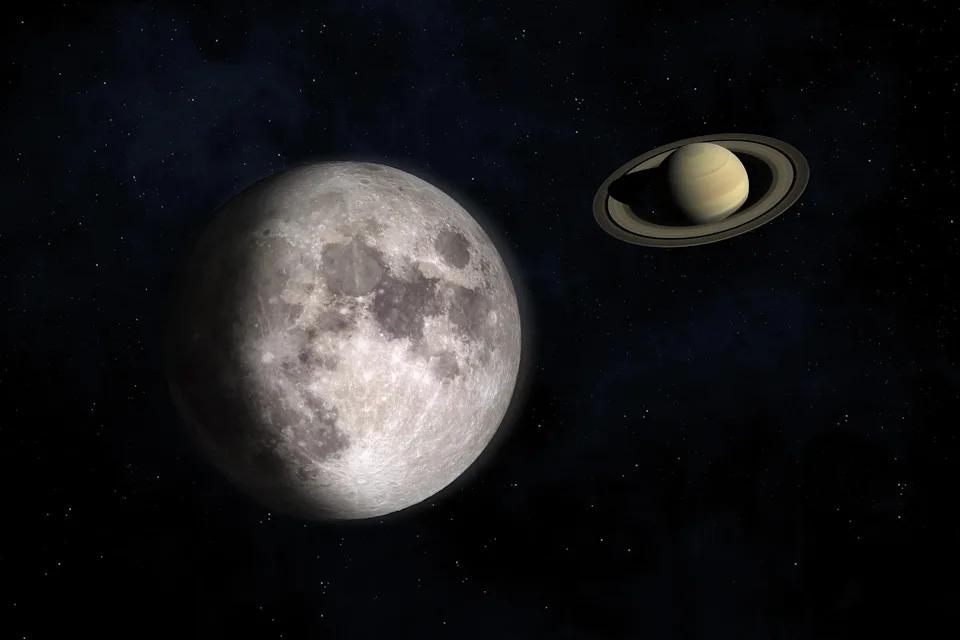
Conjunction Moon and Saturn. Meeting of the Saturn and Moon. Earth and planets of solar system. Elements of this image furnished by NASA. ______ Url(s): https://solarsystem.nasa.gov/resources/843/rare-full-moon-on-christmas-day/ https://science.nasa.gov/missions/cassini/a-valentine-from-cassini-with-love/ Adobe Photoshop CC 2023. Knoll light factory. Adobe After Effects CC 2021.
Planetary Parade and Solar Eclipses (Aug. 12)
The pre‑dawn sky on Aug. 12 offers a striking six‑planet lineup: Mercury, Jupiter, Uranus, Saturn, Neptune and Mars will stretch across the horizon. Uranus and Neptune will be faint and generally require binoculars or a small telescope; Mercury, Jupiter, Saturn and Mars should be visible without equipment from a reasonably dark site.
Aug. 12 is also a New Moon and brings both total and partial solar eclipses. According to NASA forecasts, the path of totality will cross parts of Greenland, Iceland, northern Russia, the Atlantic Ocean and will include totality visible in areas of Spain and a small corner of Portugal. A partial solar eclipse will be observable across much of the Northern Hemisphere, including portions of the northern United States (from Alaska to North Carolina), broad areas of Canada, Europe and northwestern Africa.
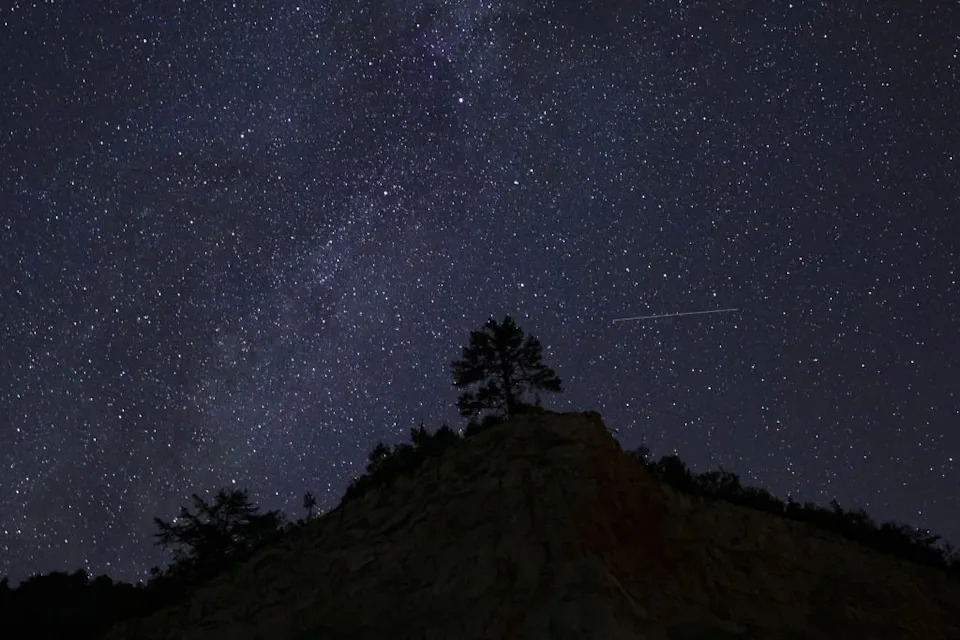
A view of the Perseid meteor shower over Lake Cubuk in Goynuk district of Bolu, Turkiye on August 13, 2024.
Perseid Meteor Shower Peak (Night of Aug. 12–13)
The annual Perseid meteor shower is expected to peak overnight between Aug. 12 and Aug. 13. Because the New Moon on Aug. 12 produces darker skies, this year’s Perseid display should be especially favorable: observers under clear, dark skies could see as many as ~100 meteors per hour at peak activity. To improve your chances, allow your eyes to adapt for 20–30 minutes, choose a wide sky view away from city lights and plan to watch for extended intervals during the late evening and pre‑dawn hours.
Month End: Deep Partial Lunar Eclipse
August closes with the final eclipse event of 2026: a deep partial lunar eclipse that will darken roughly 96% of the Moon’s disk. This dramatic shadowing makes for excellent viewing and photography opportunities where the event is visible.
Quick Viewing Tips
- Use the naked eye for wide‑field events (Moon–Saturn conjunction, Perseids). Binoculars improve views of faint planets (Uranus, Neptune) and meteors.
- Allow at least 20–30 minutes for your eyes to adapt to darkness for meteor watching.
- Check local timings and visibility maps for the eclipses before planning travel; never look directly at the Sun without proper solar filters.
Together, the early‑month conjunction, the six‑planet pre‑dawn parade and Aug. 12’s eclipses — capped by the Perseid peak and a deep partial lunar eclipse at month’s end — make August a rewarding month for skywatchers and photographers alike.
Help us improve.





















