
On July 24, orcas damaged the rudder of a 46-foot Swedish yacht off Galicia, prompting a coastguard rescue; earlier the same week the pleasure craft Idem sank near Estaca de Bares after its rudder was destroyed. Monitoring groups have logged more than 700 orca-vessel interactions since 2020, with roughly 15 individual whales implicated from an Iberian subpopulation of fewer than 50. Scientists favor social learning as the leading explanation and advise mariners to cut engines, lower sails, disengage autopilot and release the wheel during encounters. Reporting every incident helps researchers track and study the behaviour.
Orcas Sink Another Yacht Off Spain — Six-Year Pattern Of Rudder Attacks Continues
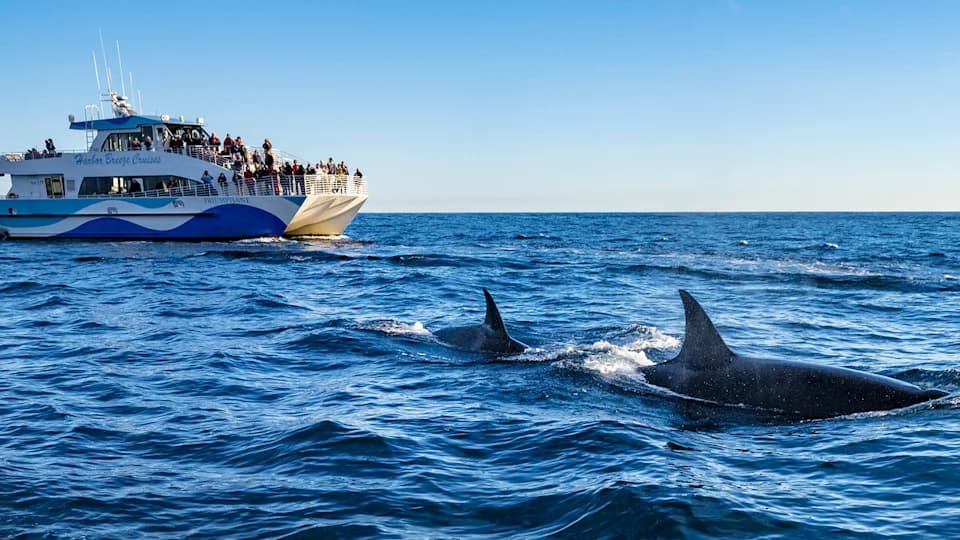
A small pod of orcas has been repeatedly targeting boats in a puzzling behavior scientists are still trying to explain. Pictured above is an unrelated pod of orcas being visited by tourists off the coast of California. . | Credit: MediaNewsGroup/Orange via Getty Images
On July 24 a pod of orcas damaged the rudder of a 46-foot (14-meter) Swedish-flagged yacht off Galicia in northwestern Spain, forcing the two people aboard to issue a mayday; a Spanish coastguard vessel towed them to safety. The episode followed other encounters in the same area earlier that week, including the sinking of a pleasure craft named the Idem near Estaca de Bares after its rudder was destroyed. Both occupants of the Idem were rescued.
What Happened and Where
Authorities and monitoring groups say the Idem is at least the eighth boat lost to these orca encounters since the pattern began in 2020. The Atlantic Orca Working Group, a Spanish–Portuguese research collective coordinating incident reports and data, has logged more than 700 interactions between orcas and vessels. Reports range from brief nudges to hours-long sessions of ramming rudders.
Which Whales Are Involved?
Researchers have identified roughly 15 individual killer whales involved in these incidents, drawn from an Iberian subpopulation estimated at fewer than 50 animals. That subpopulation is listed as Critically Endangered by the International Union for Conservation of Nature (IUCN) and relies largely on Atlantic bluefin tuna as a food source. Scientists describe the cluster as a tight, family-like group, reportedly led by a female known as White Gladis.
Why Are They Attacking Rudders?
The exact cause remains uncertain. An early idea — that a traumatic collision changed the behaviour of a single whale and others copied it — gained attention but has often been oversimplified online into a ‘‘revenge’’ narrative that most scientists reject. The leading scientific explanation is social learning: orcas are highly social, and young animals appear to observe and adopt behaviours practiced by adults. A 2022 study in Marine Mammal Science found these whales most often target sailing boats and frequently stop after damaging a rudder.
Scientists caution: ‘‘Defensive’’ or learned behaviour should not be interpreted as deliberate vengeance. Researchers emphasize careful, evidence-based study rather than sensational labels.
Advice For Mariners
Authorities such as the Maritime Safety and Rescue Society and the Atlantic Orca Working Group advise the following if approached by these orcas: cut the engine; lower sails if possible; disengage autopilot; and release the wheel so there is nothing for the animals to push against. Boats that follow this protocol tend to sustain less damage. Mariners are asked to report every encounter, since each report improves the dataset researchers use to understand and respond to the phenomenon.
These recurring incidents pose practical risks to people and vessels and raise conservation concerns for an already endangered local orca population. Continued reporting and careful scientific monitoring are critical to resolving the mystery and protecting both humans and whales.
Help us improve.





















