Construction near Šurany, Slovakia, revealed an 18-acre Roman marching camp dated to the late 2nd century C.E., likely tied to the Marcomannic Wars (166–180 C.E.). Excavators found five gates, defensive earthworks including a rare clavicula (first recorded in Slovakia), numerous Roman military artifacts and human remains often placed in pits or ditches. International laboratories will perform radiocarbon dating, archaeogenetic analysis and isotope studies to investigate the site's abrupt abandonment and the identities of the dead.
Construction Work Uncovers 18-Acre Roman Marching Camp Near Šurany, Slovakia
Construction Workers Found a Roman MysteryHistory Skills - Getty Images
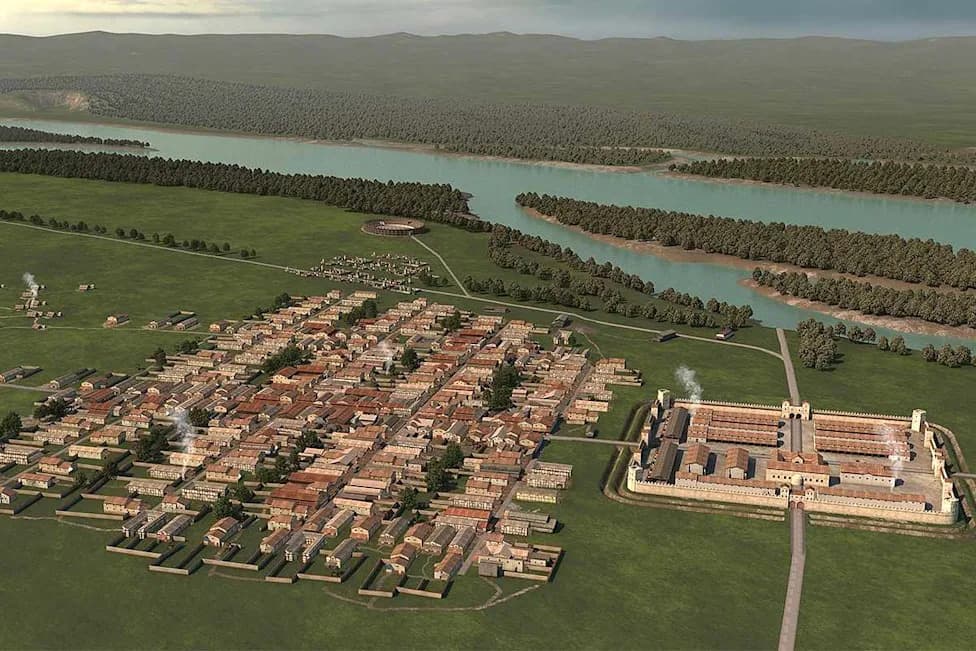
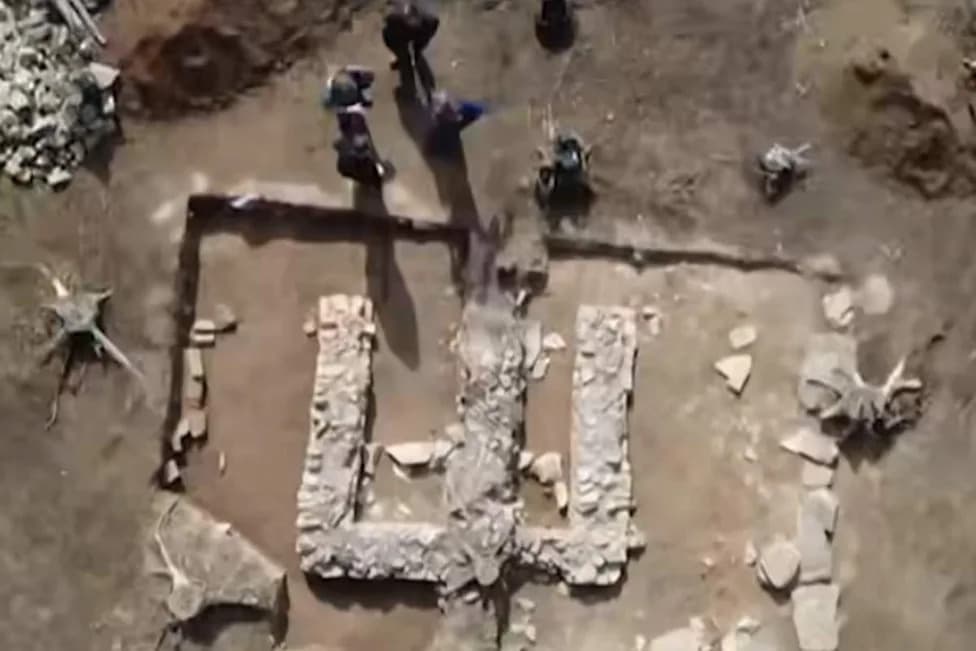
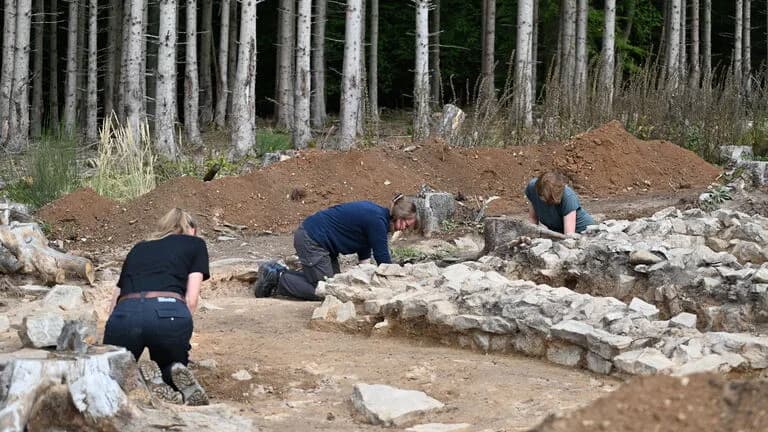
During foundation work for a new industrial park outside Šurany, Slovakia, archaeologists uncovered a large Roman marching camp dated to the second half of the 2nd century C.E., likely linked to the Marcomannic Wars (166–180 C.E.). The excavation exposed an encampment of roughly 18 acres (about 7.4 hectares) whose features and artifacts point to a rapid abandonment shortly after establishment.
The site displays key elements of Roman military planning even though its outline is not the textbook rectangle often associated with permanent legionary forts. Excavators documented five entrance gates, defensive earthworks and a specialized access feature known in Roman military architecture as a clavicula—a semicircular ditch and rampart that channels traffic into the enclosure. According to the team, the clavicula at Šurany is the first of its kind recorded in Slovakia.
"The context of the find itself is also unique," said Matej Ruttkay, director of the Institute of Archaeology of the Slovak Academy of Sciences, in a translated statement. "We are clearly investigating a site that ceased to exist immediately following a military conflict between the Romans and the Germanic tribes—a fact corroborated by numerous artifacts."
Excavations recovered multiple human remains—some partial, some complete—disposed in ditches, pits and shallow graves. Field leaders report that most of these appear to be Roman soldiers, given the associated military equipment. Marek Vojtecek, a senior member of the research team, described the assemblage as predominantly military in character.
Artifacts and Everyday Objects
The material culture recovered is extensive and includes spears, arrowheads, helmet fragments, examples of segmented (lorica segmentata) and scale armor, legionary brooches, coins and Roman military sandals with iron sole nails that preserved the footwear's original shape. Everyday items such as an axe, a cutting tool and a gaming die were also found. Many objects were unusually intact, suggesting rapid abandonment and limited looting.
Broader Archaeological Context
The discovery fills an important gap in our understanding of Roman operations north of the Danube during the late 2nd century C.E. The wider region had long been associated with Roman activity during the Marcomannic Wars: an inscription dated to 179 C.E. carved into the rock below Trenčín Castle already attested to Roman presence in the area. The Šurany camp adds a physical, large-scale military footprint to that historical picture.
Developer funding for the industrial park project enabled a comprehensive excavation that also exposed a medieval settlement (7th–8th centuries), a densely built Bronze Age settlement and two sizable burial grounds—evidence of long-term human activity in the area.
Ongoing Research and Next Steps
Researchers plan a broad program of interdisciplinary analyses to answer outstanding questions: radiocarbon dating will be conducted in Poland; sediment and soil studies in the Czech Republic; archaeogenetic work at the University of Vienna; and isotope analyses in Germany, Poland and South Africa. Additional laboratories are expected to join the project. Some soil blocks were X-rayed before storage, revealing remarkably preserved items—most vividly, sandals whose size and construction can still be assessed.
"It is truly remarkable to see a Roman soldier's original footwear and even be able to determine its size," said Michal Cheben, a lead member of the research team.
Key Questions Remaining
- Who precisely were the people buried at the site and what were their origins?
- What caused the deaths—combat wounds, disease, or a combination?
- Why were some bodies deposited in deep features like storage pits or wells?
- Why were so many valuable or rare objects left in situ rather than looted?
All recovered artifacts are now stored in climate-controlled facilities at the Institute of Archaeology and will be shared with international partners for specialized study. Further laboratory analysis and genetic and anthropological research may clarify the camp's sudden abandonment and the circumstances surrounding the human remains.
Help us improve.