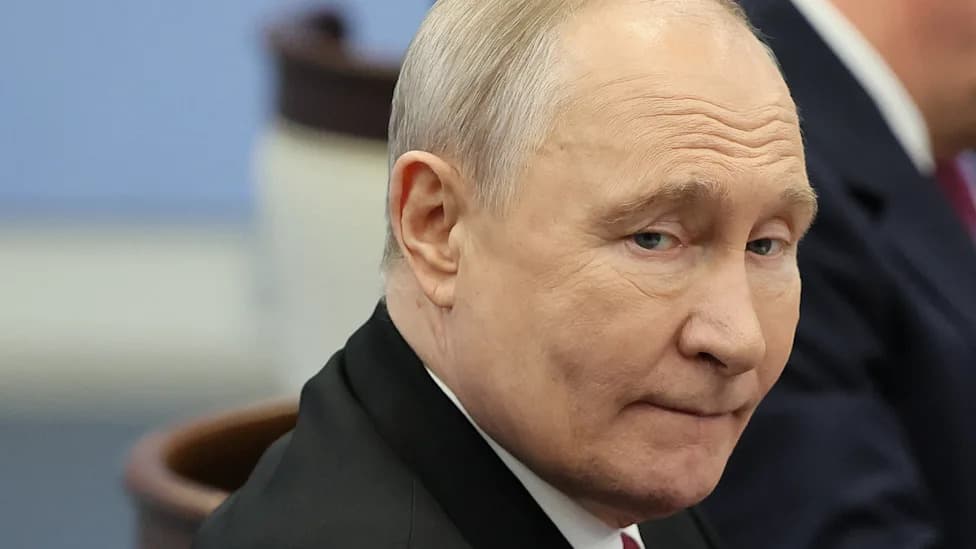
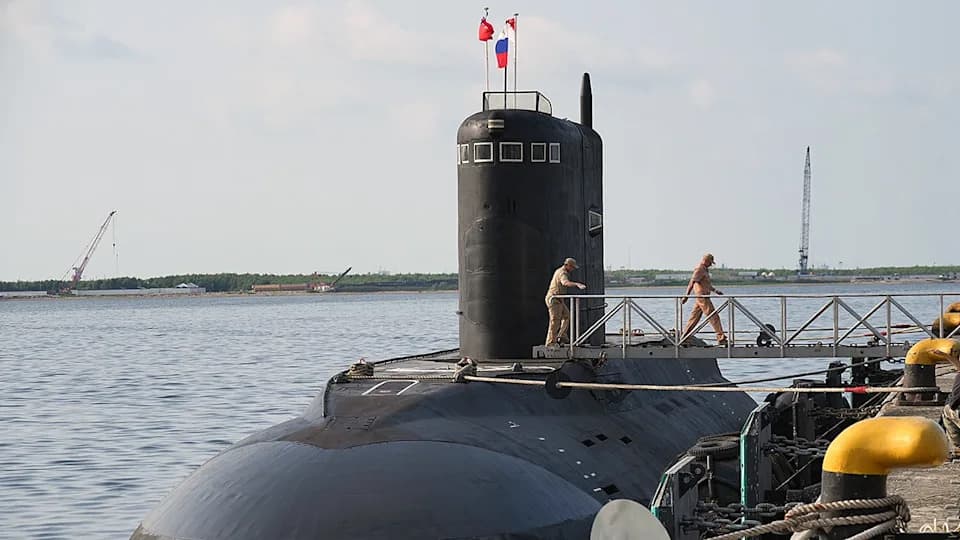
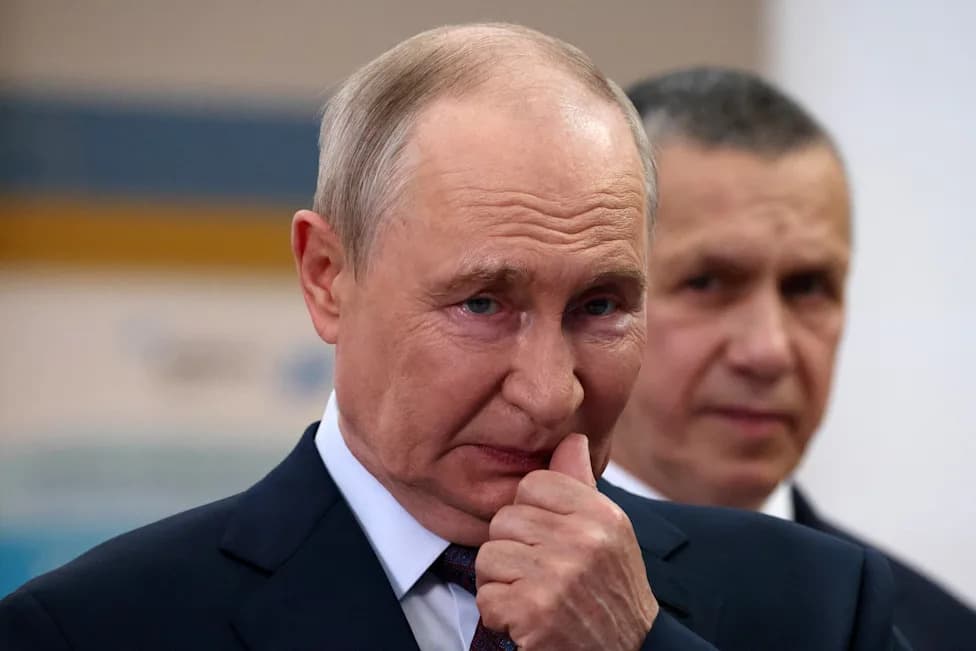
Russia replaced its traditional Navy Day fleet parade with a small, shipless reception in St. Petersburg. A giant poster of the Borei-class submarine Alexander Nevsky and another poster of surface warships framed a ceremony attended by roughly 60 sailors and a small band. Officials point to repeated long-range Ukrainian drone strikes and related security concerns — and a redeployment of air defenses around Moscow — as the reasons for scaling back public naval displays.
Russia Scales Back Navy Day: Shipless Reception and Giant Submarine Poster Replace Parade
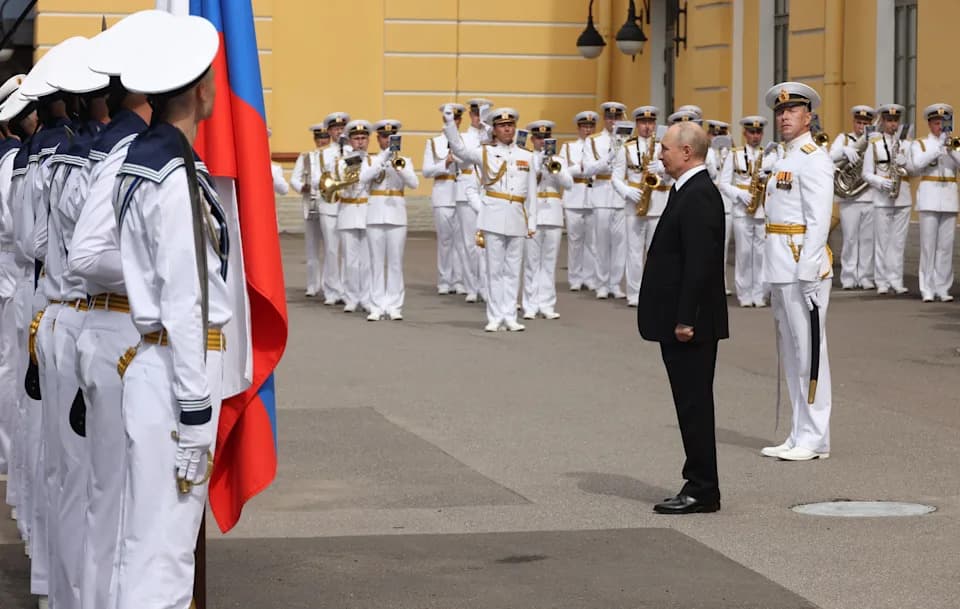
Putin greets officers while visiting the Admiralty.Contributor/Getty Images
Russia’s normally lavish Navy Day celebrations in St. Petersburg were dramatically scaled back this year: instead of a fleet on the Neva or a line-up of warships in Kronstadt, attendees saw oversized posters of naval vessels and a small, tightly controlled reception at the Admiralty.
A towering image of the Borei-class nuclear-powered missile submarine Alexander Nevsky dominated the courtyard, with a second large poster depicting two surface combatants. Two rows of roughly 30 sailors — about 60 in total — greeted President Vladimir Putin when he arrived, and a small military band performed inside a cordoned-off area to mark the Russian Navy’s 330th anniversary.
From Spectacle To Symbol
The pared-back ceremony stood in stark contrast to the event’s usual scale. Historically, Navy Day features an expansive parade of sailors and surface vessels staged on the Neva River and at the Kronstadt naval base. In 2023, that display included more than 40 warships, four submarines and roughly 3,000 personnel, with foreign dignitaries in attendance.
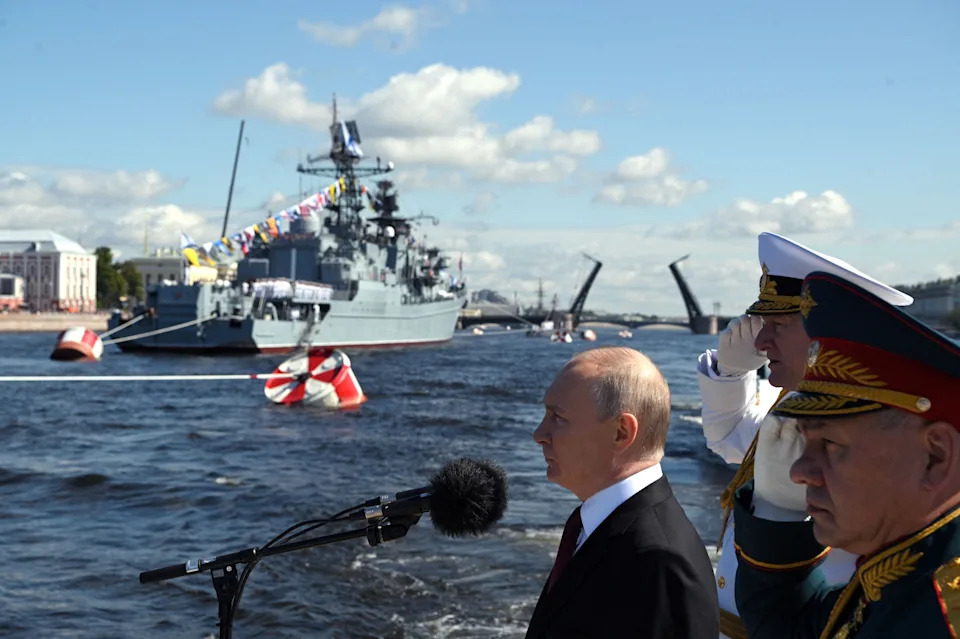
Putin and two top officials attended the 2023 Navy Day parade alongside a full line-up of warships.ALEXANDER KAZAKOV/POOL/AFP via Getty Images
Security Concerns Cited
After repeated Ukrainian long-range drone strikes against military and energy infrastructure on Russian soil, Kremlin officials have curtailed public military displays for security reasons. In 2024 the Neva display was already reduced to about 2,500 personnel and roughly 20 vessels; this year the Kremlin canceled the traditional parade entirely and opted for a small, shipless reception. Kremlin spokesman Dmitry Peskov cited the prevailing “general atmosphere” and “security reasons” for the change.
Ukrainian forces say they have sharply increased the tempo of long-range strikes, including fixed-wing, explosive-laden drones capable of reaching cities like St. Petersburg, roughly 600 miles from Ukraine’s border. Russian authorities have responded by concentrating air defenses around Moscow — deploying S-500 and S-400 surface-to-air systems and placing numerous Pantsir point-defense units on rooftops — and by reducing large, exposed public displays.
What This Means
The absence of ships and the prominence of posters underscore how the threat of long-range strikes has reshaped traditional public demonstrations of Russian naval power. Events such as the Victory Day parade and international forums have also been disrupted in recent years by drone activity and related security measures.
Bottom line: A once-grand maritime spectacle became a restrained ceremony — a visual reminder that security concerns, not celebratory pageantry, are driving the Kremlin’s choices for high-profile naval events.
Help us improve.