Citizens in Kansas City have certified a petition — with more than 4,500 signatures — that would require a public vote before the city can fund or perform work on a for-profit stadium with 2,500+ seats. The proposed ordinance would also block city-funded infrastructure tied to such a stadium unless voters approve it. City Council has 60 days to act; if it does nothing the earliest the measure could reach voters is April 2027. Supporters argue public funds should prioritize housing, transit, and education over private stadium subsidies.
Citizens Seek a Vote: Petition Would Require Public Approval Before Kansas City Funds Royals Stadium
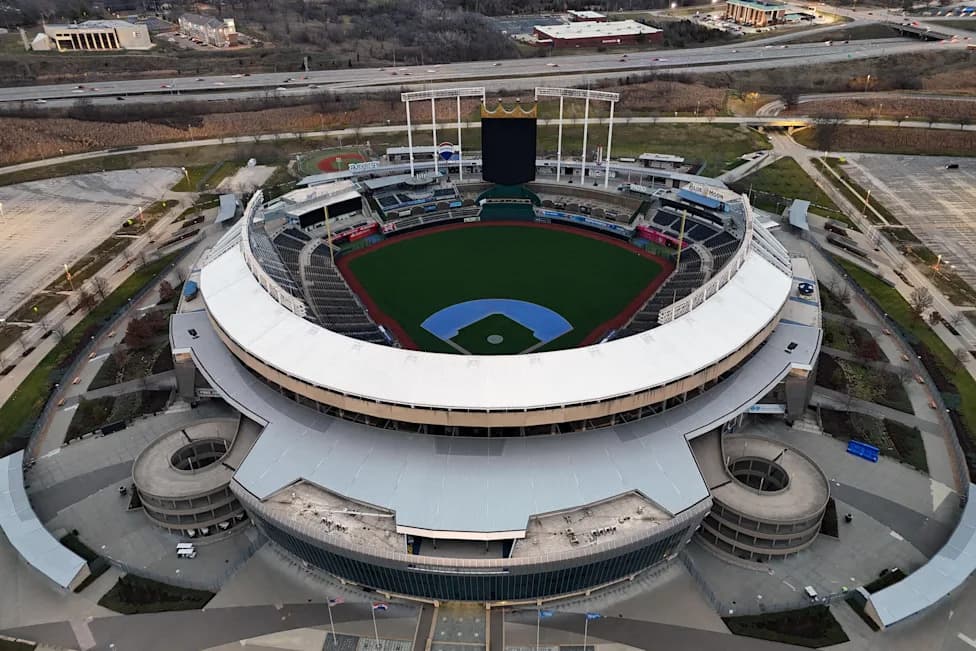
KANSAS CITY, MISSOURI - DECEMBER 25: A general overall aerial view of Kauffman Stadium on December 25, 2023 in Kansas City, Missouri. (Photo by Kirby Lee/Getty Images) | Getty Images
A citizen-led petition in Kansas City aims to force a public vote before the city can fund or perform work on any for-profit stadium with 2,500 seats or more. Backed by Missouri Workers Power (MWP), the petition was certified with more than 4,500 signatures — well above the 2,068 threshold required to reach the ballot.
What the Proposed Ordinance Would Do
The draft ordinance would do two key things: first, it would prohibit city officers, agents, and employees from implementing, advancing, or otherwise supporting any plan to design or construct, with material support from the City, a stadium or similar venue with a seating capacity of 2,500 or more for use by a for-profit business, including related development or necessary infrastructure. Second, it would require that any such plan be submitted to voters by ordinance and approved by a majority in an election before city action can proceed.
In Plain English
Put simply: the city could not spend public money on a large, privately used stadium or on infrastructure to support it unless voters approve that specific use of public funds.
Why This Matters
Kansas City leaders have discussed earmarking as much as $600 million in public money for a new Royals stadium. In neighboring Jackson County, voters rejected a stadium funding measure in 2024, which supporters of the petition cite as evidence that the public should have a say before such a large allocation of taxpayer dollars is committed.
How the Process Works
Under Kansas City rules, once a petition is submitted and certified the City Council has up to 60 days to review the proposed ordinance. During that review the council can:
- Enact the measure as-is,
- Place it on a ballot,
- Negotiate with petitioners toward a compromise, or
- Take no action.
If the council takes no final action within 60 days, the petitioners then have a 10-day window to approve edits, withdraw the petition, or ask the City Clerk to send the question to a citywide vote. If the council waits and the initiative misses the city’s deadlines for the November election, the measure would not appear until the April 2027 ballot.
Legal and Practical Effects
Unlike some initiatives that only restrict new ordinances, this proposal would also bar city employees from performing any work on a qualifying stadium project. That means even if financing steps (such as a TIF ordinance or a lease) were completed, city workers could not support construction or infrastructure for the stadium until voters approved it — or they would be violating the new law.
Voices On Both Sides
Supporters describe the campaign with the slogan "public need before corporate greed." Jaeda Roth, a member of the petition committee, told the author that rising housing costs have made it difficult for many residents to afford basic necessities — let alone attend games — and that investments in transit, housing, and schools would deliver broader public benefits.
"Public need before corporate greed," said Jaeda Roth, who noted that expanding transit and affordable housing would have direct, widespread benefits that a stadium cannot match for many residents.
The Royals declined to comment for this piece. Minutes before publication, the team announced a "community engagement meeting" about its rezoning plan; whether that reflects a change in approach remains to be seen. Mayor Quinton Lucas has signaled that city leaders expect a deal could be completed before a public vote is ever held. As he put it: "I think the deal is likely to get done before we even have some of these discussions, if we ever get to the point of a public vote."
What Happens Next
The City Council’s 60-day review period has begun. If council members do nothing and timelines are missed, the earliest possible public vote would be April 2027. If the ordinance proceeds to a ballot and voters approve it, it would become law; repealing it in the first year would require a nine-member city council supermajority rather than the usual seven.
This debate raises a basic civic question: should elected officials be able to commit hundreds of millions in public funds to a private sports facility without asking voters — or should residents have the final say on large public investments that affect housing, transit, and education funding?
Help us improve.