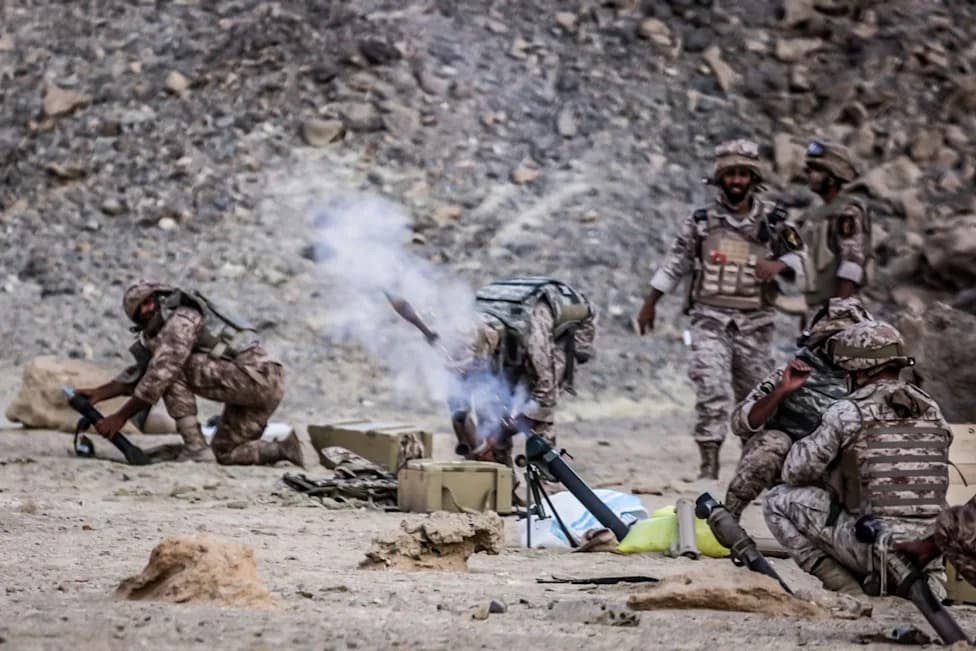
Bottom Line: While Iranian hardliners have suggested ground attacks on neighboring states or U.S. bases, analysts say Tehran lacks the amphibious lift, logistics and operational security for large-scale conventional offensives. Geography, degraded C4ISR and heavy U.S./coalition surveillance make any seizure of Bubiyan or Bahrain highly risky. Most likely outcomes are limited, asymmetric probes or special-operations-style raids rather than sustained conventional invasions.
Analysts: Iran Unlikely To Launch Large-Scale Ground Offensive Against U.S. Bases
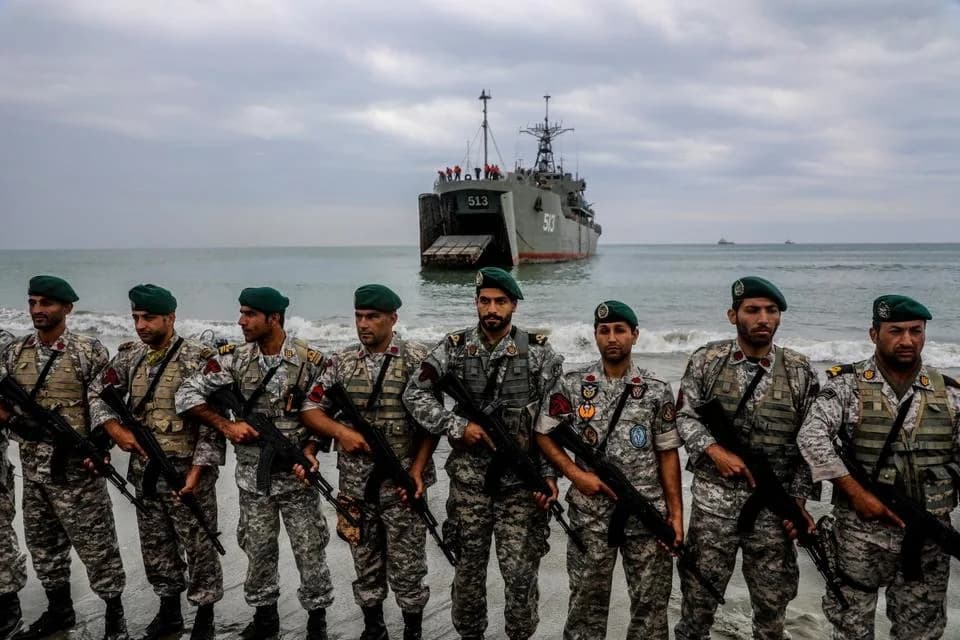
Iranian soldiers take part in an annual military drill in the coast of the Gulf of Oman and near the strategic Strait of Hormuz, in Jask, Iran on December 30, 2022. (Photo by Iranian Army / Handout/Anadolu Agency via Getty Images)Anadolu Agency via Getty Images
Iranian hardliners have publicly suggested the possibility of ground operations against neighboring states and even U.S. bases if American forces attempt to seize Iranian islands or territory. But defense analysts and regional experts say Tehran lacks the conventional lift, logistics and operational security needed for a large-scale amphibious or airborne seizure of territory such as Kuwait's Bubiyan Island or Bahrain.
Rhetoric From Tehran's Hardliners
In mid-July, members of Iran's parliament warned of retaliatory ground attacks on Kuwait and Bahrain if U.S. forces moved against Iranian soil. Ahmad Bakhshayesh Ardestani, of the parliamentary National Security Committee, said, "If the United States puts boots on the ground in Iran, we may also launch ground attacks on Kuwait and Bahrain." Former foreign minister and current parliamentarian Manouchehr Mottaki went further, publicly urging the seizure of a U.S. base and the capture of personnel.
Analysts: Capability, Not Will, Is The Constraint
Scholars and defense analysts broadly view this language as political signaling rather than the outline of an operational plan. Arash Azizi, a lecturer at Yale University and author of The Shadow Commander, called proposals to seize Kuwaiti or Bahraini territory "baseless," noting Iran's recent doctrine emphasizes irregular warfare and covert action rather than conventional, large-scale ground offensives.
"Iran's doctrine for years has been based on irregular warfare and covert operations, not outright ground military offensives," Azizi said.
Geography, Logistics And Surveillance
Geography and logistics present major obstacles. Bubiyan Island — often cited as a hypothetical target — is close to Iran but would require amphibious operations or significant airlifts to seize and hold. Camp Arifjan in Kuwait lies about 62 miles from Iran; Naval Support Activity Bahrain is approximately 128 miles away. Farzin Nadimi, a senior fellow at the Washington Institute for Near East Policy, argues that seizing and holding such targets would be "extremely difficult under current conditions."
Nadimi and others point out that months of U.S. and Israeli strikes have degraded parts of Iran's C4ISR networks, air defenses and logistics. The Persian Gulf is currently saturated with U.S. and coalition air power, ISR (intelligence, surveillance and reconnaissance) assets, naval forces and rapid-reaction capabilities, meaning any large buildup would be visible and vulnerable to counterstrikes.
Past Probes Suggest Limited, Asymmetric Options
Rather than conventional invasions, analysts say Tehran is likelier to rely on asymmetric measures: special-operations probes, covert infiltrations or proxy actions. A May incident in which six IRGC personnel attempted a covert approach to Bubiyan — four of whom were detained — is cited as an example of the sort of limited, high-risk action Iran might undertake.
Experts also note possible combined operations using the IRGC's Quds Force alongside Iran-backed militias, such as limited incursions against border posts from Iraqi territory. But even such moves would be risky and politically fraught, and regional states (including Saudi Arabia and U.S. partners) would likely respond quickly and decisively.
Historical Context And Conclusion
Observers have drawn historical parallels to rhetoric from Saddam Hussein ahead of Iraq's 1990 invasion of Kuwait, but analysts stress the practical differences: Iran today lacks the amphibious sealift and the freedom of maneuver needed for sustained conventional assaults across the Gulf. While heated rhetoric from hardliners cannot be dismissed, the most plausible scenarios remain limited, asymmetric, and high-risk rather than widescale conventional occupations.
"Beyond rhetoric, limited, high-risk special-forces style or propaganda-oriented attempts are conceivable," Nadimi concluded. "Large-scale seizures or conventional incursions are not."
Help us improve.