Simo Häyhä, nicknamed "The White Death," became one of history's most effective snipers during the Winter War after the Soviet invasion on November 30, 1939. Using iron sights, meticulous camouflage and intimate knowledge of terrain, he recorded a personal high of 25 kills in one day and is variously credited with 219–542 kills. Severely wounded near the front, Häyhä survived a coma and many surgeries, lived to age 96, and remains a potent symbol of Finnish resistance.
542 Kills? The True Story of Simo Häyhä, Finland’s ‘White Death’
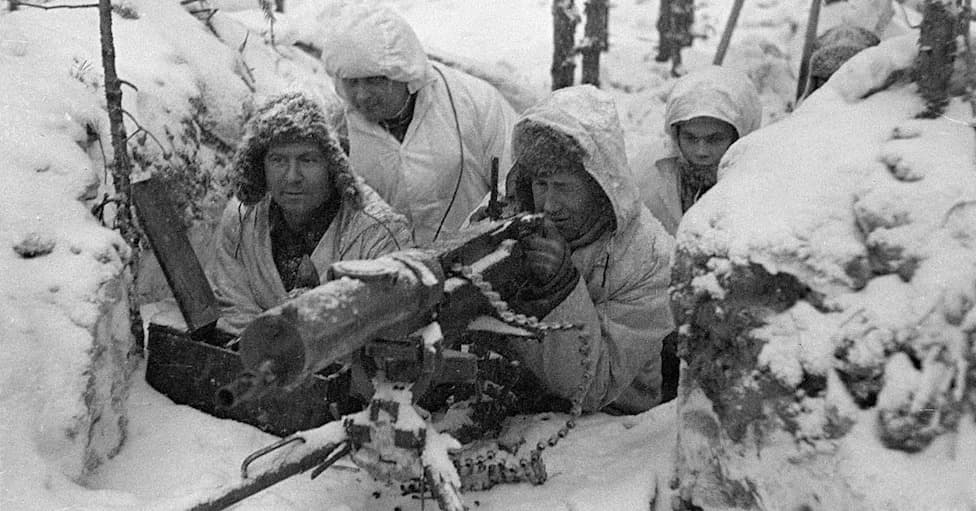
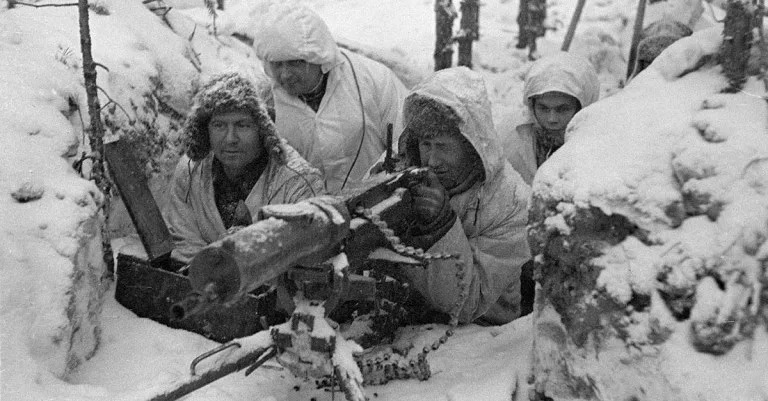
A Finnish Maxim M/32-33 machine gun nest sits 100 meters from Soviet forces during the Winter War. (Wikimedia Commons)
On the night of November 30, 1939, Simo Häyhä — a compact farmer and Civil Guard marksman — remembered sleeping well with his comrades. That same day the Soviet Union launched its invasion of Finland, beginning the Winter War, a bitter three‑and‑a‑half‑month conflict in which Häyhä emerged as one of the most feared snipers in history.
Background: Why Finland Was Targeted
Finland had been part of the Russian Empire until 1917 and remained strategically important to the Soviets. After the August 1939 Molotov‑Ribbentrop arrangement, the USSR pressed Finland for territorial concessions—most notably on the Karelian Isthmus near Leningrad (now St. Petersburg). When talks failed, Soviet forces invaded, and Finland, despite being vastly outnumbered and outgunned, mounted a fierce defense.
The Mannerheim Line and the Kollaa Front
Finnish defenders used the Mannerheim Line — a system of trenches, bunkers, tank traps and machine‑gun positions named for Marshal Carl Gustav Mannerheim — to blunt Soviet advances. On secondary sectors such as the Kollaa front, small Civil Guard units inflicted heavy losses on Soviet troops. Among them, Simo Häyhä became legendary.
How Häyhä Became the 'White Death'
Born December 17, 1905, Häyhä joined the Civil Guard at 17 and later served in the Finnish army. He preferred the bolt‑action M28‑30 rifle and developed painstaking fieldcraft: memorizing terrain, choosing covered firing positions behind rocks or trees, dressing head‑to‑toe in white camouflage, wrapping his rifle in white gauze and even tamping snow to prevent muzzle‑flash or drifting snow from revealing his position. He used iron sights rather than a scope to reduce glint and profile in sightlines.
"I had to go on many recon patrols with my men and lead many attacks, but sniping was the everyday duty," Häyhä later recalled. "I was happy with the results."
Operating in temperatures as low as −25°C, Häyhä averaged multiple enemy kills per day during the Winter War. On December 21, 1939, he recorded a personal high of 25 confirmed kills in a single day.
Body Count and the 'Sin List'
Different sources attribute between 219 and 542 confirmed kills to Häyhä; he himself maintained what he called a "sin list" of roughly 500 names. The wide range reflects differing methods of confirmation and wartime recordkeeping, but all accounts agree he was unusually lethal and effective for a single marksman working in austere conditions.
Wounding, Recovery, and Later Life
Late in the war, while operating near the front (accounts place him on sectors including Kollaa and Ulismaa), Häyhä was struck by a bullet that shattered his lower jaw and filled his lungs with blood. He fell into a coma and underwent many surgeries — reportedly around 26 operations — to reconstruct his face and recover. He survived, returned to civilian life, and lived to the age of 96, dying in 2002.
Aftermath: Finland’s Costs and Reputation
Despite extraordinary resistance and international admiration for Finnish tenacity, the country could not oppose Soviet numerical superiority indefinitely. After a renewed Soviet offensive under General Semyon Timoshenko in February 1940, Finland agreed to the Treaty of Moscow and ceded about 11% of its territory. Still, the Winter War enhanced Finland's global reputation for resilience: as historian William R. Trotter observed, Finnish troops "knew they were in the army to fight, not to march in parades."
Legacy: Simo Häyhä remains a symbol of individual skill, patience and improvisation in extreme conditions. Whether credited with hundreds of confirmed kills or remembered for the discipline and tactics he embodied, his story is inseparable from the larger tale of Finland's determined stand in the bitter winter of 1939–1940.
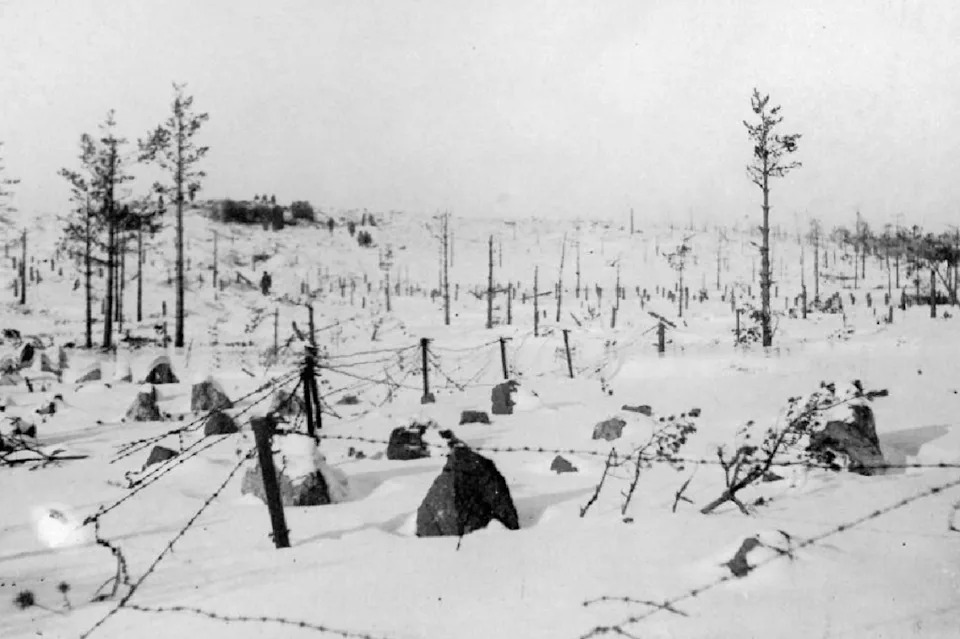
Stone barriers and barbed wires in the Mannerheim Line. (Wikimedia Commons)
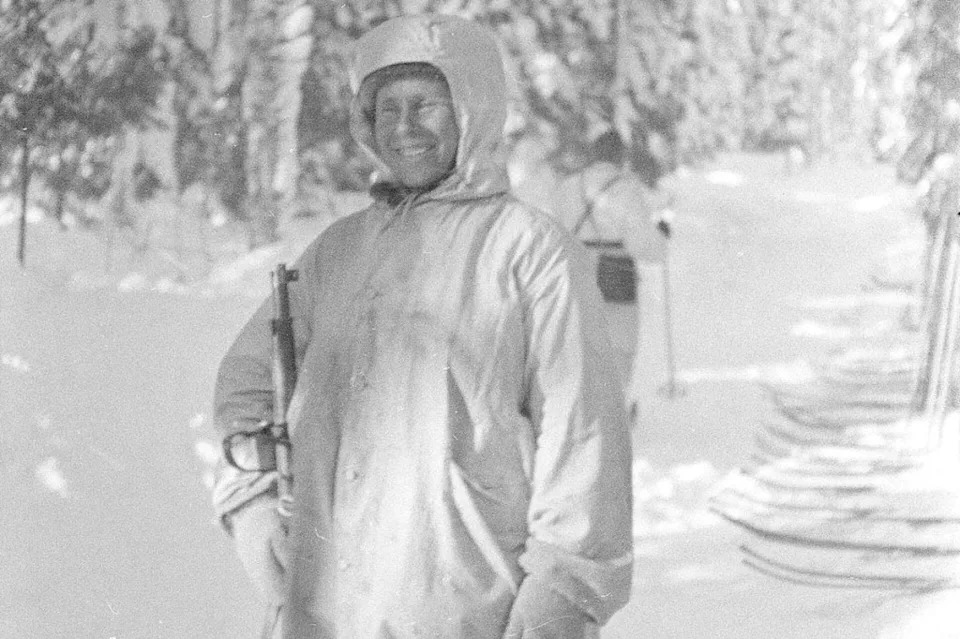
Finnish marksman Simo Häyhä became one of the most acclaimed military snipers ever during the Winter War, which ran from November 30, 1939, to March 13, 1940. (Wikimedia Commons)
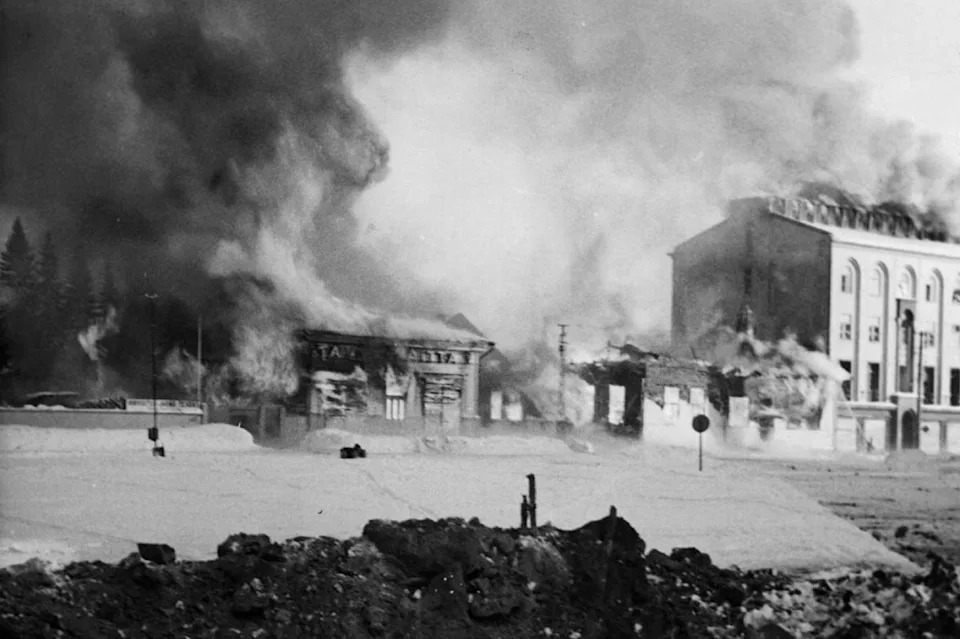
In this undated photo, buildings in a Finnish town burn after Soviet incendiary bombs hit them during the Winter War. (Hulton-Deutsch Collection/Corbis via Getty Images)
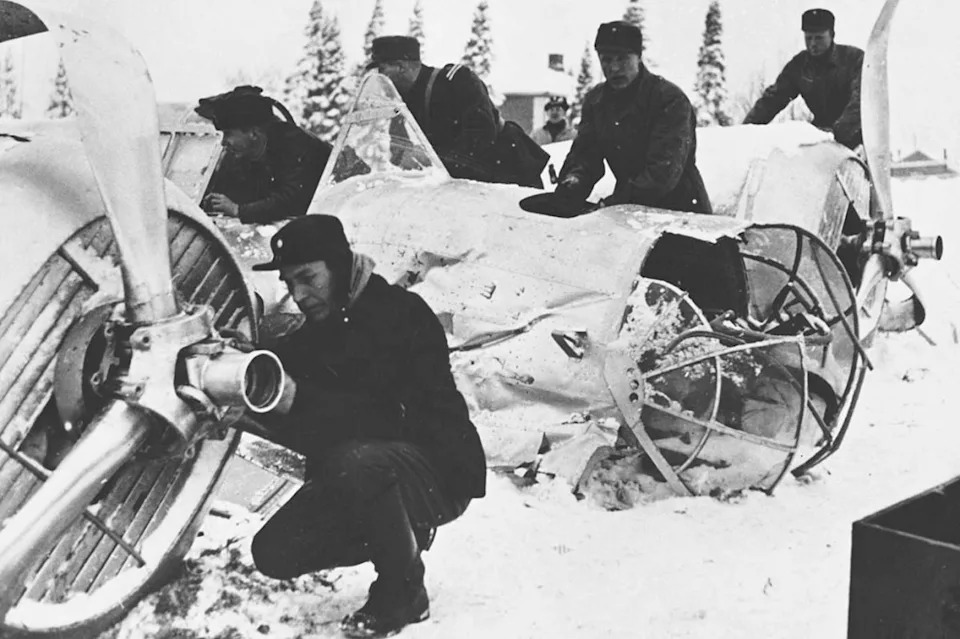
A Finnish anti-aircraft crew inspects the wreckage of a twin-engine Soviet bomber in Finland during the Winter War. (Hulton-Deutsch Collection/Corbis via Getty Images)
Winter War

Youth lacrosse
gold star family us army

Learning online
purple star school students dvids
Help us improve.