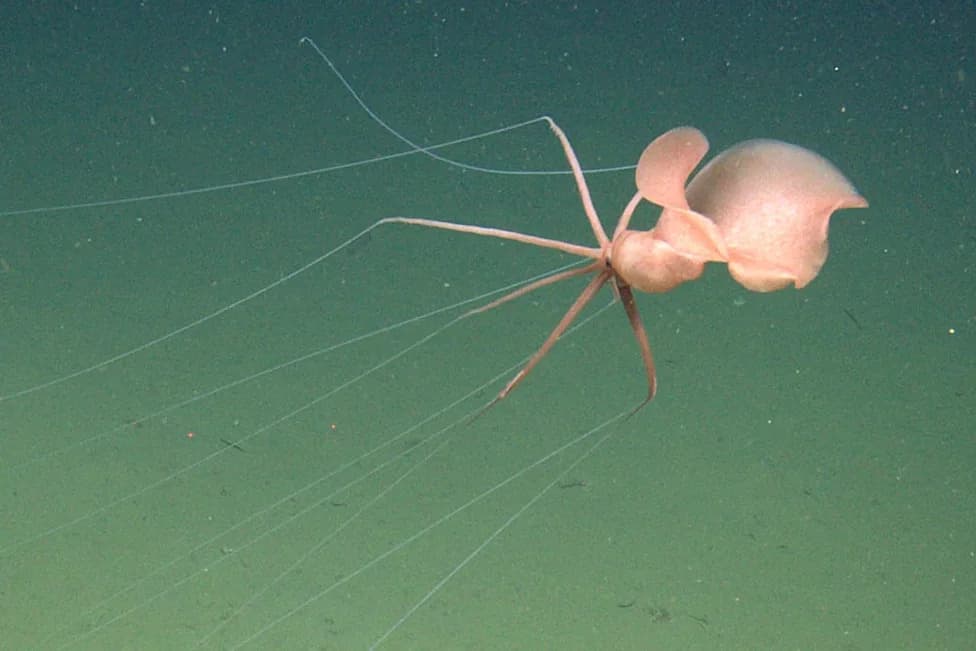
Marine biologists obtained the first wild photographs of an Arctic bobtail squid using bioluminescent counter-illumination to hide from predators. The mature female was filmed in Northeast Greenland National Park at 37–87 m depths, with three egg clusters recorded near 50 m in waters around 29.1°F (−1.6°C). The team notes there are roughly 70 bobtail squid species worldwide and calls for more Arctic surveys to build biodiversity baselines.
First Wild Photos of a Glow-in-the-Dark Arctic Bobtail Squid Reveal Stunning Counter-Illumination
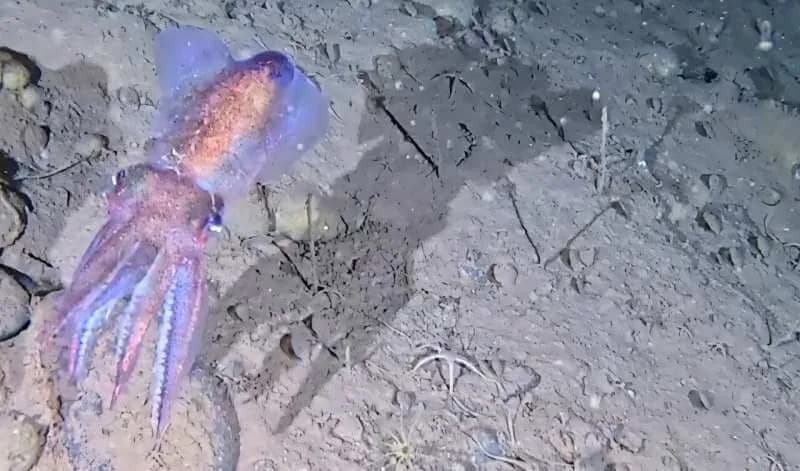
Credit: P.J. Maroni et al. / University of Western Australia
Credit: P.J. Maroni et al. / University of Western Australia
Marine biologists have captured the first confirmed wild photographs of an Arctic bobtail squid that uses bioluminescence to vanish into the water column. The mature female was filmed during a joint research cruise inside Northeast Greenland National Park using an M2 S remotely operated vehicle (ROV) fitted with an additional GoPro Hero 13.
Video footage shows the rainbow-hued squid at depths between 37 and 87 m in frigid waters as cold as 29.1°F (−1.6°C). The team also documented three egg clusters attached to rocky substrate at about 50 m depth, demonstrating the squid's ability to reproduce in near-freezing conditions.
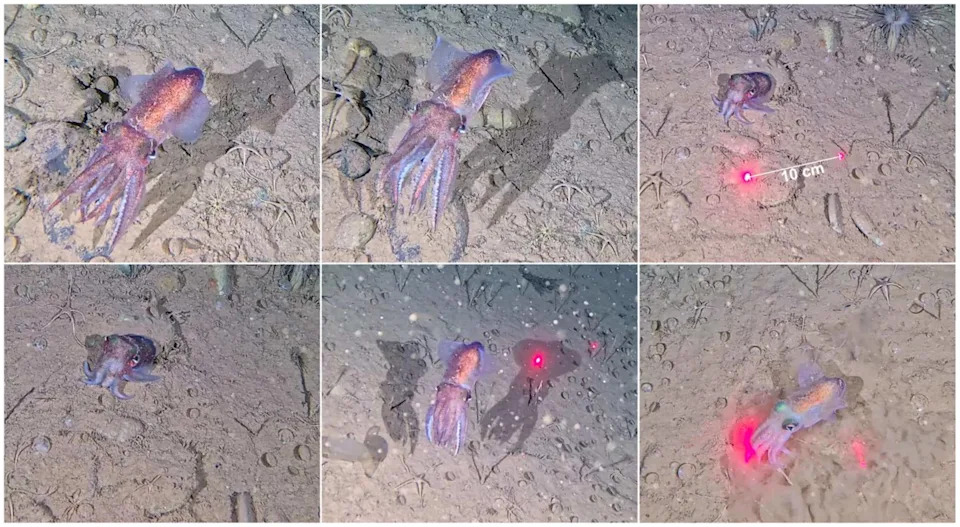
P.J. Maroni et al. / University of Western Australia
How the Squid Disappears
Bobtail squids host bioluminescent bacteria in a specialized light organ. These bacteria emit blue-green light that the squid can match to the intensity of downwelling moonlight. This counter-illumination fills in the squid’s silhouette from below, making it effectively invisible to predators and prey beneath it.
Why This Matters
About 70 species of bobtail squid are known worldwide, from warm Pacific and Indian Ocean waters to the sub-zero environments of the Arctic. Led by Dr. Paige Maroni of the University of Western Australia’s School of Biological Sciences, the research team highlights the ecological importance of cephalopods in Arctic food webs and the resilience of life in extreme marine habitats.
“These observations highlight both the remarkable adaptations of Arctic marine life and the urgent need for baseline biodiversity data in under-studied polar regions,” Dr. Maroni and colleagues write in the expedition paper.
The researchers stress that more targeted surveys and long-term monitoring are required to establish biodiversity baselines for the Arctic and to better understand how these communities may respond to environmental change.
Notes: The footage and still images from the ROV provide rare visual confirmation of bioluminescent counter-illumination in an Arctic bobtail squid and document reproductive activity at near-freezing temperatures.
Help us improve.