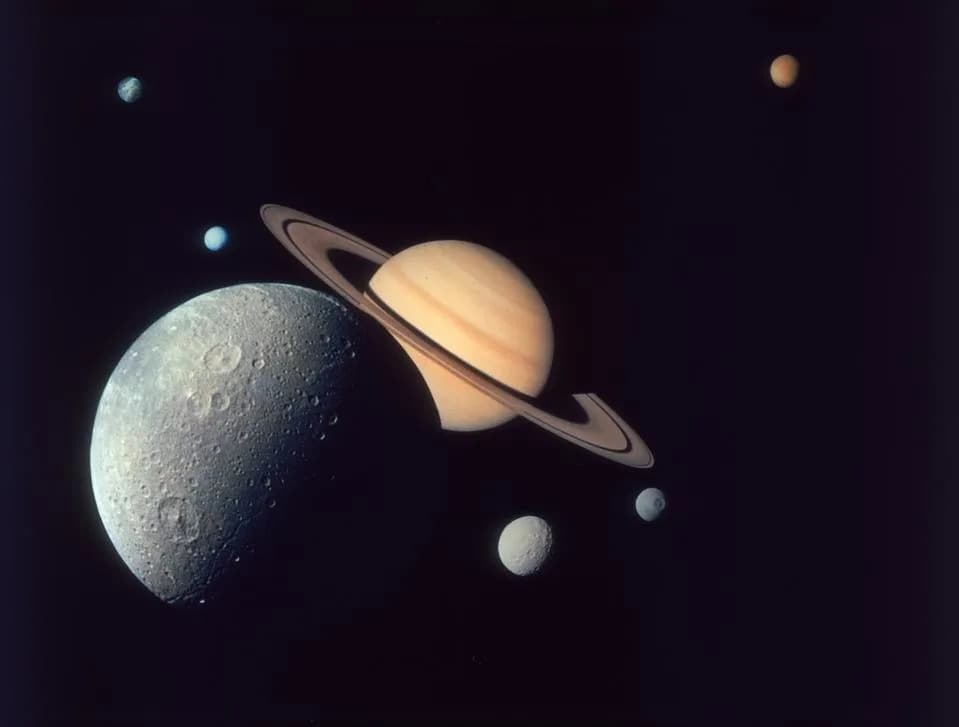
Researchers report a candidate exomoon, CD-35 2722 B, orbiting a brown dwarf and detected via radial velocity measurements. The object is roughly 90% the size of Jupiter, larger than Saturn, and completes an orbit in about 170 days. Classification is contested because brown dwarfs sit between stars and planets and the IAU has no settled definition for exomoons. Further observations and formal definitions will determine whether CD-35 2722 B is ultimately called a moon, a planet, or a hybrid.
Possible First Exomoon Detected Around a Brown Dwarf — CD-35 2722 B Blurs Planet–Moon Boundary
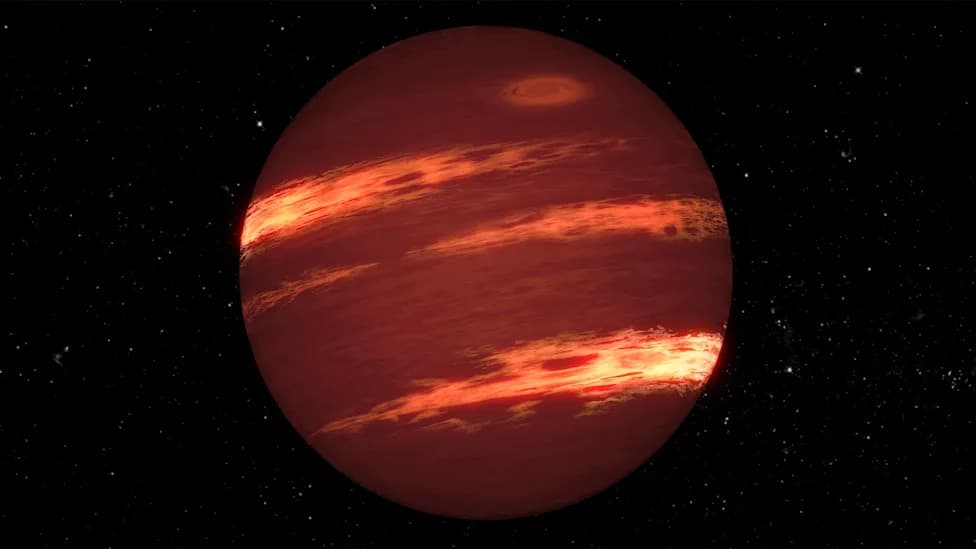
A brown dwarf isn't a star or a planet, so can it even have a moon?Credit: CNET
Researchers report evidence for a moon-like object orbiting a brown dwarf, a finding that could represent the first confirmed exomoon or a very unusual planet. The candidate, designated CD-35 2722 B, is roughly 90% the size of Jupiter, larger than Saturn, and completes an orbit around its host in about 170 days.
How the Object Was Detected
The discovery, described in a recent study led by Kevin Hoy, a PhD student at the Instituto de Estudios Astrofísicos, relies on radial velocity analysis. This classic technique detects tiny Doppler shifts — or wobbles — in a host object’s spectrum caused by the gravitational tug of an orbiting companion. It’s the same basic method that helped reveal the first exoplanets, and the team reports this is the first time it has produced evidence for a satellite around a companion brown dwarf.
"This is the first time, to our knowledge, this technique has produced evidence of satellites around a companion brown dwarf," Hoy said in the study.
Why Classification Is Controversial
Calling CD-35 2722 B a "moon" is not straightforward. Brown dwarfs occupy a gray area between planets and stars: they are more massive than typical planets but lack sustained hydrogen fusion like stars. Current practice by some classification authorities groups brown dwarfs with stars for certain definitions, which would make sufficiently massive companions planets rather than moons.
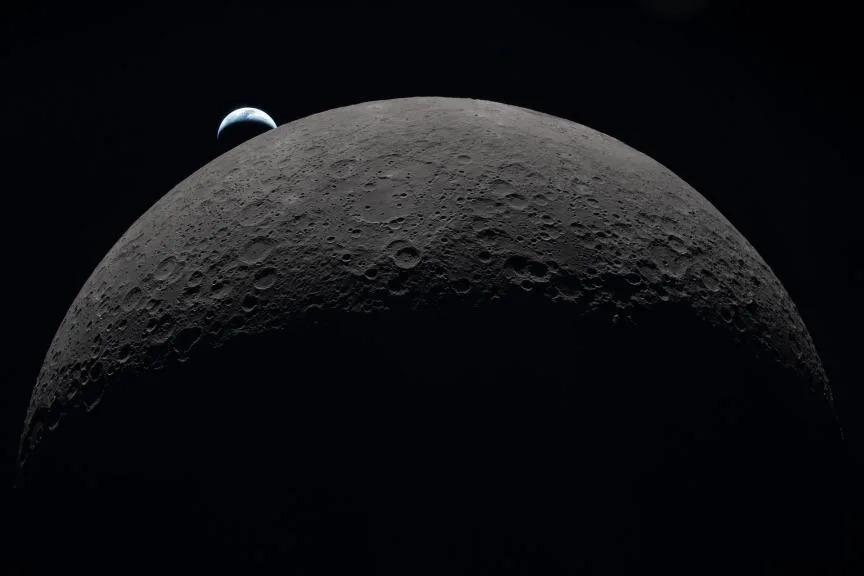
Most people understand that a moon is an object that orbits another object that isn't a star, like Earth's moon or the various other moons in the solar system.NASA
Complicating matters further, the candidate has at least the mass of Jupiter — far larger than any rocky or icy moon in our solar system. That raises the question of whether such a massive object should be considered a moon at all, even if it behaves dynamically like one by orbiting a companion rather than the primary star.
What’s Next
Because the International Astronomical Union (IAU) has not adopted a formal definition for "exomoon," astronomers will debate whether CD-35 2722 B should be labeled an exomoon, a planet, or a hybrid case that challenges our categories. Further observations and independent confirmations will be essential to refine the object’s mass, orbit, and formation history — all of which will inform how the community chooses to classify it.
Until formal definitions are updated, CD-35 2722 B stands as an intriguing object that highlights how planetary science must adapt as new and unexpected systems are discovered.
Help us improve.