The Los Angeles Homeless Services Authority's delayed 2026 count found a 3.4% increase in the city's homeless population and a 7.9% jump in those living unsheltered, undermining Mayor Karen Bass's claims of progress. The data outpaced countywide increases and has intensified criticism of LAHSA's oversight and the city's reliance on a "housing first" approach. The results complicate the mayoral race: City Councilmember Nithya Raman—who chairs the council's homelessness committee—shares responsibility, while Spencer Pratt, who campaigned aggressively on the issue, missed the runoff after late ballots. Observers warn the outcome limits voter choice and strains local democracy.
Delayed LA Homeless Count Undercuts Mayor Bass and Leaves Voters With a Tough Choice

An image collage containing 2 images, Image 1 shows Los Angeles Mayor Karen Bass speaking into a microphone, Image 2 shows A homeless woman stands near makeshift shelters and trash on a Los Angeles street
The Los Angeles Homeless Services Authority's (LAHSA) delayed 2026 homeless count has complicated an already turbulent mayoral race, casting doubt on Mayor Karen Bass's claim of measurable progress while exposing broader regulatory and political failures.

Karen Bass is in deep trouble. Getty Images for Los Angeles Cleantech Incubator (LACI)
New Data, New Questions
LAHSA's 2026 tally showed a roughly 3.4% increase in the city's homeless population compared with 2025, and a 7.9% rise in people living unsheltered—those sleeping on the streets or in vehicles. Those increases outpaced Los Angeles County as a whole, which recorded a 1.2% rise in total homelessness and a 3.3% increase in its unsheltered population over the same period.
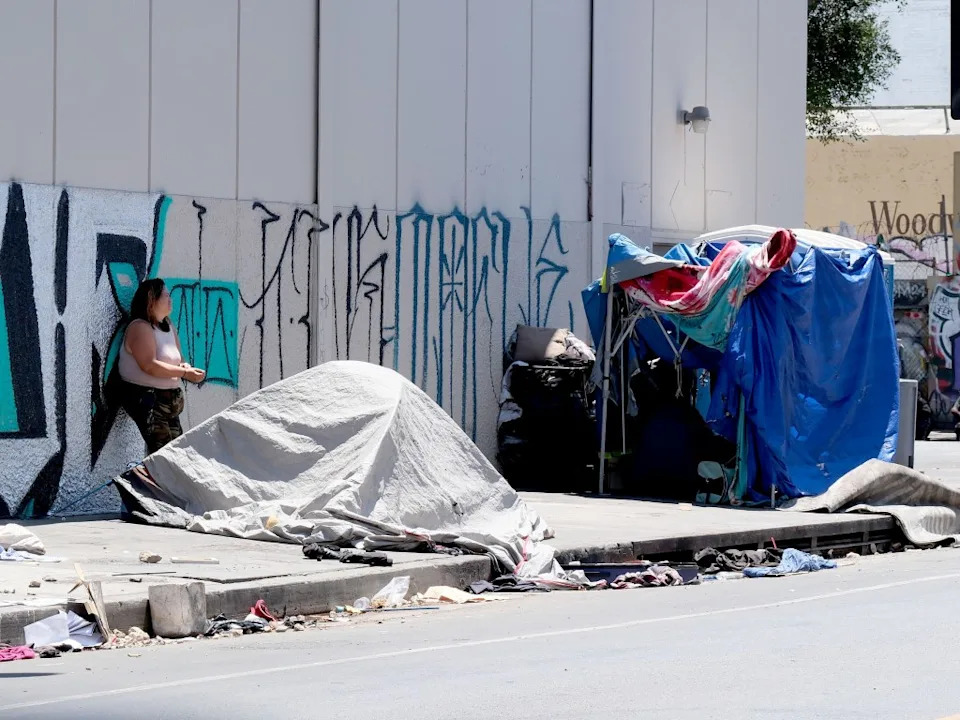
But the mayor continued to argue that she had earned a second term, thanks to the progress that LA had made in reducing homelessness. Andy Johnstone for CA Post
Political Fallout
The figures undermine a central argument of Mayor Bass's reelection campaign. Her team had highlighted what it called "the first-ever back-to-back decreases in homelessness" under her administration—an assertion now challenged by the latest data. Bass's office blamed federal policy for worsening conditions, saying higher costs and reduced safety-net funding pushed more residents into precarity. That explanation has not persuaded many voters.
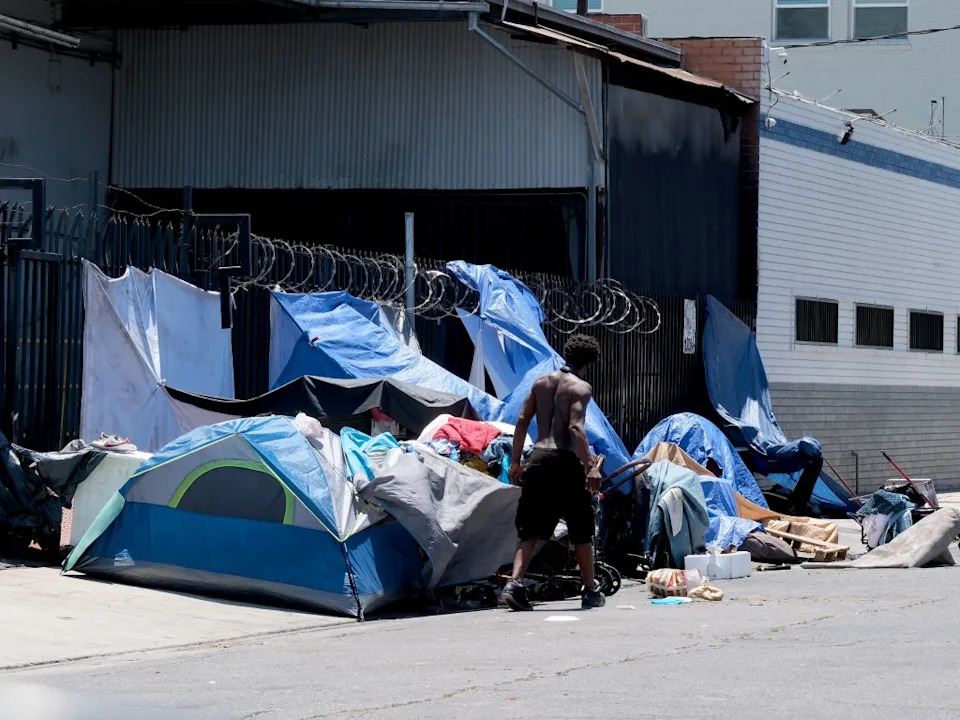
On Friday, the LA Homeless Services Authority (LAHSA) released its delayed homeless count for 2026. Andy Johnstone for CA Post
Accountability, Strategy, and Spending
City and county governments together spend about $3 billion annually addressing homelessness. Critics argue that despite that investment, Los Angeles has not pursued a sufficiently comprehensive approach—pointing to a heavy reliance on "housing first" strategies without parallel investments in substance use treatment, mental health services, and enforcement of public-health and safety ordinances around encampments.
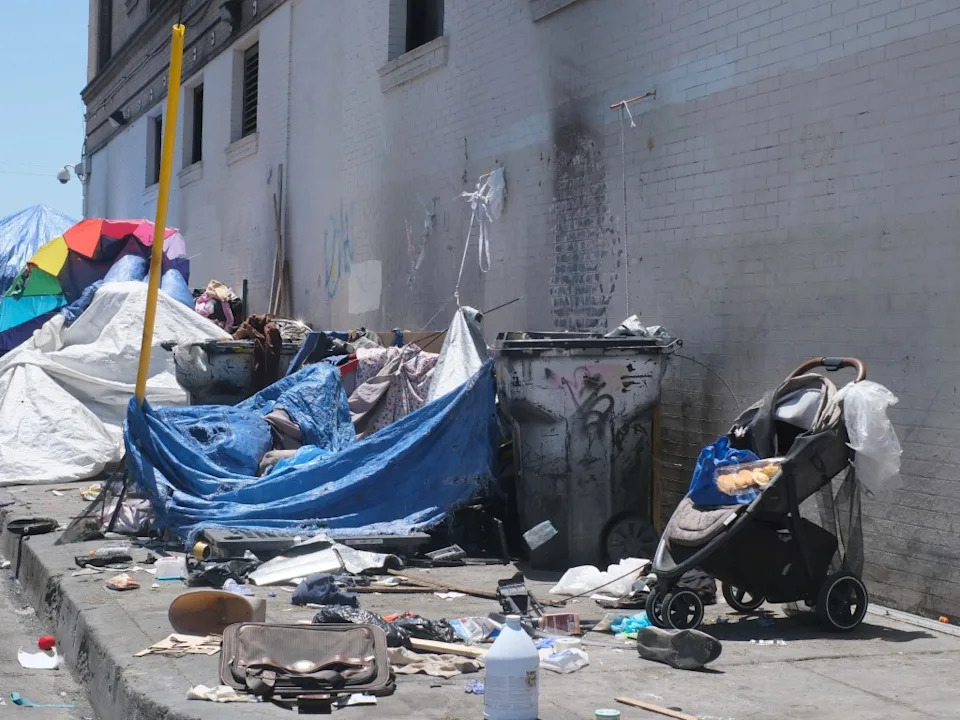
Four walls do not solve the problem for people who pursue their cravings and their demons on the streets. Andy Johnstone for CA Post
LAHSA has also faced sharp criticism for weak oversight and accountability. Local officials have been criticized for not monitoring the agency closely enough and for being slow to assume certain administrative functions.

If the homeless numbers had been available before the June 2 primary vote, it is possible that challenger Spencer Pratt would have qualified for the general election. London Entertainment for CA Post
Electoral Consequences
Under ordinary circumstances, the poor numbers might help Mayor Bass's runoff opponent, City Councilmember Nithya Raman, who chairs the City Council committee on homelessness. But Raman also carries responsibility: as the council’s homelessness committee chair, she shares political exposure for the city’s mixed results.

Pratt, who lost his family home in the Palisades Fire, made homelessness a major focus of his campaign. Jon Rou/LMU
Meanwhile, challenger Spencer Pratt—who made homelessness a central issue after losing his Palisades home in the Palisades Fire—fell short of advancing to the runoff. Pratt appeared to be in second place on election night, but late-arriving ballots pushed Raman past him. Observers say the delayed release of the homeless count deprived voters of timely data that could have influenced the June 2 primary.
A Constrained Choice and a Strained Democracy
Los Angeles voters now face a difficult choice: reelect an incumbent whose homelessness record is now in question, or support a challenger whose policy prescriptions critics call risky. Some allege that organized ballot collection in neighborhoods with high concentrations of unhoused residents helped propel Raman into the runoff, further complicating the narrative.
California's jungle primary rules limit voter options in the general election—there is no write-in alternative—raising concerns about the breadth of democratic choice available to Los Angeles residents.
Joel Pollak is Opinion Editor of the California Post.
Help us improve.