The nearly 2,000-foot-deep discovery of an 18th-century wreck in the Skagerrak Strait revealed rows of largely intact Chinese porcelain and other luxury goods preserved on the seabed. ROV footage shows plates barely shifted since sinking, and a Lübecker Ratsziegelei-marked brick suggests a date before 1772. Unopened crates may contain organic cargo such as tea or textiles. Norwegian authorities are protecting the site for research and careful documentation rather than commercial salvage.
275-Year-Old Shipwreck Nearly 2,000 Feet Down Off Norway Reveals Remarkably Intact Chinese Porcelain
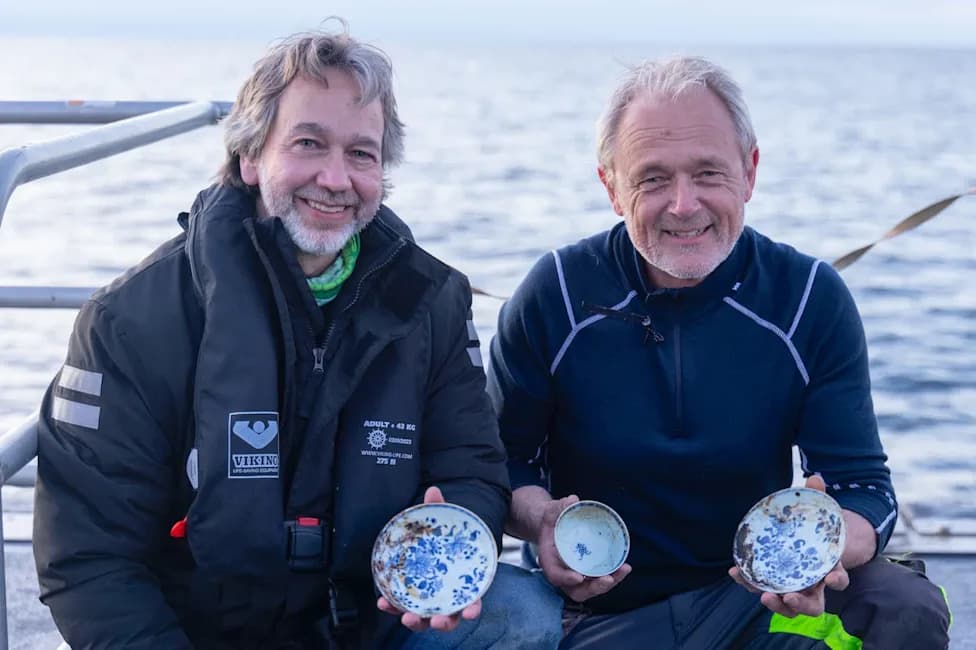
Photo Credit: Sindre Kinnerod, Flash Studio
An 18th-century shipwreck discovered nearly 2,000 feet (about 610 meters) below the surface in the Skagerrak Strait appears to preserve rows of Chinese porcelain largely in their original stacks. The find offers an unusually clear snapshot of an 18th-century trade route and the kinds of luxury goods carried across oceans centuries ago.
The wreck was located by Espen Saastad, a watch designer who operates a small business using remotely operated vehicles (ROVs) for underwater surveys. Norway's Directorate for Cultural Heritage announced the discovery in June, following review of ROV footage and seabed images.
Investigators report that the cargo is strikingly well preserved: neatly stacked Chinese porcelain plates and items that appear largely undamaged, fragments of chandeliers, goblets, bottles and barrels of grain. ROV footage suggests some plates have barely shifted since the vessel sank—a level of preservation rarely seen after centuries on the seabed.
Key clues to the wreck's age and origins include a brick from the galley stamped with a Lübecker Ratsziegelei mark; that Lübeck brickworks operated until 1772, helping narrow the likely time window for the sinking. Several sealed crates remain unopened on the site and may contain textiles or organic cargo such as tea, herbs or medicinal materials—items that rarely survive but would be archaeologically invaluable if documented carefully.
Damage, Protection and Research Priorities
Parts of the wreck have already been harmed by modern trawling. Because such disturbances can permanently destroy archaeological context, Norwegian cultural heritage authorities have designated the site a protected monument. The emphasis is on remote documentation, careful mapping and preservation rather than commercial salvage.
Investigators are systematically cataloguing visible objects from seabed images and planning targeted, non-invasive study of key finds—most notably a porcelain piece shaped like a lotus plant that remains in situ. Continued remote exploration and mapping will aim to balance learning about the site with protecting fragile remains.
“I had to pinch myself when I realised the scale of the find — it was hard to believe. I'm now looking forward to learning more about the ship's history,”
Why This Matters
This cargo sheds light on a transitional moment in global commerce: Chinese porcelain, still a symbol of luxury, was becoming more widely shipped to European markets. A cargo this complete can reveal details about 18th-century trade networks, shipping practices and consumer demand that heavily damaged wrecks cannot.
The discovery also highlights how smaller ROV operations can open new opportunities for deep-water archaeology while minimizing immediate disturbance to fragile sites. Careful documentation now may preserve knowledge that would otherwise be lost if the site is further damaged.
Help us improve.