
Israel is caught between extreme summer heat and rising regional tensions. Temperatures in Tel Aviv soared to about 112°F while US‑Iran exchanges intensified, prompting some cities to reopen bomb shelters and the IDF to raise its readiness to "maximum." Officials warn Iran could target Israel if US strikes expand; market reactions pushed Brent crude above $100 a barrel. Civilians report fatigue but daily life — beaches and surfing — continues amid uncertainty.
Scorching Heat and Growing War Fears: Israelis Navigate Beaches, Bomb Shelters and Uncertainty
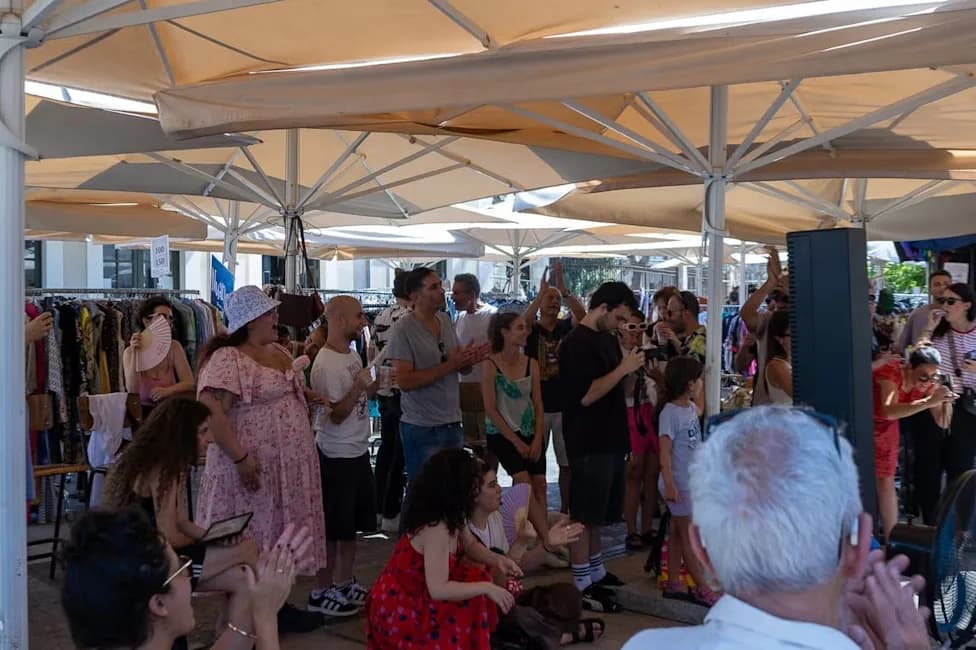
A crowd gathers to listen to Oren Pesso and his daughter Renee perform at Hatachana Park in Tel Aviv, July 24, 2026. (photo credit: Theia Chatelle)
As Israel endures record summer heat, a renewed cycle of US-Iran strikes has raised fears the fighting could once again touch Israeli soil. For many citizens the mood is one of suspended anxiety — life continues on packed beaches even as municipalities quietly ready shelters and the military raises its alert level.
Heat, Crowds and Everyday Life
Tel Aviv sweltered this week, with temperatures reaching about 112°F (44°C). Despite the heat warnings from Israel's Meteorological Service and alerts about heat stress, evening beaches remained crowded. Surf conditions were unusually good, with swells approaching six feet, and many residents treated the coastline as a brief respite from worry.
Rising Regional Tensions
Direct hostilities between the United States and Iran reignited two weeks ago. US Central Command carried out repeated strikes on Iranian targets, and Iran responded by launching drones at US facilities in Bahrain, Kuwait and Jordan. Tehran has warned that further US escalation could lead it to target Israel, and analysts increasingly warn each round of tit‑for‑tat strikes could raise the chances Israel is drawn in.
Civilian Preparedness and Limits of Protection
Several Israeli municipalities have reopened public bomb shelters that were closed after the ceasefire on June 17. Cities including Ramat Gan and Karmiel have opened all shelters, and the Israel Defense Forces moved from high alert to what officials described as "maximum readiness." Yet Israel's Home Front Command has not issued new, specific civilian instructions.
Many residents rely on mamads — reinforced safe rooms in newer apartment buildings — but survivors and experts warn these shelters are not infallible. Ballistic missiles used in previous exchanges can destroy safe rooms on impact, and a June 2025 direct strike on Beersheba killed four people sheltering in their mamads and wounded others.
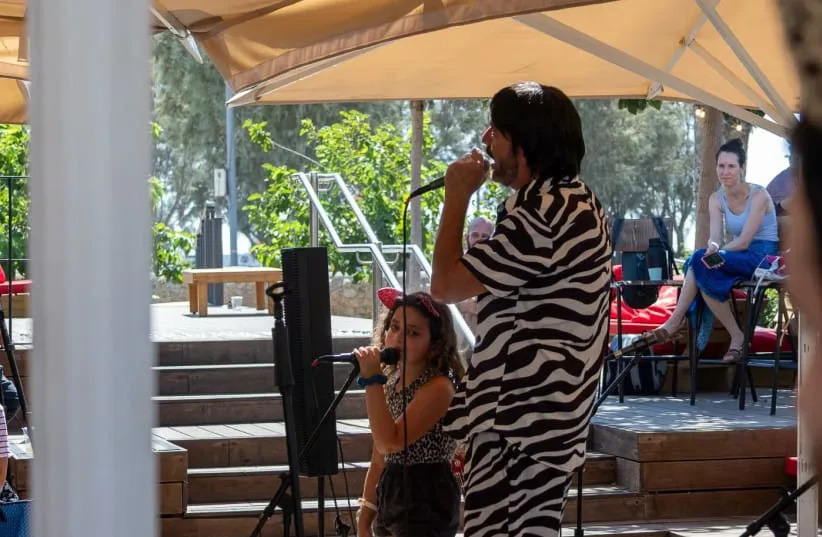
Oren Pesso sings with his daughter Renee and his avant-garde musical ensemble, Jilber and the Cats, in Tel Aviv, July 24, 2026. (credit: Theia Chatelle)
Weapons, Casualties and Human Cost
Iranian forces have increased the use of ballistic missiles and cluster munitions. Cluster submunitions scatter dozens of bomblets over wide areas and have struck civilian neighborhoods; reporting indicates roughly 10 civilian deaths were caused by cluster munitions among the civilian casualties attributed to Iranian strikes since February.
Official tallies are constrained by military censorship and reporting limits, but available figures place the recent round's toll at at least 28 Israelis killed and more than 4,000 wounded. Last week, Michael Katz, 82, who had been critically injured in an April building strike, died of his wounds.
Politics, Deterrence and Markets
Prime Minister Benjamin Netanyahu announced a planned trip to the United States for talks with President Donald Trump, a move that prompted some speculation the immediate risk of an Iranian strike on Israel might lessen. Israeli defense officials have issued stern warnings: "If Iran attacks Israel, it will suffer a crushing blow," Defense Minister Israel Katz said after a security assessment.
Markets have reacted to the perceived risk: Brent crude rose above $100 a barrel for the first time since May after Houthi allies of Iran launched attacks and declared a blockade near the Bab el‑Mandeb Strait, disrupting shipping and raising concerns about wider economic fallout.
Personal Stories: Fatigue and Resolve
"We're really just sick of it," said Tel Aviv performance artist Oren Pesso. "The idea of another round of missiles coming — it's just too much."
Others described resigned preparedness. Gideon Alon, visiting Tel Aviv from a northern kibbutz, said life near the Lebanese border has never fully returned to normal and his family's mamad remains ready. Yet many, like 25‑year‑old Sarah Cohen of Yafo, continued to head to the beach, choosing to live in the present while bracing for an uncertain future.
For now, the country balances immediate civilian rhythms with military and municipal precautions as regional strikes persist and the prospect of renewed direct confrontation looms.
Help us improve.





















