Democrats Are Using Epstein-Related Records In Midterm Ads. Campaigns in multiple swing states are tying Republican candidates to alleged cover-ups, failures to protect survivors and connections to Epstein allies. Congress forced the release of many Justice Department records after a bipartisan effort, and the House Oversight Committee has released additional documents. Survivors welcome transparency but warn against politicizing their trauma.
The Epstein Election: How Jeffrey Epstein Is Shaping Midterm Campaigns
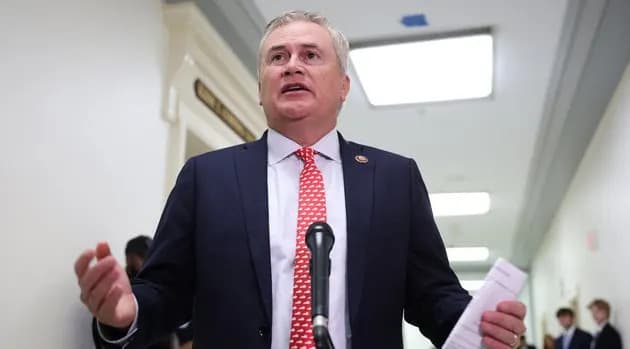
Rep. James Comer (R-Ky.) speaks to the media last month as he arrives to a closed-door interview with former CEO of Apollo Global Management Leon Black before the House Oversight Committee on Capitol Hill. The committee was continuing to hold closed-door interviews as part of its investigation into *** offender Jeffrey Epstein. Kevin Dietsch via Getty Images
WASHINGTON — As the midterms unfold, Democrats across the country are prominently invoking Jeffrey Epstein — the disgraced financier and convicted sex offender who died in 2019 — in paid advertising to attack Republican candidates and underline themes of corruption, elite protection and failures to protect survivors.
How Campaigns Are Using The Epstein Files
In several key contests, Democratic ads resurrect Epstein-related allegations to tie GOP hopefuls to alleged cover-ups or to associates of Epstein. In Wisconsin, an ad accuses a leading Republican gubernatorial candidate of blocking the release of Epstein records. In Georgia, an ad from Sen. Jon Ossoff's campaign highlights a police sergeant's criticism of his Republican opponent for "protecting powerful elites instead of our children." In Ohio, former Sen. Sherrod Brown has repeatedly targeted his opponent's links to a close Epstein associate.
Political Mechanics And The Congressional Push
Congress moved to force public disclosure of some Justice Department records related to Epstein after a bipartisan push in the House that strained relationships within the GOP. A discharge petition, backed by a mix of Republicans and Democrats, forced a floor vote; nearly every House member voted to make the files public, and the Senate later cleared the measure by unanimous consent, prompting the creation of a publicly searchable "Epstein Library."
Oversight And Subpoenas
The House Oversight Committee subpoenaed Justice Department materials and later obtained and released additional documents. Committee chair Rep. James Comer issued subpoenas to the estate and other entities, producing correspondence that drew fresh attention to high-profile names mentioned in the records.
Responses From Republicans And Counterattacks
Republicans targeted by the ads have largely dismissed the messaging as political desperation. Some GOP figures highlight that many of the criticized members ultimately supported transparency measures, while others point to Democratic ties to Epstein associates — for example, public scrutiny around tech investor Reid Hoffman, who has acknowledged visiting Epstein's private island twice but denies wrongdoing.
"What it is is desperation," said Rep. Tom Tiffany, the Republican candidate for governor in Wisconsin. "They don't have anything to run on."
Survivors' Perspectives
Survivors and advocates, who helped push for greater transparency, express mixed feelings. Many welcome public disclosure and accountability but warn against the political exploitation of survivors' trauma. Liz Stein, who says she was assaulted and trafficked by Epstein and an associate, said that using the case to inform the public about systemic failures feels supportive, but using survivors' suffering as a campaign headline can feel "exploitative."
Where This Could Matter
Democrats expect Epstein-themed ads to appear across multiple swing states and competitive races, including House and Senate contests where questions have arisen about candidates' ties to Epstein associates or votes over transparency. Key names referenced in public debate include Donald Trump, Les Wexner, Reid Hoffman, Jon Husted and John Sununu, among others.
Conclusion
Whether measured as political strategy or a push for accountability, the reemergence of Epstein in midterm advertising has turned the files and related revelations into a potent campaign issue. It highlights broader themes voters may weigh at the ballot box: trust in institutions, how elites are treated by the justice system, and the ethical boundaries of using survivors' stories in political messaging.
Help us improve.