Short Summary: Social media claims that Canadian aid to Ukraine prevented purchases of water bombers misrepresent how aerial firefighting is funded and managed. Provinces control their own fleets and share aircraft through the Canadian Interagency Forest Fire Centre, with private contractors supplementing capacity. In 2026 CIFFC leased 10 aircraft under the Pan-Canadian Aerial Assets Program, independent trackers logged dozens of active firefighting planes, and new procurement is underway though some deliveries may not arrive until the early 2030s.
Misleading Claim: Ukraine Aid Did Not Prevent Canada From Getting Water Bombers During the Intense 2026 Wildfire Season
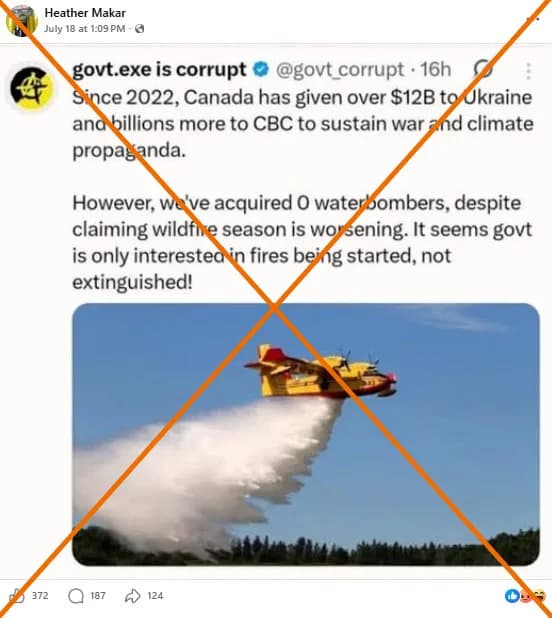
A screenshot of a Facebook post taken on July 23, 2026
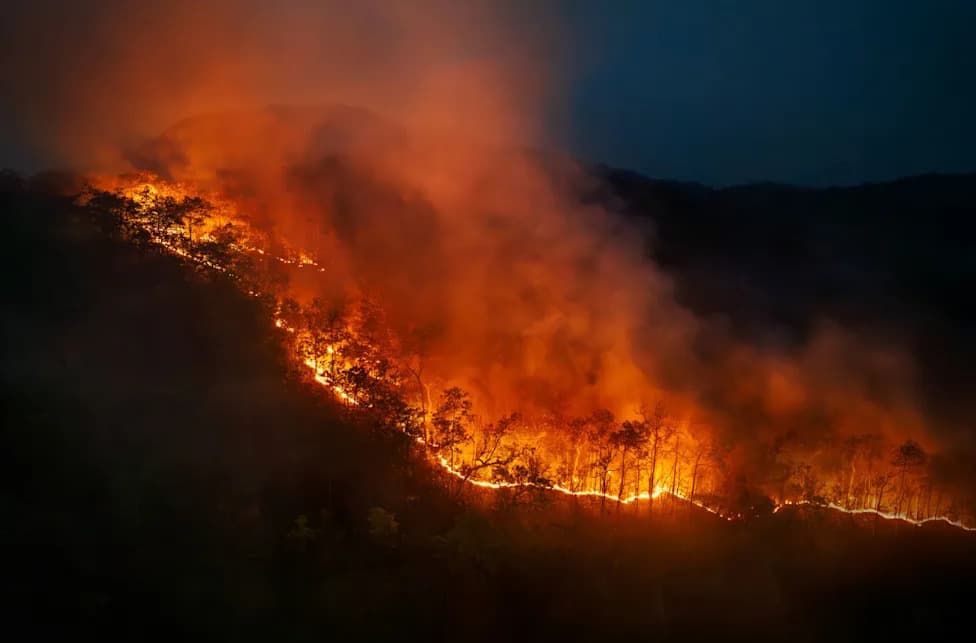
As Canada grappled with one of its most intense wildfire seasons in 2026—scorching an area roughly the size of Belgium—social media posts accused the federal government of diverting money that could have bought water bombers to foreign aid for Ukraine. Experts who spoke to AFP say those claims are misleading because aerial firefighting in Canada is primarily a provincial responsibility and relies on interprovincial sharing and private contractors.
What The Social Posts Say
"Since 2022, Canada has given over $12B to Ukraine and billions more to CBC to sustain war and climate propaganda. However, we've acquired 0 waterbombers, despite claiming wildfire season is worsening."
Variations of this claim first circulated on X in June 2025 and resurfaced across platforms as wildfires spread through the boreal forest in July 2026. By July 18, with nearly 1,000 active fires, Prime Minister Mark Carney described the season as among the "most intense" in Canadian history.
Why The Claim Is Misleading
Funding and procurement are not a single federal decision: Federal foreign aid—including more than C$13 billion in direct support to Ukraine, much of it disbursed via the IMF-administered account—does not translate directly into purchases for provincial firefighting fleets. Provinces and territories manage their own aerial firefighting assets.
CIFFC coordinates, but provinces own fleets: The Canadian Interagency Forest Fire Centre (CIFFC) facilitates interprovincial lending of aircraft but does not maintain a single national registry of all water bombers. CIFFC confirmed that under the Pan-Canadian Aerial Assets Program (PCAAP) it leased 10 aircraft in 2026 to strengthen aerial response capacity.
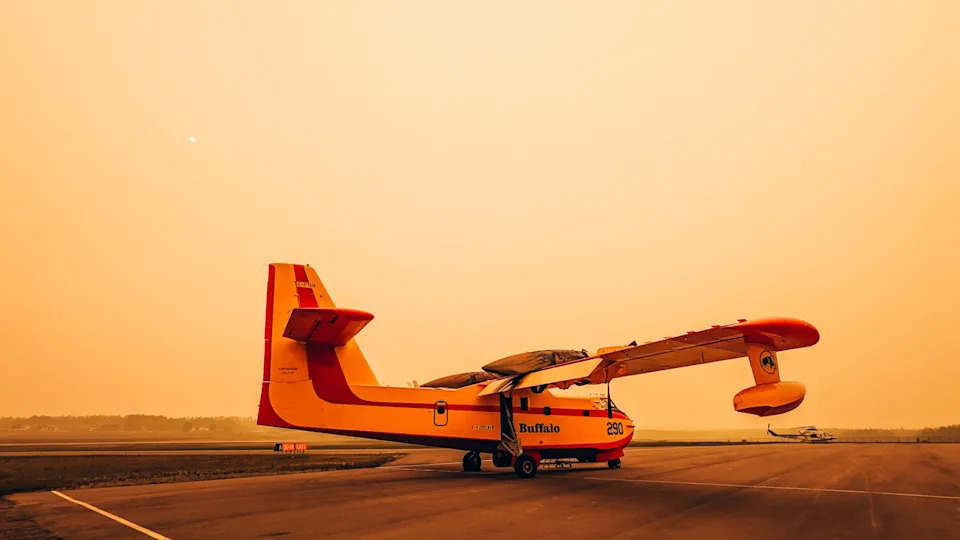
This June 3, 2023 image released by the Societe De Protection Des Forets shows a firefighting aircraft taxiing under smoky skies from wildfires at an airport in Val-d'Or, Quebec, CanadaAmelie HebertSociete De Protection Des Forets
Active aerial capacity was significant in 2026: Independent tracking by Ernst Mulders of waterbomber.app recorded 73 distinct firefighting aircraft operating in Canada in the three months up to July, including 63 water bombers. Provincial fleets and contractors also reported substantial resources: Quebec operates 14 government-owned water bombers (plus contractor support), Ontario reported a combined 80 helicopters and water-bombing aircraft, and British Columbia’s base fleet includes 27 fixed-wing aircraft with the ability to add mutual aid and contractor capacity.
Planes Alone Don’t Solve Wildfires: Experts stressed that aircraft primarily support ground crews. Jean Strong of the BC Wildfire Service and analysts like Steffan Watkins cautioned that simply adding more planes would have limited benefit without sufficient ground resources and coordinated deployment.
Procurement And Future Capacity
De Havilland Canada announced in March 2022 a revival of water-bomber production, with early orders for European countries. Several provinces (Alberta, Manitoba and Ontario) have since signed contracts for new aircraft, but analysts say delivery of those new models may not occur until the early 2030s. In the meantime, converting retired aircraft into water bombers remains a faster, lower-cost option that Canada has used for years.
Bottom Line
While federal spending on Ukraine has been substantial, social media claims that it directly prevented Canada from acquiring water bombers oversimplify a complex system of provincial responsibility, leased assets, contractor support and long procurement timelines. Recent leases under PCAAP, active provincial fleets, contractor support and ongoing procurement plans indicate multiple avenues for expanding aerial firefighting capacity—but not a single federal funding decision that "blocked" purchases.
Help us improve.