
Lightning struck a Chinese Long March-3B rocket about 30 seconds after liftoff from Xichang on July 23, 2026, an event captured in striking photos and video. CASC confirmed the Tianlian II-06 satellite reached its planned geostationary orbit and will relay communications to the Tiangong Space Station. The incident echoes past lightning strikes on rockets — notably Apollo 12 and a 2019 Soyuz — and recalls the 1987 Atlas/Centaur-67 breakup that led NASA to adopt strict Lightning Launch Commit Criteria.
Lightning Strikes Chinese Long March-3B About 30 Seconds After Launch — Stunning Photos Capture the Moment
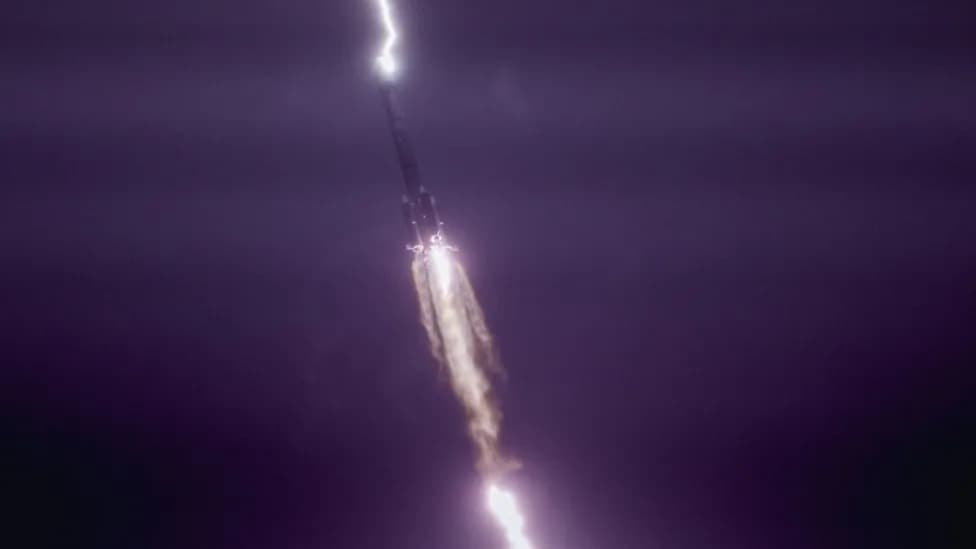
Lightning strike on Chinese rocket captured in epic launch photo
A Long March-3B carrier rocket lifting the Tianlian II-06 communications-relay satellite was struck by lightning roughly 30 seconds after liftoff from China's Xichang Satellite Launch Center on July 23, 2026. Dramatic video and photos of the ascent show a bright bolt arcing to the vehicle, prompting audible gasps from spectators near the launch site.
Launch and Mission Outcome
The China Aerospace Science and Technology Corporation (CASC) confirmed that despite the strike, the Long March-3B completed its mission and placed Tianlian II-06 into its planned geostationary orbit. The satellite is intended to relay communications for the Tiangong Space Station and to support future crewed missions.
Why Lightning Matters
Lightning can damage onboard electronics, sensors and guidance systems. In many historical cases, rockets have continued to orbit despite strikes, but in some incidents lightning has caused mission failures. Engineers study such events carefully to understand vulnerabilities and to harden hardware and procedures.
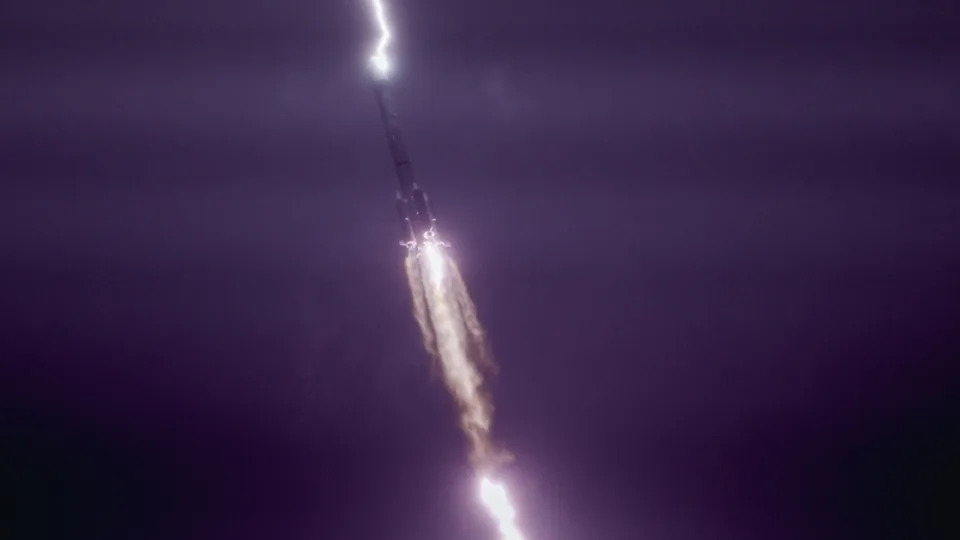
A Long March-3B carrier rocket carrying the Tianlian II-06 satellite blasts off from the Xichang Satellite Launch Center on July 23, 2026 in Xichang, Sichuan Province of China. | Credit: Zhou Quan/VCG via Getty Images
Historical Context
Rockets struck by lightning are rare but not unprecedented. During the Apollo 12 launch, the Saturn V was hit twice; a postflight NASA report said some non-essential instruments and sensors experienced "permanent effects," yet the mission proceeded and the crew reached the Moon. A Russian Soyuz was also struck shortly after a 2019 launch but still placed its payload into orbit.
Contrast: In 1987, a lightning strike on an Atlas/Centaur-67 led to a guidance-computer malfunction and the vehicle's breakup. That accident prompted NASA to develop and adopt strict Lightning Launch Commit Criteria (LLCC) to better define weather conditions that should delay launches. According to NASA, since implementing those criteria in the United States, no U.S. launch vehicles have intercepted or triggered lightning on launch.
What Comes Next
Investigators and mission engineers typically review telemetry and imagery following such events to determine any degradation or latent effects on the vehicle and payload. CASC's confirmation that Tianlian II-06 reached its intended orbit is a clear operational success, but the lightning strike will likely be a case study for designers and launch planners.
Photo credit: Zhou Quan/VCG via Getty Images
Help us improve.





















