Environmental groups have petitioned the FCC to pause licensing for more than one million proposed orbital data‑centre satellites, warning of serious atmospheric, ecological and night‑sky harms. Critics say heavy launches would inject black carbon into the stratosphere and that satellite reentries release alumina, potentially warming the mesosphere and affecting ozone layers by 2040. Researchers also warn that accounting for launch and reentry emissions could make orbital data centers more carbon‑intensive than ground facilities. The petition requests a full NEPA Programmatic Environmental Impact Statement before licensing proceeds.
Experts Warn Orbital Data Centers Proposed by Musk, Bezos Could Be Catastrophic for Atmosphere and Night Sky
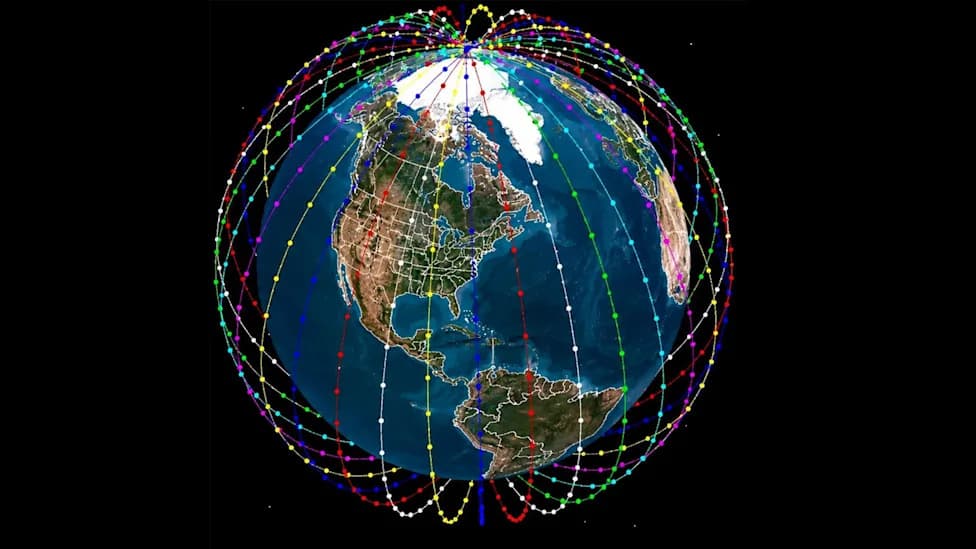
Image: European Space Agency
Environmental groups are urging regulators to stop a wave of proposals to build data centers in orbit, warning that launching massive fleets of servers into space could cause lasting harm to the atmosphere, night skies and terrestrial ecosystems.
Coalition Files Petition to Pause Licensing
A coalition led by Earthjustice, Public Employees for Environmental Responsibility (PEER) and DarkSky International has filed a formal petition with the FCC asking the agency to halt licensing for more than one million proposed orbital data‑center satellites. The groups call the plans potentially "catastrophic" for the atmosphere and the night sky, and request a Programmatic Environmental Impact Statement under NEPA before any licenses are granted.
Who’s Proposing Orbital Data Centers?
Companies including SpaceX, Blue Origin and a startup connected to a Robinhood co‑founder have applied for unprecedented orbital compute capacity. One applicant, Cowboy Space Corporation, has requested authorization for up to 20,000 satellites with launches aimed at 2028 (The Guardian). Active satellites already increased from roughly 1,400 in 2015 to about 15,000 today, with projections of 100,000 by 2030 even before any dedicated orbital data centers are launched (The Guardian; Engadget).
Why Advocates Are Concerned
The industry pitch emphasizes advantages such as solar power, reduced land use, and the absence of noisy diesel generators. But scientists and environmental advocates warn that the environmental calculus changes when launches, on‑orbit operations and reentries are included.
Analyses that cite research by Maloney and Ross estimate that each heavy rocket launch can deposit roughly 10 tons of black carbon (soot) into the stratosphere. In that layer, such particles can have an outsized warming effect—sometimes estimated at roughly 500 times the short‑term warming impact of comparable ground‑level emissions.
When satellites deorbit and burn up on reentry, they vaporize metals such as aluminum and magnesium, releasing alumina (aluminum oxide) particles into atmospheric layers that are important for ozone protection. A 2025 modeling study reported by Mongabay found that alumina from current satellite reentries could change polar wind patterns and warm the mesosphere by 2040.
Research from Saarland University, summarized in Scientific American, suggests that when launch and reentry emissions are fully accounted for, some orbital data‑center proposals could carry a larger total carbon footprint than comparable terrestrial facilities. The rapid growth in AI infrastructure demand is a key driver pushing firms to explore orbital alternatives.
“Even if they do burn up, you do not want to be filling up the atmosphere with refuse from these any more than you would want it coming from a smoke stack.”
— Steve Volz, former head of NOAA’s satellite office (quoted in The Guardian)
Debris, Night‑Sky and Technical Risks
Increasing the number of satellites raises the probability of collision events that can fragment hardware into clouds of debris, threatening weather, navigation and communications satellites already in orbit, warn Earthjustice and legal scholars. DarkSky International adds that millions of additional satellites would permanently alter the nocturnal environment, disrupting astronomy and wildlife that depend on darkness.
Former federal space officials have also questioned whether orbital data centers are technically and economically viable at the scales proposed, calling them prohibitively expensive and technically uncertain (The Guardian).
“These projects could permanently alter the night sky as we know it.”
— Ruskin Hartley, DarkSky International (quoted by Earthjustice)
Regulatory Status
As of the latest reports, the FCC has not issued a formal response and no programmatic environmental review under NEPA has been ordered. Petitioners argue the agency must evaluate public‑interest obligations under the Communications Act and consider broader atmospheric and ecological impacts before allowing widespread licensing.
With the stratosphere largely unregulated by any single national authority, petitioners say it is imperative that regulators apply rigorous environmental review to what could become a global, long‑lasting experiment with planetary consequences.
Note: This report synthesizes coverage from The Guardian, Engadget, Mongabay, Scientific American and Earthjustice press materials.
Help us improve.