Researchers report that vellus-like hairs in mice are linked to fast-conducting sensory neurons that register light hair contact as itch. The response is modulated by the mechanosensor Piezo2 and transmitted by TLR5+ neurons; when these neurons are silenced, mice no longer perceive inflamed skin as itchy. The findings suggest a novel pathway for treating chronic itch, though translation to humans will require further study.
Study Finds 'Peach Fuzz' Hairs May Form a Dedicated Itch-Sensing Organ
(Henry Ry/Pexels)
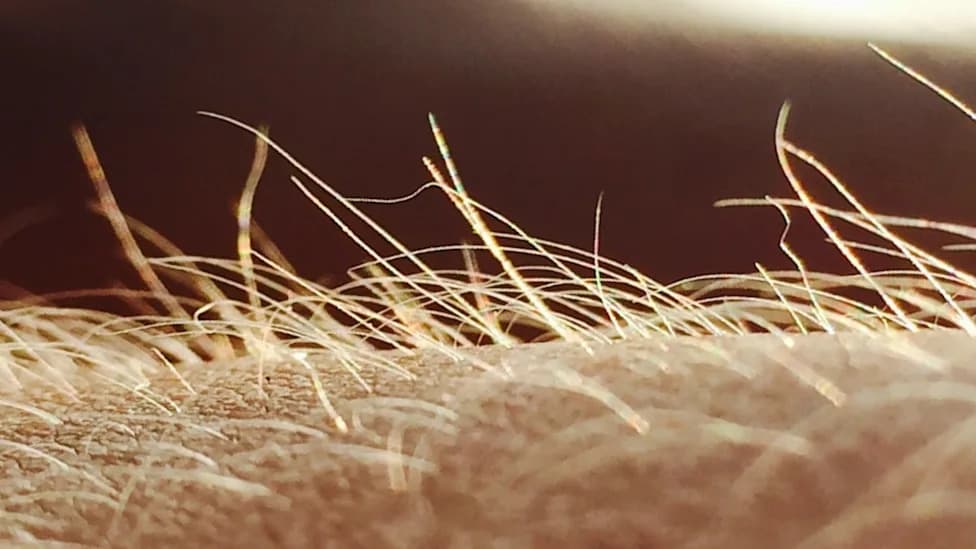
When you feel an itch, it is often your body's signal that something foreign is touching your skin. Small irritants — dry skin flakes, debris, insect bites, or even a stray hair — commonly trigger the urge to scratch, which in many cases helps remove the irritant. A new study in mice suggests that this defensive response may rely on a specialized sensory structure: vellus-like hairs, sometimes likened to human "peach fuzz." (Fatima et al., Neuron, 2026)
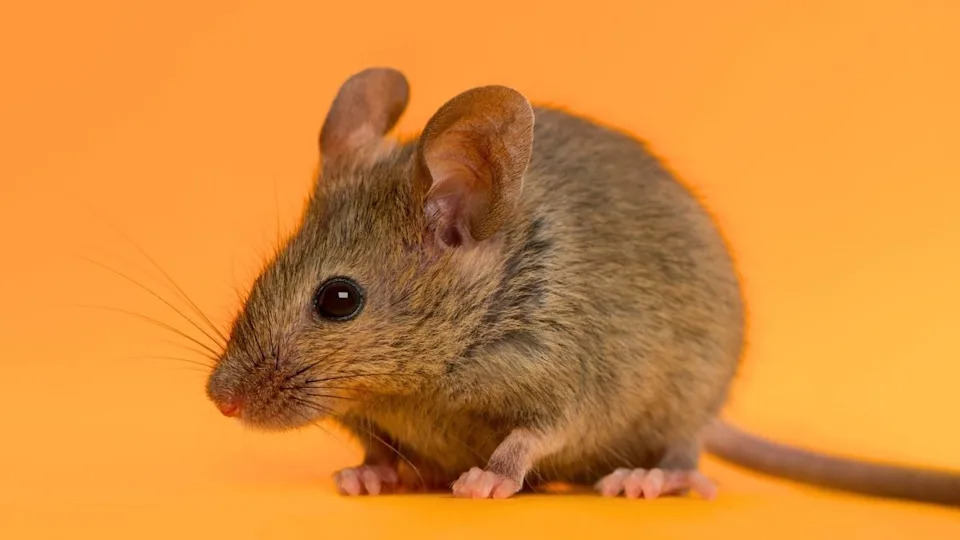
Vellus hairs in mice grow most prolifically behind their ears and on their hind paws. (GlobalP/iStock/Getty Images Plus)
What the Study Found
The University of Michigan–led team identified atypical, region-specific vellus-like hairs in mice that are especially abundant behind the ears and on the hind paws—areas where the skin is relatively exposed. Each of these fine hairs is linked to fast-conducting sensory neurons that register light hair movement as an itch signal. A gentle stroke of a single vellus-like hair was sufficient to trigger scratching behavior in mice.
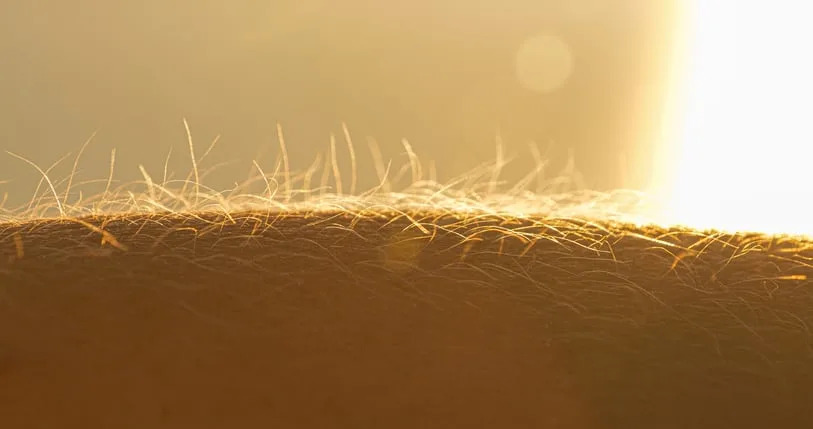
Vellus hairs, aka 'peach fuzz', cover almost every inch of the human body. (helivideo/iStock/Getty Images Plus)
Key Molecular Players
The mechanosensitive protein Piezo2 modulates the response, and the signal is carried by a population of TLR5-positive (TLR5+) sensory neurons. In mice with chronic skin inflammation localized to hair-bearing regions, these neurons fired persistently, producing continuous scratching. When the researchers genetically silenced the genes that activate this neuronal population, the mice no longer perceived the inflamed skin as itchy.
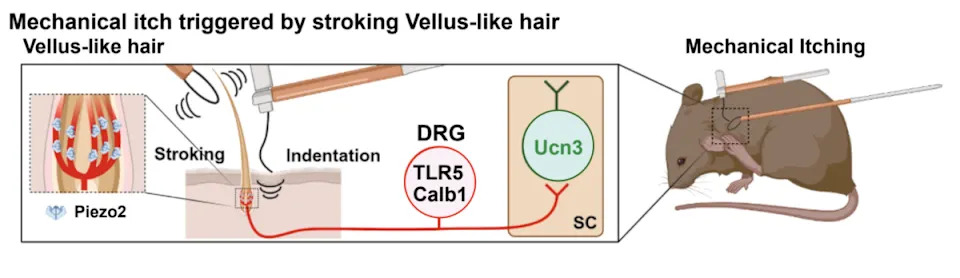
A gentle stroke of the tip of a vellus-like hair was enough to trigger itching in mice. The researchers found this impulse was modulated by a protein called Piezo2, and transmitted by TLR5+ sensory neurons. (Fatima et al.,Neuron, 2026)
“These specialized hairs and their associated nerve terminals are crucial for regulating trichoknesis — itching triggered by hair contact — in chronic itch,” the authors report.
Why It Matters
Rodent and human hairs differ in structure, but because many sensory pathways are conserved across mammals, the findings point to a potentially new biological target for human chronic-itch conditions such as eczema, insect bites, and contact dermatitis. The work suggests that selectively altering activity in the TLR5+ neuron population or the Piezo2 pathway could reduce hair-contact–driven itch without broadly suppressing other somatosensory functions.

Subscribe to ScienceAlert's free fact-checked newsletter
Limitations and Caveats
Mouse and human skin differ in hair type and distribution: rodents have varied pelage (guard, awl/auchene, zig-zag) while humans are covered predominantly by fine vellus hairs. Therefore, translation to humans will require additional studies to confirm comparable hair–nerve structures and safety of any targeted therapies. The researchers emphasize that while the pathway is promising, clinical application will need careful validation.
Takeaway
The study uncovers a previously underappreciated sensory mechanism: fine hairs coupled with specific neurons that can drive mechanical itch. If similar structures exist and function similarly in humans, they could offer a focused target for new treatments that relieve chronic itch without broad sensory suppression.
Help us improve.