
Senate Majority Leader John Thune publicly rebuked White House press secretary Karoline Leavitt after she said the administration was losing patience with the Senate's failure to advance the SAVE America Act. Thune challenged the White House to persuade Republican senators directly and pointed to Democrats as floor blockers. The House narrowly adopted a budget blueprint that included parts of the bill, and the Senate recess begins August 7. Critics say the SAVE Act's passport-or-birth-certificate registration, mandatory photo ID, and mail-voting ban could disenfranchise millions.
Senate Leader Rebukes White House Push to Force Vote on SAVE America Act
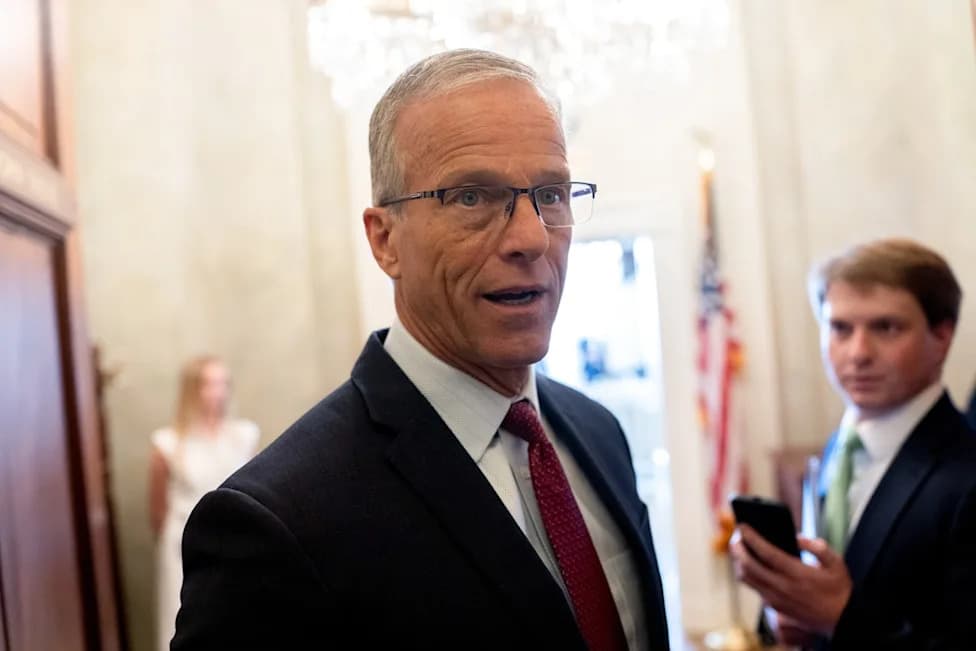
Senate Leader Snaps Over Trump Trying to Force a Vote on SAVE Act
Senate Majority Leader John Thune sharply rebuked White House press secretary Karoline Leavitt on Thursday after she warned the administration was losing patience with the Senate's inability to advance former President Donald Trump's SAVE America Act.
Speaking to reporters, Thune challenged the White House to persuade senators directly:
"Well maybe she or somebody else ought to get on the phone and get the votes, right? It's 50 around here. And, so, instead of pointing the finger at Republicans, they might think about going after the people who are stopping it on the floor, which is the Democrats."
He added,
"And if there are Republicans that they think are gettable, get on the phone. Let's get them to 'yes.'"
Earlier at a press briefing, Leavitt said the president's "patience is running out" and urged lawmakers to move as much of the SAVE America Act as possible before lawmakers leave for the August recess. The Senate is scheduled to begin its recess on August 7. The House, which began its month-long recess the same day, voted 216-214 to adopt a budget blueprint that incorporated portions of the bill.
President Trump has repeatedly made passage of the SAVE Act a condition for his support of other legislation. He has at times refused to sign other bills and delayed nominations to press for the measure, actions that have complicated funding for the Department of Homeland Security, stalled passage of the National Defense Authorization Act, and derailed a planned bipartisan housing bill signing.
What the SAVE Act Proposes
The initial version of the SAVE America Act proposed several major changes to federal voting rules. Among the most controversial provisions were a requirement that prospective registrants present either a passport or a birth certificate to register to vote, a nationwide photo identification mandate for in-person voting, and an outright ban on mail-in voting.
Critics argue these measures would effectively disenfranchise millions of eligible voters. Observers noted that roughly half of Americans do not hold passports, and that strict documentation rules could disproportionately affect people who have changed their names, including many married women. Opponents also say a ban on absentee or mail voting would limit access for seniors, voters with disabilities, and people who live far from polling places.
Supporters say the bill would strengthen election integrity; opponents counter that it would create unnecessary barriers to participation. Notably, President Trump has repeatedly criticized mail voting as "crooked" and "corrupt," despite having cast mail-in ballots himself in the past.
The confrontation between Thune and the White House highlights growing tensions as leaders race toward the August recess and the broader debate over voting access and election rules continues to roil Washington.
Help us improve.





















