
This article argues that U.S. military advantage depends on secure, transparent supply chains and explains how a new executive order aims to harden defense procurement. Beginning January 1, 2027, waivers under 10 U.S.C. 4872(c)(1) and (e) face tighter proof requirements, and contractors must map tier-by-tier supply chains and screen lower-tier suppliers for foreign-control and financial risk. The Department of Defense will accelerate qualification of trusted sources and enforce penalties, including contract loss and possible legal referral, for noncompliance.
Peace Through Secure Supply Chains: The Push To Harden U.S. Defense Procurement
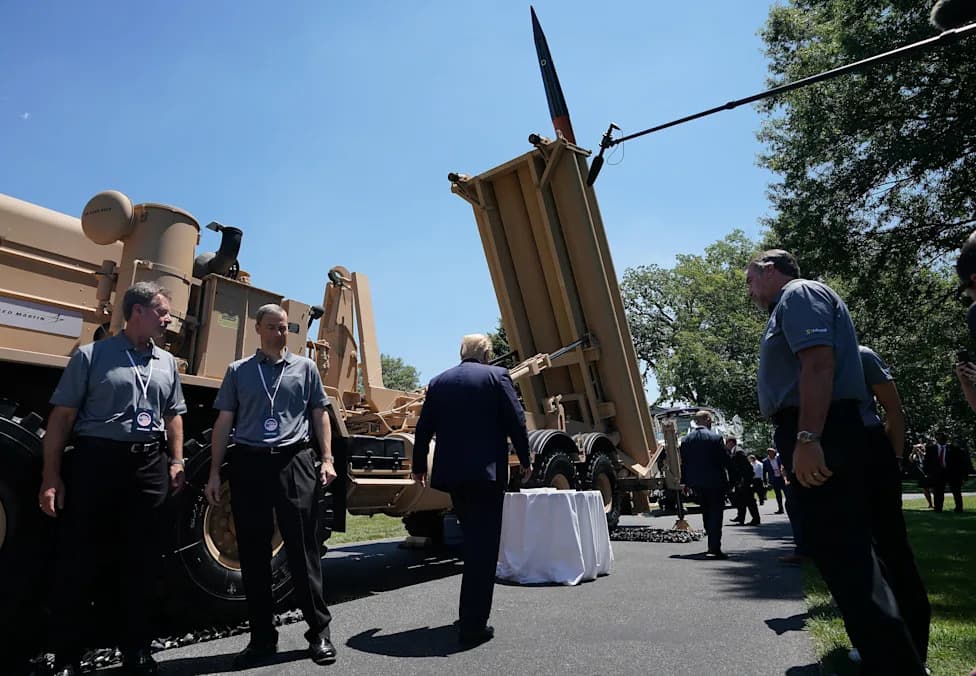
President Donald Trump looks at a Lockheed Martin THAAD anti-ballistic missile launcher while touring his "Made In America" product showcase at the White House on July 15, 2019. (Chip Somodevilla/Getty Images)
The United States fields the most capable military on Earth, but battlefield dominance depends on far more than final assembly lines. Weapons systems — from fighter jets and missile batteries to naval platforms and drones — begin with minerals, magnets, chips, chemicals, castings and software that flow through global, multi-tiered supply chains. If the Department of Defense cannot trace where those critical inputs come from, national security is exposed.
Why Lower Tiers Matter
Government visibility often stops at the first or second tier of suppliers, while critical vulnerabilities hide deeper: specialty metals foundries, niche electronics vendors, software suppliers and raw-material providers. Those lower tiers can include firms with foreign ownership, control, or influence, single-point-of-failure suppliers, or companies operating through adversary-controlled chokepoints. In a crisis, these hidden risks can disrupt production, compromise systems, or deny access to essential inputs.
What The Executive Order Does
The executive order "Securing America's Defense Supply Chains and Ensuring Domestic Acquisition of Critical Materials" seeks to address that exposure by tightening waiver procedures, forcing visibility into extended supply chains, vetting lower-tier suppliers, accelerating domestic qualification of alternatives, and increasing contractor accountability.
Key Measures
- Stricter Waiver Rules: Beginning January 1, 2027, waivers under 10 U.S.C. 4872(c)(1) and (e) will require precise identification of noncompliant sources, exhaustive documentation of efforts to find compliant alternatives, a defined plan to remove noncompliant items, and a firm timeline.
- Full Supply-Chain Mapping: The Secretary of Defense will promulgate rules requiring contractors to provide a tier-by-tier bill of materials tracing components, parts, software, and materials back to their origins for designated national-security acquisitions.
- Lower-Tier Vetting: Contractors must screen suppliers and subcontractors for financial fragility, foreign ownership/control/influence (FOCI), and manufacturing or supply risk, report significant vulnerabilities, and remediate them on tracked timelines.
- Qualification Of Trusted Sources: Contractors relying on inputs from unreliable foreign suppliers must promptly qualify lawful domestic, allied, or otherwise trusted alternatives. The Department of Defense will accelerate testing, qualification, and the removal of regulatory roadblocks that impede rapid qualification.
- Accountability And Enforcement: Failure to qualify approved alternatives or to implement mitigation plans can result in loss of task orders, contract options, or entire contracts. Fraudulent or willfully misleading behavior may be referred to the Attorney General for prosecution.
Not Paperwork — Battlefield Preparation. If a major weapons program depends on a foreign-controlled supplier or a single vulnerable source, that is a strategic risk that must be identified and mitigated long before conflict.
Practical Impact For Contractors
Contractors will need to invest in supply-chain transparency and resilience: build comprehensive bills of materials, expand supplier due diligence beyond immediate subcontractors, fund qualification tests, and plan contingencies for supplier failures. Contractors who treat qualification as a low priority risk losing business and facing legal consequences.
Why This Matters
America’s defense industrial base begins in mines, refineries, foundries, chemical plants and semiconductor fabs as much as it ends on an assembly line. Ensuring peace through strength requires not only advanced weapons but secure, transparent, and trusted supply chains — built from domestic, allied, and otherwise vetted sources — backed by enforcement, expedited qualification, and clear accountability.
Peter Navarro is the White House Senior Counselor for Trade and Manufacturing.
Help us improve.





















