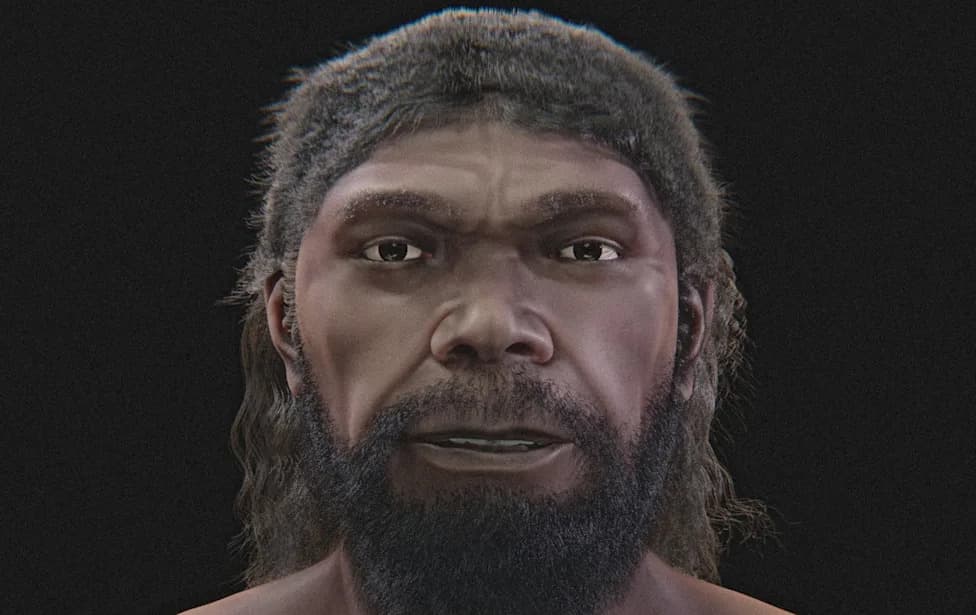
Once We Were Like You at Budapest’s Aquincum Museum presents 16 facial reconstructions of residents from the Roman‑era city, including six hyperrealistic silicone models. Using 3D CT scans, 3D‑printed replicas and ancient DNA, specialists created informed approximations while acknowledging unavoidable uncertainties in features like expression and hairstyle. The remains reveal a diverse population and signs of hard labor and deprivation; life‑size reconstructions aim to humanize the deceased and inspire empathy.
Faces Reborn: 16 Hyperreal Reconstructions From Roman‑Era Aquincum
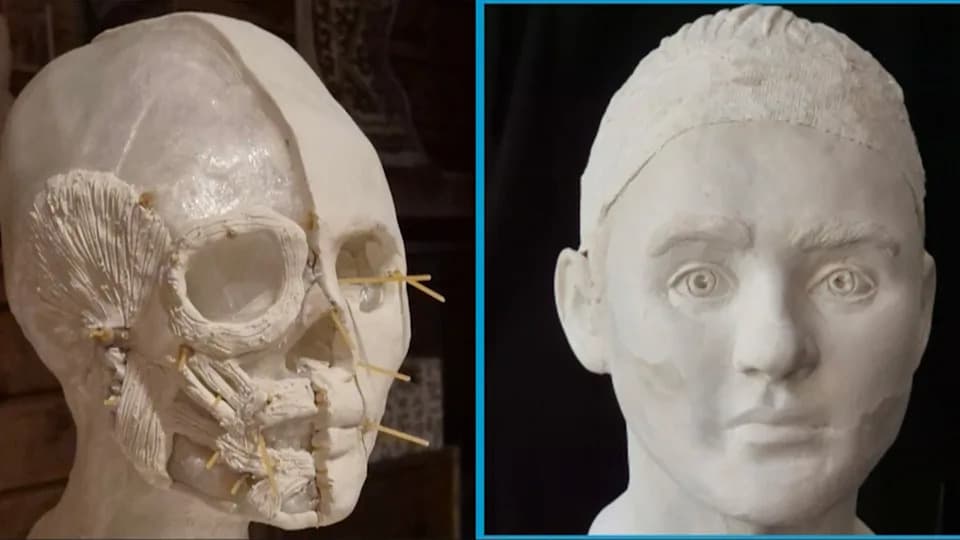
A reconstructed face is displayed as part of an ongoing exhibit at the Aquincum Museum in Budapest, Hungary. | Credit: ARC-heo art-REKO Studio
A young woman crowned with a laurel wreath — buried in fine clothing and unusual bird‑shaped cork sandals — has reappeared nearly 1,700 years after her death as part of a new exhibition at Budapest’s Aquincum Museum. "Once We Were Like You" pairs excavated skulls from the Roman‑era city of Aquincum with scientifically informed facial reconstructions for 16 individuals.
The Exhibition
Six of the reconstructions are hyperrealistic silicone models complete with artificial eyes, human hair, eyebrows, eyelashes and, in some cases, beards. The display, open through Oct. 31 at the Aquincum Museum, presents men, women and a child who lived in the region during Roman rule — inviting visitors to meet these people as three‑dimensional presences rather than as skeletal remains.
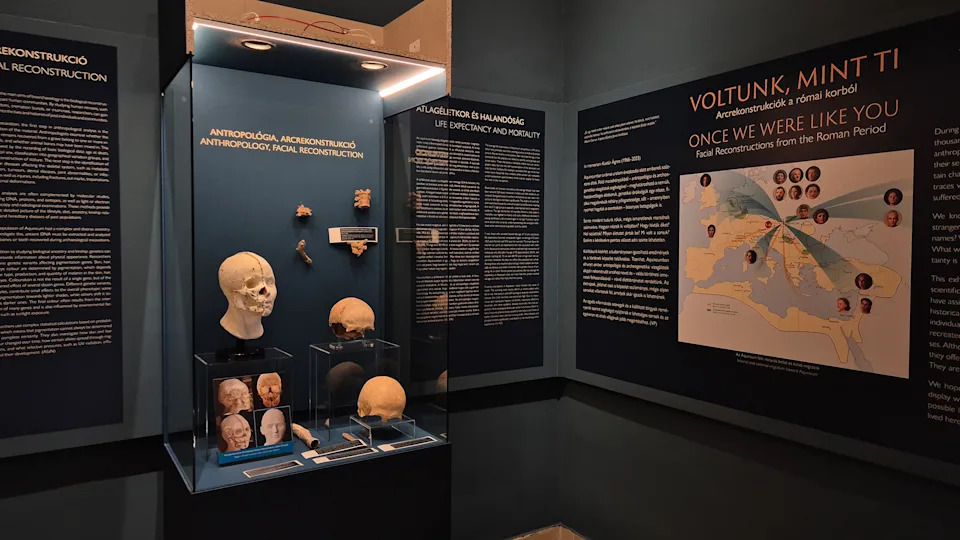
The entrance to the "Once We Were Like You" exhibit at the Aquincum Museum in Budapest. | Credit: Gábor Lakos Aquincum Museum Budapest
The Science Behind the Faces
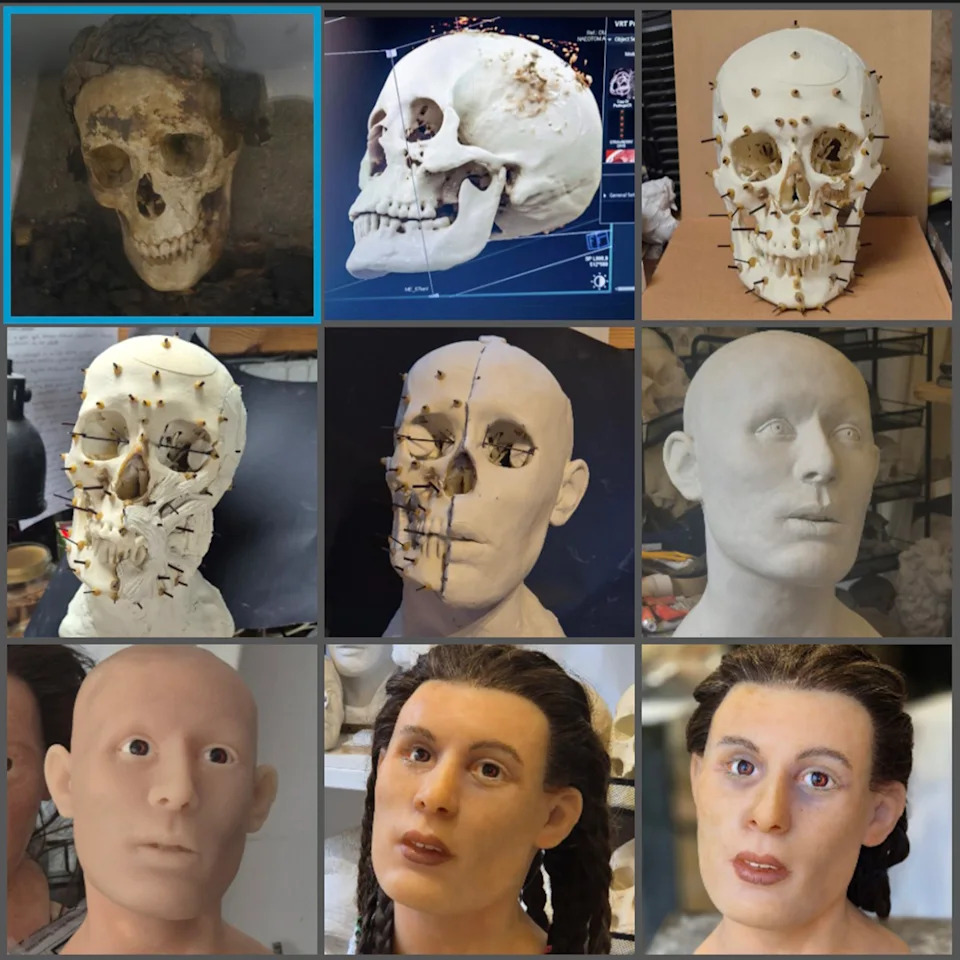
Creating each face begins with a high‑resolution 3D CT scan of the original skull. Specialists produce exact 3D‑printed replicas so artists and scientists can work without repeatedly handling fragile remains. Wherever possible, the project integrates modern techniques — 3D scanning, CT imaging, archaeogenetic (ancient DNA) analysis and facial approximation research — to produce the most informed reconstructions.
"The face is the most important feature for recognizing a person," said forensic facial‑reconstruction specialist Emese Gábor, who sculpted the silicone models. She explained that when a hyperreal result is requested, she makes a mould and casts the face in pigmented silicone, finishing it with real human hair, brows, lashes and facial hair where appropriate.
ARC-heo art-REKO Studio
What DNA and Bones Tell Us
Ancient DNA can sometimes indicate likely pigmentation traits — such as probable eye, hair and skin color — but these remain approximations. Details such as hairstyle, facial expression and other personal features often rely on informed inference rather than direct evidence from the bones.
Genetic and archaeological analyses associated with the exhibition point to a diverse Aquincum population. The individuals show links to present‑day Italy, Scotland and Syria, as well as to Sarmatian groups from the Eurasian steppe and earlier Celtic communities that inhabited the region before Roman rule.
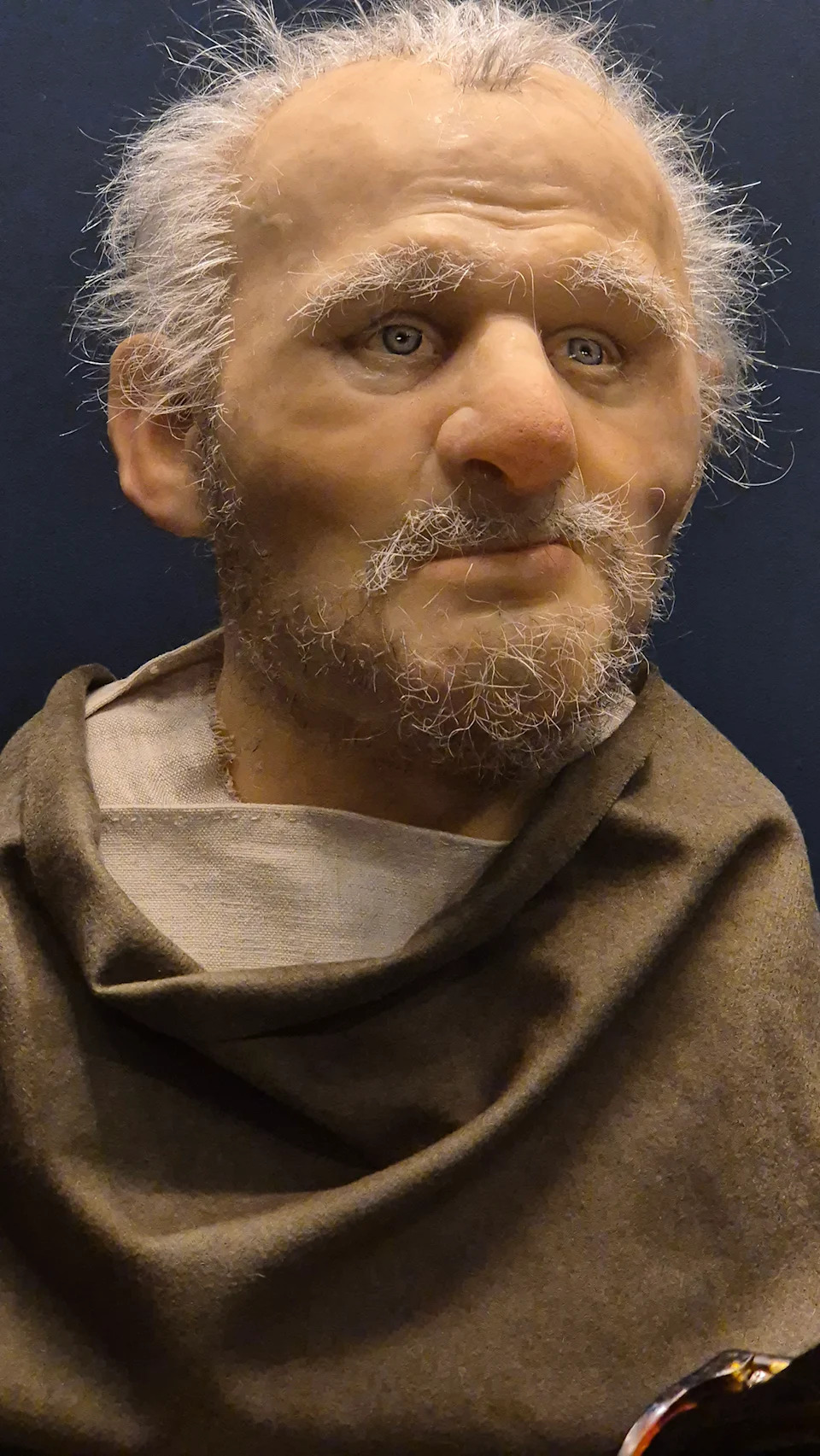
The silicon reconstruction of an ancient construction worker. | Credit: Gábor Lakos Aquincum Museum Budapest
Stories in the Grave Goods
One reconstruction that particularly affected Gábor is the woman known as the Jablonka Road mummy. Though her face’s soft tissues had decayed, her skull remained and a laurel wreath rested on her head. Her burial included fine clothing, a spindle for weaving, bird‑shaped cork sandals and a painted male portrait placed near her feet — possibly representing a husband or father, though his identity is unknown. Archaeological context and anthropological data helped archaeologists assemble a likely life story while Gábor created the facial likeness.
Hard Lives Revealed in Bone
Analyses of the skeletons suggest that many individuals endured heavy physical labor, episodes of hunger and chronic inflammation. Curators interpret these indicators as evidence that numerous people on display were among the less wealthy members of Roman‑era society — people rarely named in surviving written records.
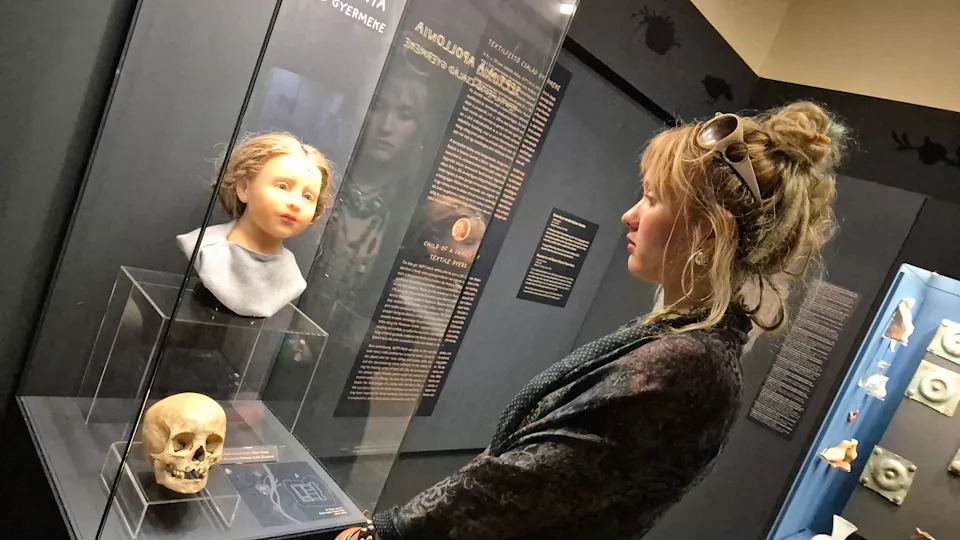
Gábor stands in front of a display showing the reconstructed face of a child from Aquincum. | Credit: Gábor Lakos Aquincum Museum Budapest
Violence, Interpretation and Empathy
Two women in the exhibition were buried face‑down with their legs bound. The museum’s interpretation associates one burial with accusations of witchcraft and the other with alleged poisoning; however, curators emphasize that such narratives are interpretive and not direct, incontrovertible evidence from the burials themselves.
"Every reconstruction is a journey," Gábor said. "As I shape each face, I find myself reflecting on that person's life again and again, and by the end, they no longer feel like anonymous remains, but like real people."
Gábor and the museum argue that life‑size physical reconstructions offer a different experience from digital images: visitors can stand eye‑to‑eye with a three‑dimensional figure, circle it and study it from multiple angles. The hope is that encountering these faces will prompt museumgoers to imagine the full lives — work, family, joys and hardships — that once surrounded the excavated bones.
Exhibition: "Once We Were Like You", Aquincum Museum, Budapest. Runs through Oct. 31.
Help us improve.