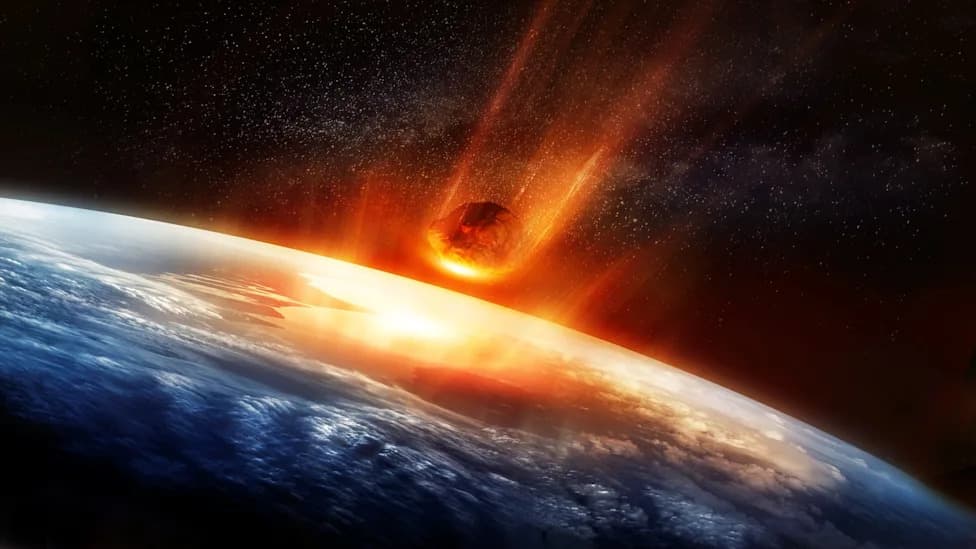
The asteroid that ended the age of non-avian dinosaurs has been linked to a very rare subgroup of carbonaceous meteorites: CO (Ornans) chondrites. Researchers compared nickel isotope ratios from K–Pg boundary layers at five sites (including Stevns Klint, Denmark) with 11 meteorite samples and found the closest match to CO meteorites. Because CO chondrites are relatively poor in volatiles such as sulfur, the study suggests that suspended fine debris and aerosols — not sulfur locked inside the impactor — were the likeliest drivers of prolonged global darkness and ecological collapse.
A Rare, Distant Space Rock Killed the Dinosaurs — And Made Their Fate Even Unluckier
(Mark Garlick/Science Photo Library/Getty Images)
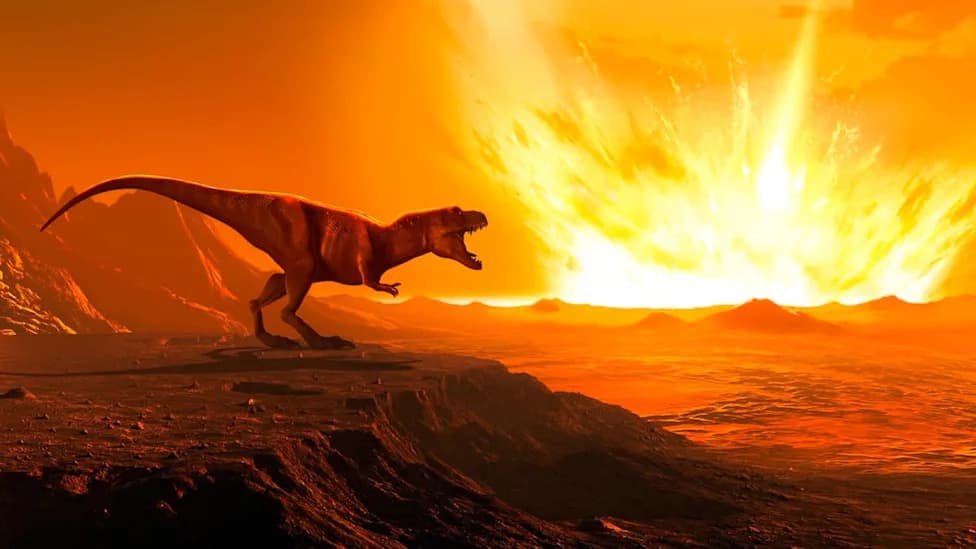
About 66 million years ago a massive asteroid struck the region that is now Mexico’s Yucatán Peninsula. The impact triggered tsunamis, worldwide wildfires, intense seismic and volcanic activity, and ejected vast amounts of debris that darkened the skies, cooled the planet and collapsed ecosystems by killing plants at the base of food chains.
Scientists have long argued that a combination of factors — impact location and angle, size of the object, and even the season (mid-spring in the Northern Hemisphere) — made the day unusually destructive and reduced the odds of recovery for many species. A new study in Science Advances adds another stroke of bad luck: the impactor appears to have been an extremely rare type of meteorite that likely originated far beyond the inner Solar System.
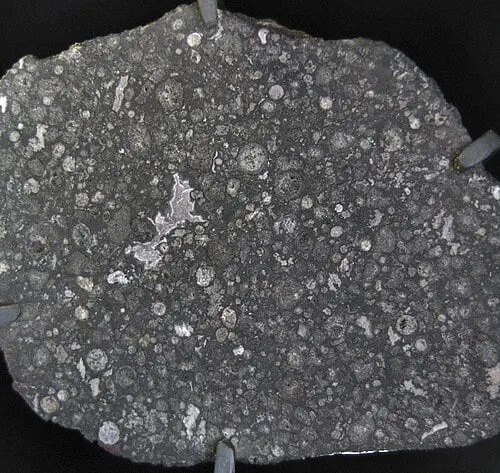
A slice of a carbonaceous chondrite meteorite. (Shiny Things/Wikimedia Commons/CC BY 2.0)
Previous work established that the K–Pg (Cretaceous–Paleogene) impactor belonged to the carbonaceous chondrite class, which accounts for under five percent of meteorite falls. The new isotopic analysis narrows the culprit further to the Carbonaceous Ornans subgroup (CO meteorites) — a tiny fraction of that already small family.
The research team performed a forensic comparison of extraterrestrial residue preserved in the global K–Pg boundary. They measured nickel isotope signatures from boundary samples taken at five locations — including the dark, clay-rich K–Pg layer at Stevns Klint in Denmark, one site in Spain and three sites in Italy — and compared those signatures with 11 carbonaceous chondrite reference meteorites spanning several subgroups.
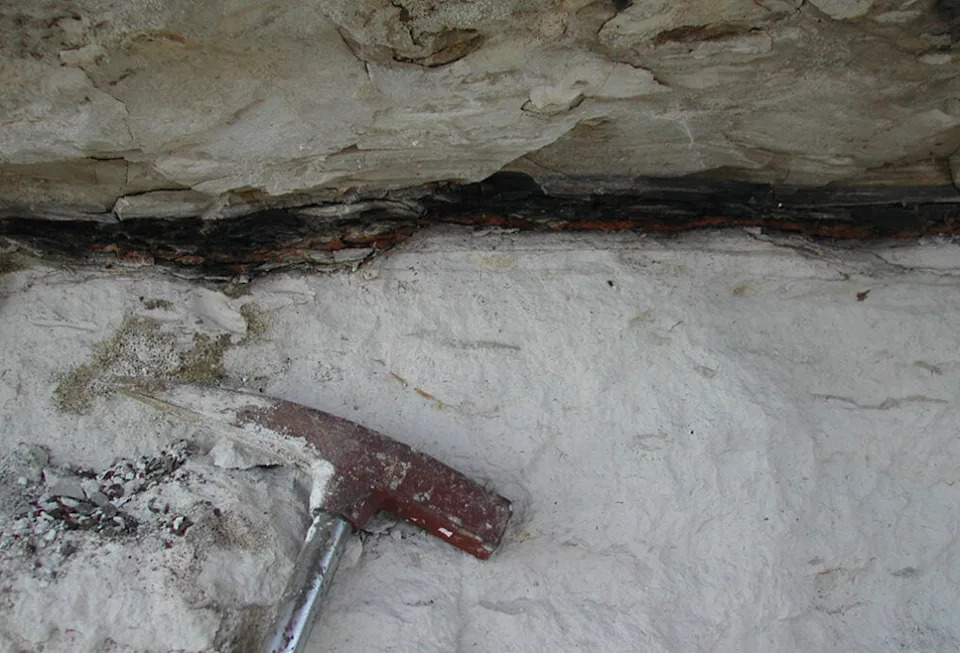
Residue of theCretaceous-Paleogeneimpact. Dark clay-rich KT boundary layer in Stevn's Klint, Denmark used in the study. (Dr Philippe Claeys)
Why nickel? Primitive meteorites contain much higher nickel concentrations than Earth’s crust, and different meteorite groups carry distinctive nickel isotope fingerprints. After isolating and purifying nickel from the boundary layers, the researchers found isotopic ratios that matched most closely with CO (Ornans) meteorites and effectively excluded many other candidate compositions, including the carbonaceous Mighei-type chondrites favored by some earlier studies.
“Carbonaceous chondrites of the Ornans class are definitely not like the typical meteors you find in museum collections,” said Philippe Claeys, a geologist at Vrije Universiteit Brussel. “Being impacted by such a rare, distant projectile really underscores how unlucky the dinosaurs were.”
Identifying the impactor as a CO meteorite has important implications for what produced the long-running environmental crisis after the collision. CO meteorites contain relatively low amounts of volatile elements — including carbon, zinc, water and especially sulfur — compared with other carbonaceous classes found on Earth. That reduces the likelihood that sulfur contained within the asteroid itself was the principal source of prolonged global sulfur loading.

Subscribe to ScienceAlert's free fact-checked newsletter
However, this does not remove other sources of atmospheric sulfur: vaporized target rocks at the impact site (for example, sulfate-bearing sediments) could still have released large amounts of sulfur into the atmosphere. The new study emphasizes that the immediate and long-term climatic effects were most likely dominated by vast quantities of fine debris and aerosols lofted into the atmosphere by the impact. Those dust and aerosol clouds would have blocked sunlight, cooled the surface and disrupted photosynthesis worldwide, driving cascading extinctions at the K–Pg boundary.
Taken together with the impact’s size, place, angle and season, the identification of an unusually rare, distant projectile adds to a catalogue of coincidences that made the K–Pg event exceptionally catastrophic. The research was published in Science Advances.
Help us improve.