NASA's New Horizons has exited a 321‑day hibernation and is beginning to downlink spacecraft telemetry and stored science data from about six billion miles away. The probe — famous for its Pluto (2015) and Arrokoth (2019) encounters — appears healthy, with routine status reports during hibernation marked "green." Engineers will retrieve data from three primary instruments (dust counter, particle spectrometer, and solar wind sensor) and plan ultraviolet observations of hydrogen in the outer heliosphere in the coming weeks.
New Horizons Wakes After 321‑Day Hibernation — What Its Instruments Will Reveal Six Billion Miles Out
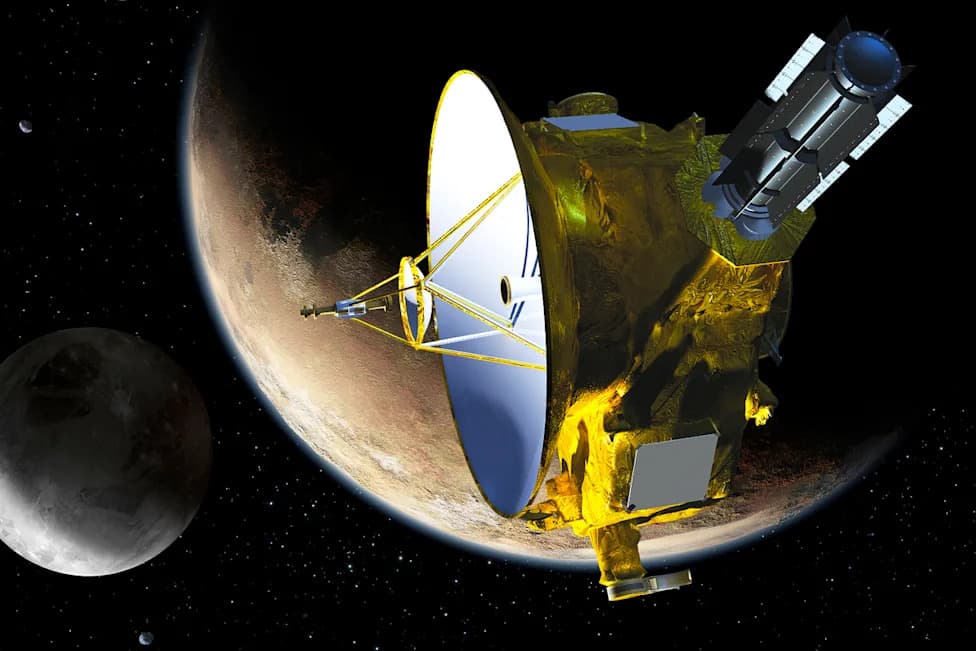
A NASA satellite just woke up from hibernation in deep space. Here is what it can tell us
NASA's New Horizons spacecraft has emerged from a 321‑day hibernation and is beginning to send stored data and status reports from roughly six billion miles from Earth. The $780.6 million probe — best known for its 2015 Pluto flyby and its 2019 encounter with the Kuiper Belt object Arrokoth — continues to study the outer reaches of the solar system as it coasts beyond Pluto.
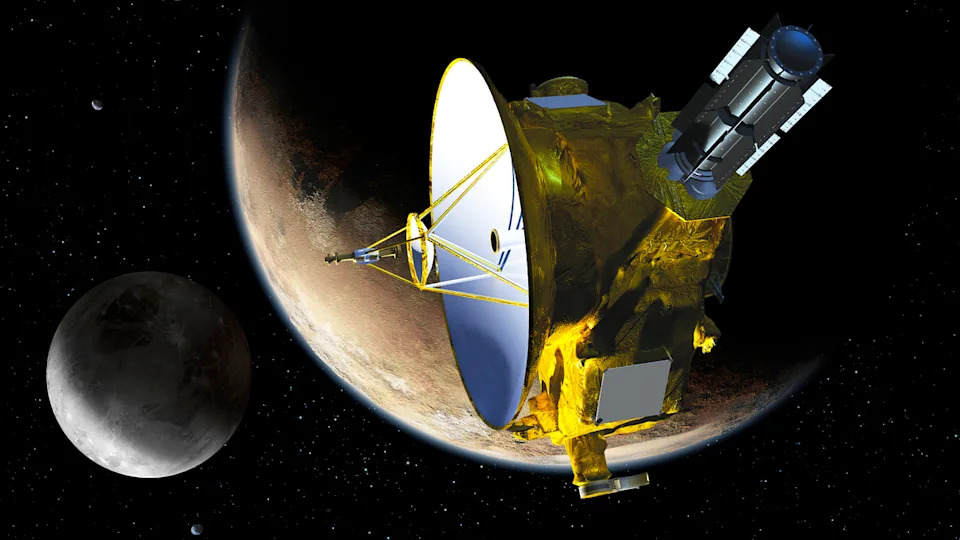
NASA's New Horizon's spacecraft is in good health after nearly a year in hibernation, according to the space agency (NASA)
During long cruise phases New Horizons routinely enters hibernation to conserve systems while still collecting and storing science and engineering data. This most recent sleep period ended on June 23, when the spacecraft transitioned back to active operations and resumed fuller communications with mission control.
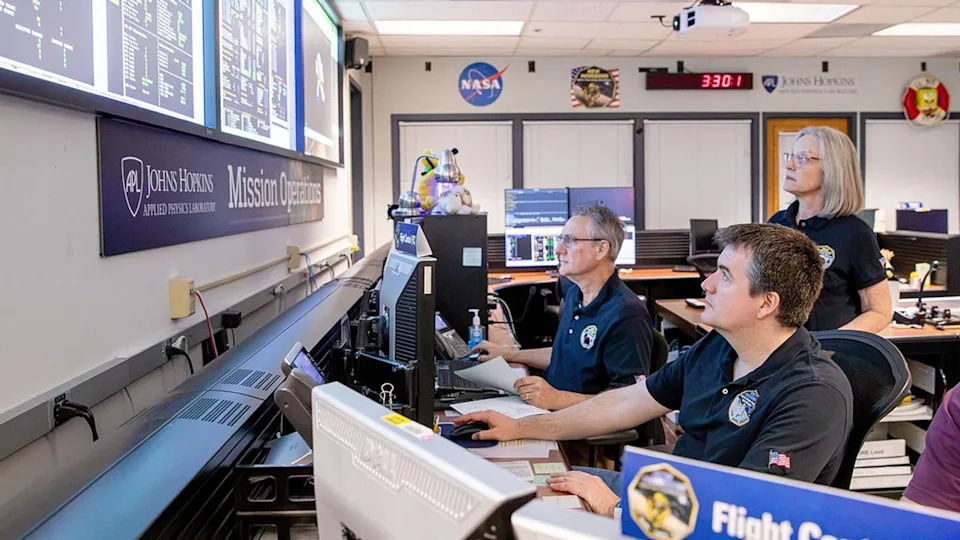
From left, flight controllers Mark Lahr and Josh Albers, and Mission Operations Manager Alice Bowman, monitor telemetry streaming from NASA's New Horizons spacecraft at the Johns Hopkins Applied Physics Laboratory in Maryland last month (NASA/Johns Hopkins APL/SwRI/Justin Gladden)
"Every status report through this hibernation period was 'green,' meaning all was well aboard New Horizons each and every week," said Alice Bowman, mission operations manager for New Horizons at Johns Hopkins Applied Physics Laboratory.
Over the next few days, the operations team will downlink detailed telemetry about the spacecraft's health and safety. Once those checks are complete, engineers will begin retrieving science data stored on board from the probe's primary instruments: the Venetia Burney Student Dust Counter (which counts dust particles), the Pluto Energetic Particle Spectrometer Science Investigation (PEPSSI) for charged particles, and the Solar Wind At Pluto (SWAP) instrument for solar wind measurements.

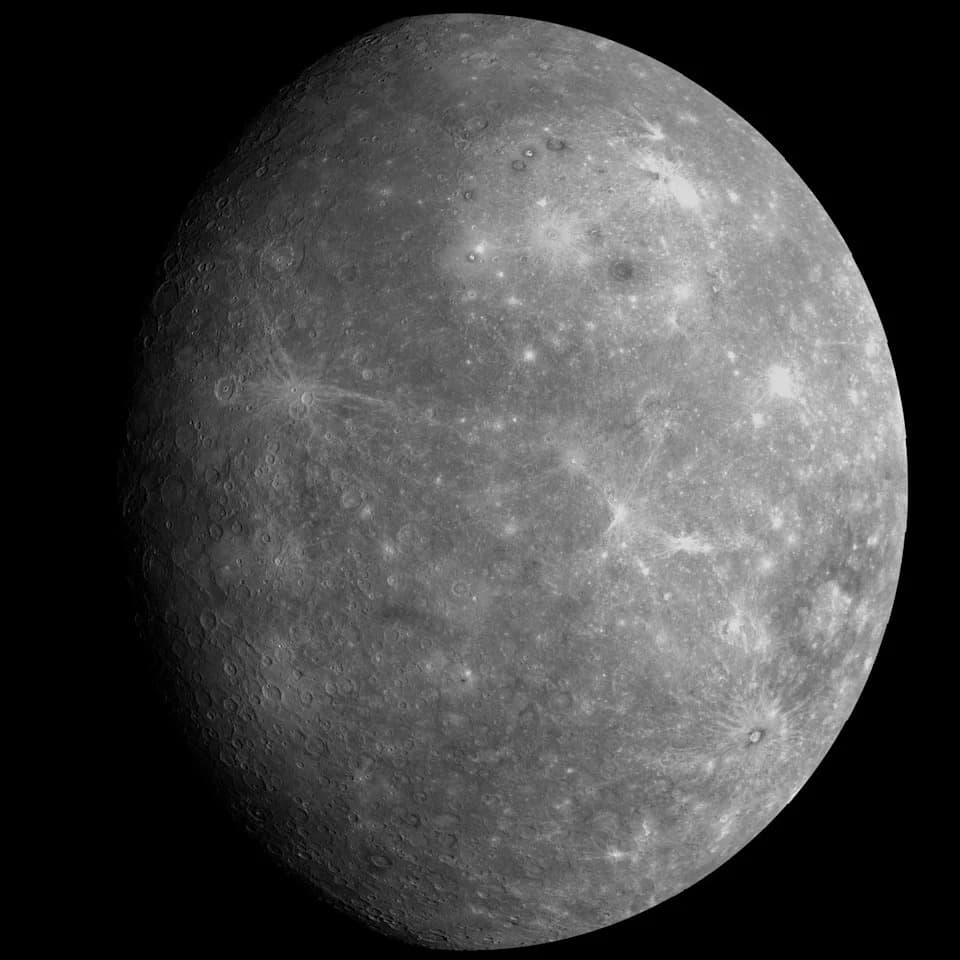
This image of Pluto was taken by NASA's New Horizons spacecraft as it flew through the Pluto system in July 2015. It was the first spacecraft to explore Pluto up close (NASA/Johns Hopkins University Applied Physics Laboratory/Southwest Research Institute)
Mission planners expect the science instruments to resume regular measurements within a month. In roughly three weeks, the spacecraft's Alice ultraviolet spectrograph is scheduled to observe the distribution of hydrogen in the outer heliosphere, while the dust counter, PEPSSI and SWAP continue ongoing monitoring as the ground team performs instrument and spacecraft checkouts.
The New Horizons team is also finalizing upgrades to ground software designed to streamline long‑term operations. Those upgrades will be tested through the end of the year.
Launched in January 2006 at a record high Earth‑departure speed, New Horizons has performed a series of landmark observations: a close flyby of Jupiter en route to the outer solar system, a historic close encounter with Pluto in July 2015, and a detailed exploration of the Kuiper Belt object Arrokoth in 2019. The probe has also contributed measurements of the heliosphere along its trajectory. According to the Planetary Society, New Horizons is expected to remain functional through the end of this decade.
Help us improve.