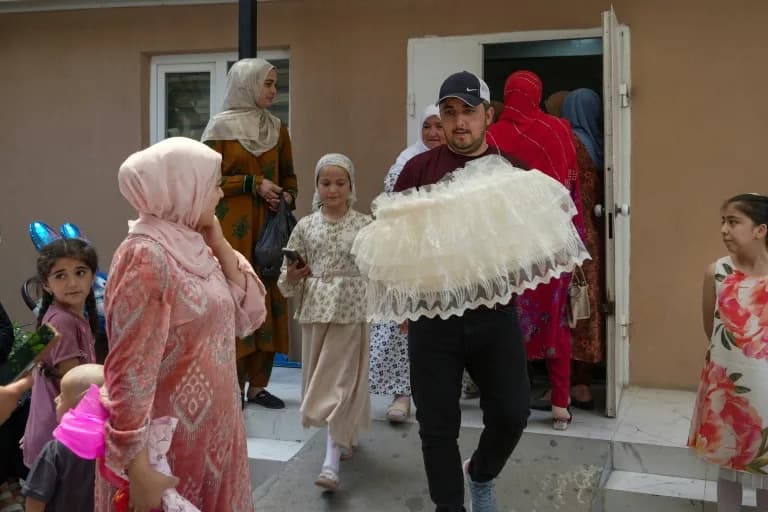
After giving birth, many Tajik parents expect choosing a name to be a simple formality. Instead, a government registry of approved first names — introduced about a decade ago and updated in February — has left some families unable to register names officials deem "not Tajik enough."
Shakhnoza Nazarova says the name she and her family chose, Dunyo, appeared on an earlier list but was removed in the latest update. A month after her daughter’s birth, she says officials have offered no clear guidance on how to proceed.
“We had chosen Dunyo. This name was on the list. But when the baby was born and we applied for the birth certificate, Dunyo had been removed,” Nazarova told reporters in Dushanbe.
Gurdovarid Mamadjonova, who is expecting her second daughter, says her preferred name, Yasmina, is also not on the roster. Her first daughter was registered as Oisha because the registry rejected her preferred spelling, Aisha. Many parents now face the choice of accepting an officially approved variant or launching a slow, uncertain bureaucratic process to contest the decision.
Tajik Identity And Official Policy
In Tajikistan—a secular Muslim country of roughly 10 million people—President Emomali Rakhmon has pursued policies to reshape national identity, limit visible signs of religious conservatism and reduce perceived foreign cultural influence. He has publicly said it is "absolutely unacceptable" to "glorify the foreign in the choice of first names," arguing that foreign names distance younger generations from their historical roots.
Officials say the registry promotes Tajik culture and helps curb influences from radical Islamism and, to a lesser extent, Russian cultural patterns. But the criteria for what counts as an acceptable Tajik name are not clear: some common Muslim names such as Muhammad or Kareem remain allowed, while others like Yassine, Amira or Riyad are excluded.
Other Cultural Restrictions
The name registry is one element of a wider cultural campaign that has included a 2016 prohibition on the Russian "-ov" surname ending for newborns, restrictions on the hijab in public institutions and limits on long beards for young men. Rakhmon himself removed the "-ov" ending from his surname in 2007 as a symbolic move away from Soviet-era naming conventions.
Impact On Families And Traditions
Central Asian naming customs historically allow families to create meaningful, sometimes unique names tied to birth circumstances, places or desired traits. For many Tajiks, this cultural practice clashes with an official list that can feel arbitrary and inflexible.
Badakhshon Tursunova, who was named after her family's home region, recalled classmates with evocative names like Vatan (homeland) and Tabarali (axe). Since independence, many families resumed using Muslim names that had been suppressed under Soviet rule; today's registry has reintroduced limits on that freedom for ethnic Tajiks.
Practical Complications
Beyond cultural concerns, the policy collides with practical realities. Tajikistan depends economically on Russia, and hundreds of thousands of Tajik migrant workers live there. That dependence has made some Tajiks reluctant to drop Russian-style surnames or navigate complex name-change procedures that could complicate migration and legal status abroad.
Officials have not published a clear appeals process or alternatives for parents whose chosen names are excluded. For now, many families report confusion, delay in issuing birth certificates, and the prospect of accepting names they did not choose.
What’s clear: the naming registry reflects a broader political effort to define national identity, but its vagueness and administrative friction are leaving ordinary parents caught between cultural policy and everyday life.