ESA’s Euclid telescope has produced a six‑gigapixel visible‑light mosaic of the Milky Way’s galactic bulge that resolves about 60 million stars. Captured in 26 hours during March 2025 from nine sky patches, the composite covers a field roughly 270 times larger than Hubble’s view and already contains 51 known planetary systems. Astronomers say the detail will boost exoplanet searches via gravitational microlensing and will provide a key reference for NASA’s upcoming Roman Space Telescope.
Euclid’s Six‑Gigapixel Portrait of the Milky Way Reveals 60 Million Stars — A New Tool for Exoplanet Hunting
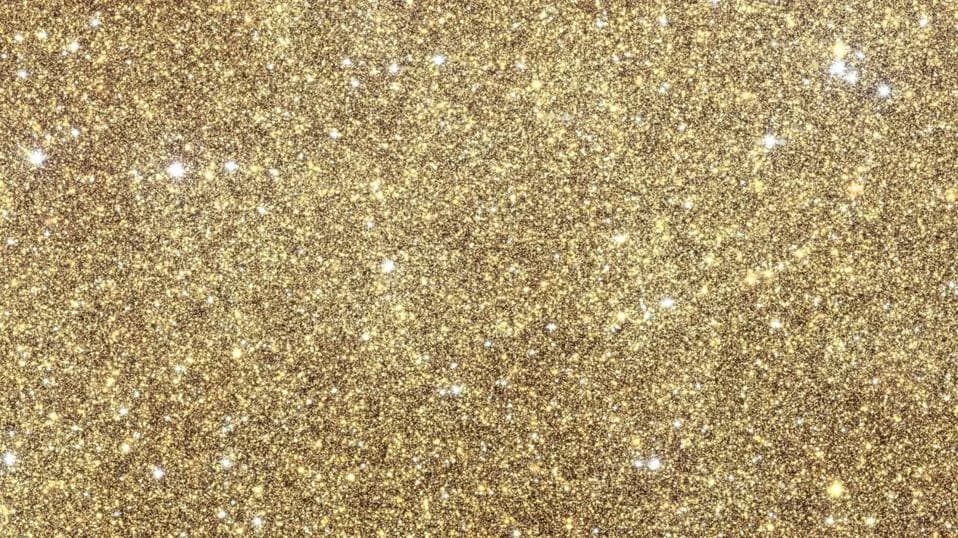
A dense field of tiny, tightly packed points of light fills this detail from the ESA's image of the Milky Way's galactic bulge.ESA/Euclid/Euclid Consortium/NASA, CFHT, image processing by J.-C. Cuillandre and E. Bertin (CEA Paris-Saclay)
The European Space Agency’s Euclid space telescope has produced the most detailed visible‑light image yet of the Milky Way’s central region: a six‑gigapixel mosaic that resolves roughly 60 million individual stars, together with nebulae and star clusters.
Captured over 26 hours in March 2025 and assembled from nine adjacent sky patches, the composite spans a field about 270 times larger than the view of NASA’s Hubble Space Telescope. The image targets the galaxy’s densely populated central region, the galactic bulge, located roughly 26,000 light‑years from Earth.
More Than a Stunning Image
Beyond its striking visual impact, the mosaic is a powerful scientific resource. Euclid’s visible‑light camera can distinguish individual stars in the crowded bulge without being overwhelmed by their combined glow. That resolving power makes the dataset especially valuable for time‑domain studies and searches for planets using gravitational microlensing.
“It’s beautiful at first glance, but the longer you look the more it becomes clear that every star in the frame is data,” said Dan Zafra, co‑founder of Capture The Atlas. “Visually it feels like a great astronomical artwork; scientifically it’s a tool for understanding our galaxy and the planets hidden within it.”
Microlensing And Exoplanet Science
Microlensing occurs when a foreground star passes nearly in front of a more distant star, and the nearer star’s gravity briefly magnifies the background star’s light. If the foreground star hosts a planet, that planet can produce a short, telltale blip in brightness. Over the past two decades, ground‑based microlensing surveys have discovered nearly 300 exoplanets toward the galactic center.
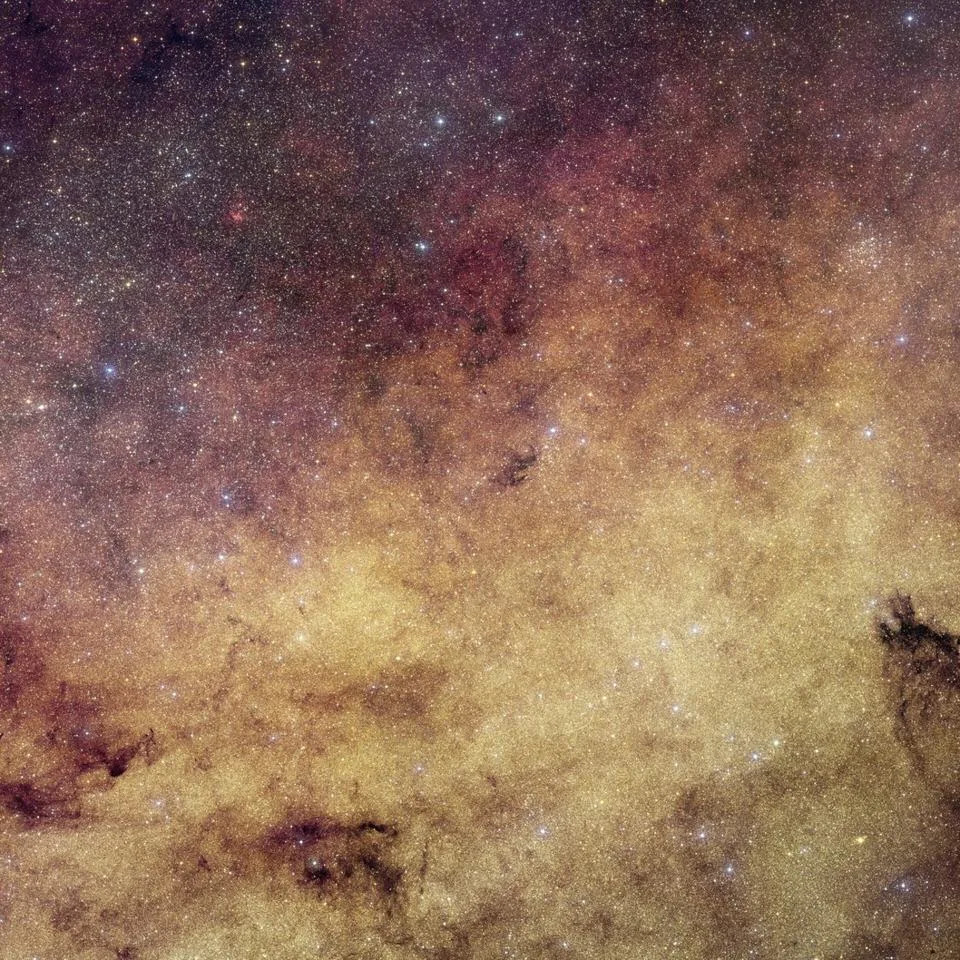
Here, in full, is the largest high-resolution photo ever made of our Milky Way galaxy's center in visible light.ESA/Euclid/Euclid Consortium/NASA, CFHT, image processing by J.-C. Cuillandre and E. Bertin (CEA Paris-Saclay)
Jean‑Philippe Beaulieu of the Institut d’Astrophysique de Paris and the University of Tasmania noted that the Euclid mosaic already includes 51 known planetary systems and will help study many more that future surveys uncover.
Legacy And Synergy With Future Missions
Euclid was launched in 2023 with a primary mission to probe dark energy and dark matter by mapping more than one‑third of the sky over a planned six‑year mission. Its sensitive, high‑resolution visible camera is also well suited to providing reference imagery and time‑domain data for the galactic bulge.
Euclid’s data will complement observations by NASA’s Nancy Grace Roman Space Telescope, which is scheduled to launch on a SpaceX Falcon Heavy and will carry out a Galactic Bulge Time‑Domain Survey to monitor the same region repeatedly. Together, Euclid, Roman, and ground‑based programs are expected to improve microlensing planet yields and build a more complete map of planets in the crowded center of our galaxy.
The European Space Agency released the high‑resolution mosaic to the public in a sharing event; researchers can now mine the image for variable events, refine stellar catalogs in the bulge, and plan follow‑up observations with future facilities.
Image credit: ESA / Euclid Consortium.
Help us improve.