
Supply disruptions at the Strait of Hormuz have curtailed roughly one-third of global fertilizer trade, driving fertilizer prices up and spurring U.S. farmers to plant millions fewer acres of corn in 2026. Decades of overapplication have left many U.S. soils with legacy stores of nitrogen and phosphorus that can partially sustain crops when new fertilizer is reduced. In parts of the central Midwest and Eastern livestock regions, those soil reserves may allow lower fertilizer use without major yield losses, cutting costs and nutrient runoff; however, low-fertility regions such as parts of sub-Saharan Africa still require improved fertilizer access.
War-Related Fertilizer Shortage Could Cut U.S. Soil And Water Pollution — At A Cost
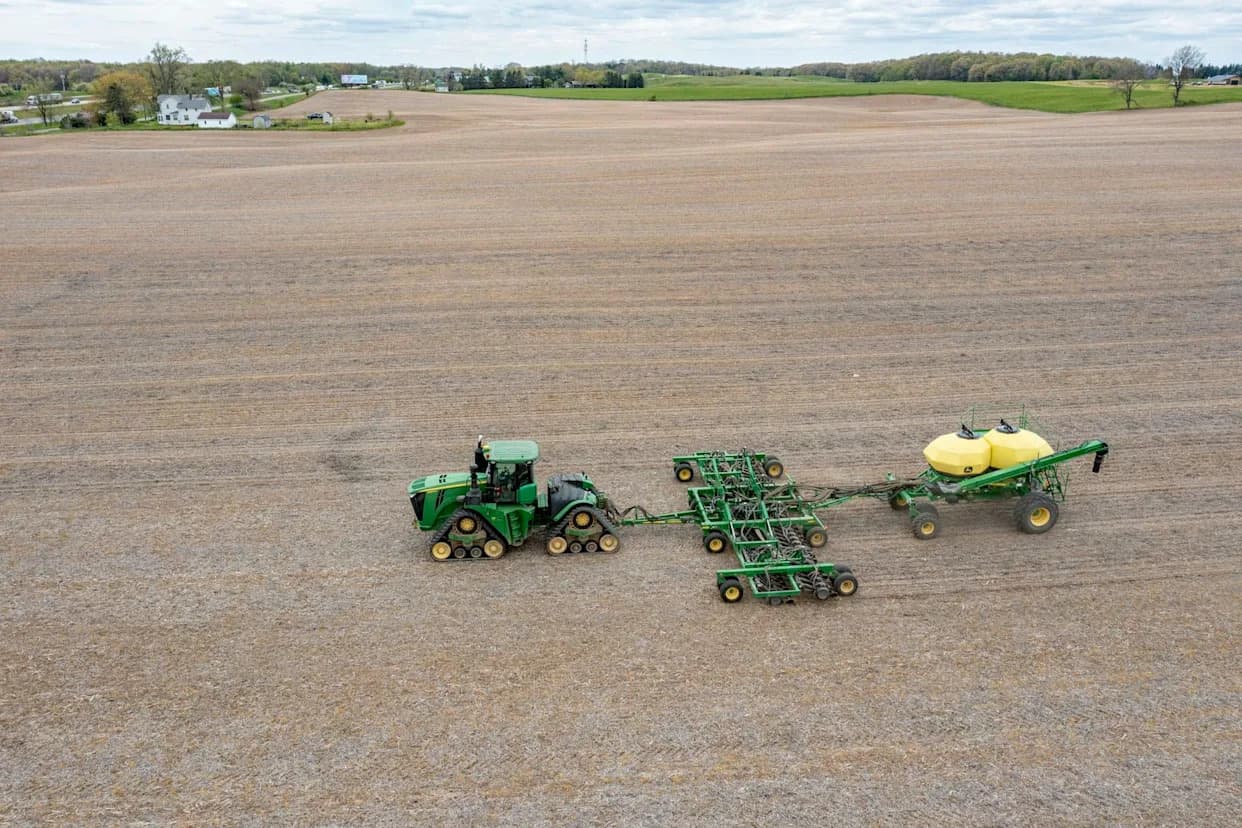
A farmer in Michigan spreads liquid fertilizer on a field.Jim West/UCG/Universal Images Group via Getty Images
American farmers are expected to plant several million fewer acres of corn in 2026 than they did in 2025 after the closure of the Strait of Hormuz disrupted a major fertilizer trading route and the energy and raw materials needed to make and move fertilizer. The shutdown has interrupted deliveries that account for roughly one-third of globally traded agricultural fertilizers, driving prices higher and prompting many farmers to cut back on fertilizer use or shift to less fertilizer-intensive crops.
How Legacy Soil Nutrients Matter
Decades of applying more fertilizer than crops require have created substantial "legacy" reserves of nitrogen and phosphorus in many agricultural soils. When crops do not take up all applied nutrients, those nutrients can accumulate in soils, leach into groundwater, or run off into rivers and lakes — fueling algal blooms, coastal dead zones and greenhouse gas emissions.
However, those accumulated soil nutrients can also partially buffer shortfalls in new fertilizer inputs. Research in intensive agricultural regions shows that fertilizer applications can sometimes be cut substantially with little or no detectable effect on yields because crops draw on soil nutrient stores.
What The Analysis Shows
Our analysis of phosphorus across U.S. croplands found that parts of the central Midwest and livestock-dominated regions in the East contain soil phosphorus reserves large enough that production could be maintained with less new fertilizer in the short term. In these nutrient-saturated systems, reducing fertilizer use can lower costs and shrink environmental losses without proportionately reducing yields.
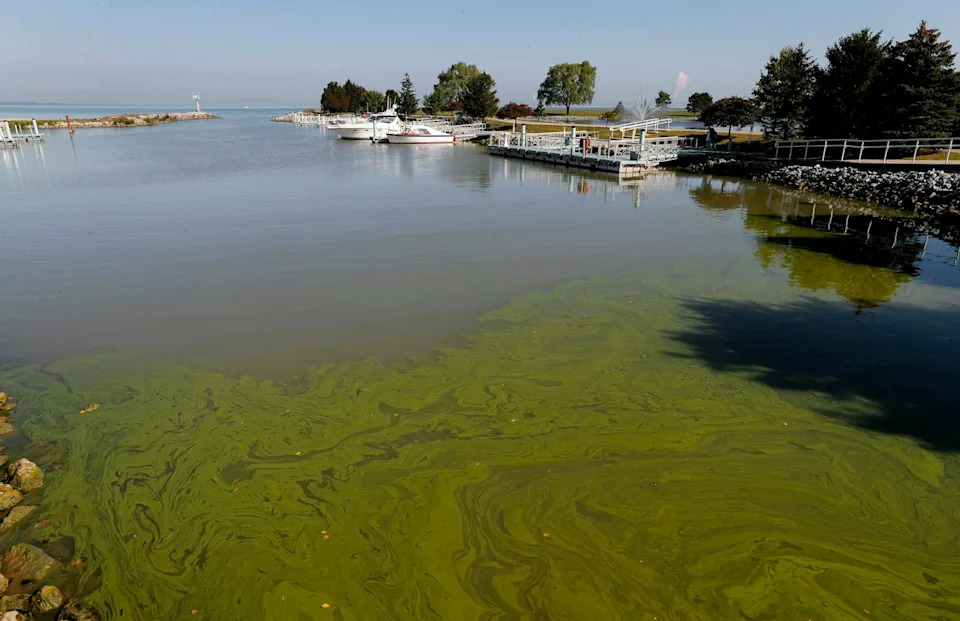
Excess fertilizer that runs off farmland with rainfall can cause algae blooms, like this one in Lake Erie in 2017.AP Photo/Paul Sancya
Opportunities And Limitations
Lower fertilizer use in saturated fields can mean fewer nutrients washing into rivers and streams and less contribution to downstream water-quality problems. The current shortage also highlights a domestic alternative: livestock manure. Manure contains substantial nitrogen and phosphorus and can be processed into nutrient-rich slurry in anaerobic digesters, which also produce electricity as a byproduct. Expanding manure processing and distributing that slurry to crop farmers could reduce dependence on imported fertilizers.
But the details matter. Not every field holds enough legacy nutrients to sustain yields if fertilizer inputs decline, and the buffers that exist in some fields will not last indefinitely. Regions with inherently low soil fertility — for example, parts of sub-Saharan Africa — still need improved access to fertilizers to raise production and support livelihoods.
What Comes Next
The coming growing season may act as a large-scale experiment: it could reveal how much yield can be maintained from legacy soil nutrients and whether reduced fertilizer applications measurably improve downstream water quality. Policymakers and farmers will need to weigh short-term buffering benefits against long-term soil health, crop needs, and global food-security concerns.
This article was written by Kimberly Van Meter (Penn State) and Nandita Basu (University of Waterloo) and is republished from The Conversation, a nonprofit independent news organization.
Funding disclosures: Kimberly Van Meter receives support from the National Science Foundation, the U.S. Environmental Protection Agency, and the U.S. Department of Agriculture. Nandita Basu receives funding from Environment and Climate Change Canada, NSERC, and the World Bank.
Help us improve.





















