
The Jerusalem Post reports Morocco, Albania and Greece will join the proposed International Stabilization Force (ISF) for Gaza, with a small team of Moroccan planning officers already on the ground for operational discussions. Indonesia was previously named as the first contributor, with media estimates ranging from 1,000 to 8,000 troops depending on timing and conditions. ISF planners aim for a long-term force of roughly 20,000 troops and training for 12,000 police, with initial operations expected to begin in Rafah. No final timetables or full force compositions have been confirmed.
Morocco, Albania and Greece Join Proposed Gaza Stabilization Force; Moroccan Planners Arrive for Phase II Talks
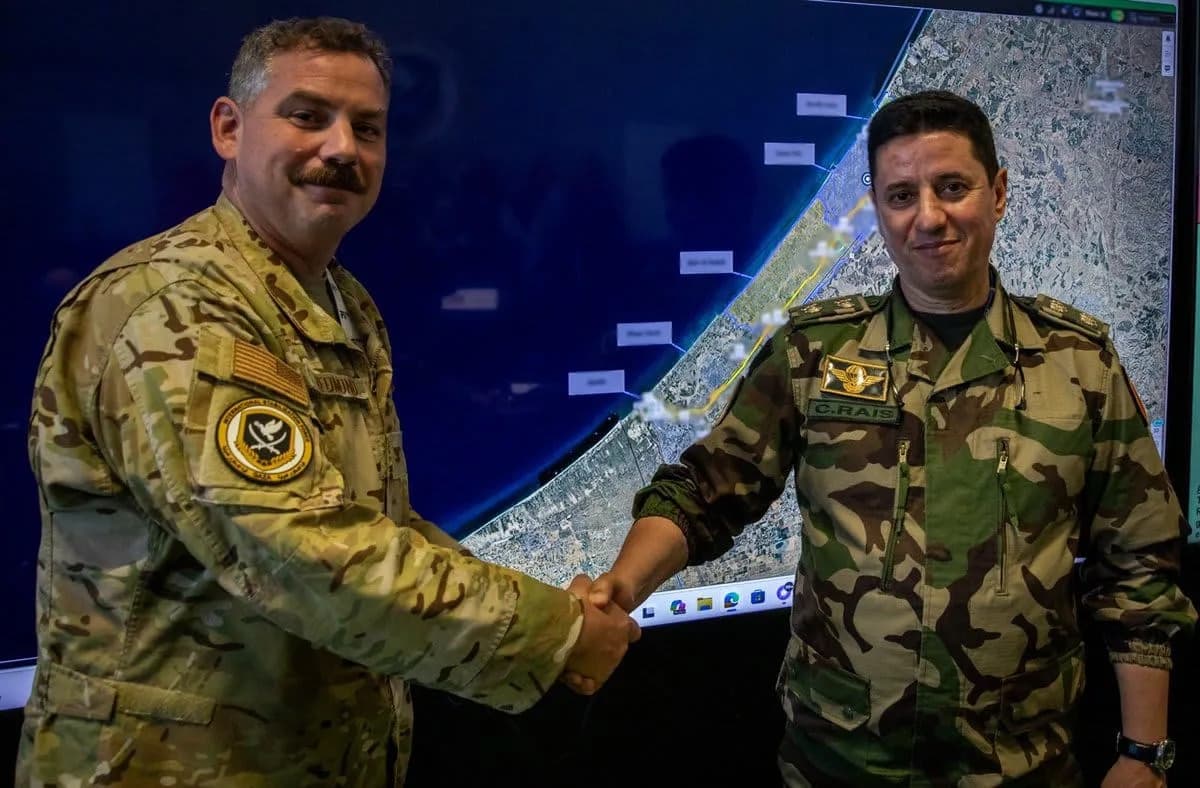
Moroccan officers join Gaza stabilization force planning in Israel. (photo credit: Courtesy: Board of Peace)
The Jerusalem Post reports that Morocco, Albania and Greece are set to join the proposed International Stabilization Force (ISF) for Gaza, a multinational mission intended to perform peacekeeping and stabilization duties during Phase II of the US-backed ceasefire plan.
Small Moroccan planning team arrives — A handful of Moroccan planning officers (believed to be in the single digits) have already arrived to take part in discussions about the ISF’s structure and operations. Officials emphasise these personnel are engaged in planning work only and have not been deployed into Gaza.
What the ISF would do
The ISF is intended to supervise ceasefire lines, support stabilization and reconstruction efforts, and handle certain border-related responsibilities during the second phase of the ceasefire plan. The US-led Civil-Military Coordination Center (CMCC) has been coordinating planning with Israel and international partners on how the force would transit between Israel and Gaza, how materials would be moved through Israel for stabilization tasks, and the force’s likely rules of engagement.
Contributions, commitments and goals
Indonesia was previously announced as the first contributor, with media reports suggesting an initial deployment of about 1,000 troops in April that could grow to roughly 8,000 by June, although those figures depend on conditions on the ground. In February, ISF commander US Army Maj.-Gen. Jasper Jeffers said Indonesia, Morocco, Kazakhstan, Kosovo and Albania had pledged troops, while Egypt and Jordan committed to training Palestinian police.
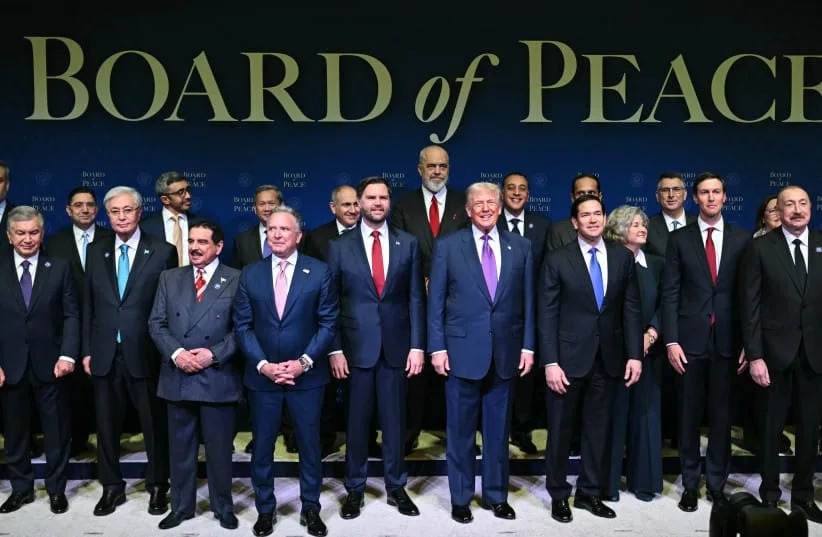
US President Donald Trump (C), flanked by US Vice President JD Vance (L) and US Secretary of State Marco Rubio (R), joins leaders for a group photo during the inaugural meeting of the ''Board of Peace'' at the US Institute of Peace in Washington, DC, on February 19, 2026. (credit: SAUL LOEB/AFPvia Getty Images)
Jeffers has described a long-term objective of roughly 20,000 ISF troops and training some 12,000 Palestinian police officers, with operations envisioned to begin in Rafah and expand sector by sector.
Political and diplomatic sensitivity
Morocco’s potential role carries particular diplomatic weight. Rabat normalised relations with Israel under the Abraham Accords in 2020 and maintains close defence ties. A Moroccan contribution to Gaza’s postwar security architecture could influence other Arab and Muslim-majority states weighing participation in the US-backed plan.
Israeli concerns and mission limits
Israeli officials and the IDF have been part of discussions about the ISF’s mandate. Israel has sought clear objectives for disarming Hamas and has warned against an outcome it describes as "UNIFIL 2," referring to criticism that the UN peacekeeping mission in Lebanon failed to prevent Hezbollah’s rearmament. Earlier reporting indicated that ISF participants, at least initially, would not be expected to engage Hamas directly but would focus on monitoring ceasefire lines and other border-related duties.
Timing and next steps
No firm timetable has been set for broader Moroccan deployments, and it remains unclear whether Rabat will send combat troops, police units or a smaller support contingent. For now, Morocco’s role appears limited to planning activities, but even a modest presence of planning officers may signal that the ISF is beginning to take shape after months of stalled discussions.
Bottom line: The arrival of Moroccan planning officers marks an early operational step for the ISF, while contributions from Albania, Greece and others remain subject to timetables, political decisions and evolving conditions on the ground.
Help us improve.





















